


1:1 with a GTM engineerBuild any workflow in this course with an engineer · 8 sessions left · closes in Book your session

Claude Workflows For SEO: 10 Full Usable Workflows

Sources: AgriciDaniel/claude-seo (25 skills, 18 sub-agents, MIT licensed, covers technical SEO, E-E-A-T, schema, GEO/AEO, backlinks, local SEO, semantic clustering), the…

Try Prosp Free45 minutes, on your own data · 8 sessions left
5/5 rated on Capterra·Used by 800+ agencies and sales teams
Guide12 sections
Section 1

Overview: What Claude Does and Does Not Do for SEO

Sources: AgriciDaniel/claude-seo (25 skills, 18 sub-agents, MIT licensed, covers technical SEO, E-E-A-T, schema, GEO/AEO, backlinks, local SEO, semantic clustering), the seranking/seo-skills repo already documented in this workspace (26 skills), and a documented 5-phase client audit methodology built around Ahrefs data. Every workflow below is written out in full as a copy-paste Claude prompt, not just a description of what exists elsewhere.

10 workflows, covering the full SEO function from technical foundation through to AI Search visibility:

  1. The Full 5-Phase Site Audit
  2. Technical Crawl and Index Audit
  3. Content Brief Generator with SERP Analysis
  4. Schema and GEO/AEO Audit
  5. Competitor Content Gap to Editorial Calendar
  6. Backlink Gap to Outreach List
  7. Local SEO Audit for Multi-Location Businesses
  8. Site Drift Monitoring (Baseline, Compare, History)
  9. Cross-Tool Data Reconciliation
  10. Weekly and Monthly SEO Reporting Automation

What Claude actually does and does not do here

Claude cannot retrieve live ranking data, backlink profiles, search volumes, or Core Web Vitals scores on its own. Those numbers come from Screaming Frog, Ahrefs, Semrush, Google Search Console, or a connected MCP like SE Ranking's. Claude is the reasoning engine sitting on top of that data: it structures the analysis, prioritises the findings, and writes the deliverable. Every workflow below assumes you are pasting in or connecting to real data, not asking Claude to invent numbers from nothing.

A large context window means an entire site's HTML, a Screaming Frog export, a GSC export, and several competitor pages can be analysed in one conversation rather than across disconnected sessions, which is the main structural advantage over doing this manually.

Section 2

Workflow 1: The Full 5-Phase Site Audit

A full client-ready audit built around 5 phases, running in one session rather than across disconnected tools. Replaces roughly 6-8 hours of manual analysis.

The full workflow

Run a full 5-phase SEO audit for [DOMAIN].

## Phase 1: Crawl and index audit
Paste or upload: [Screaming Frog export / site crawl data]
Check for: noindex tags on important pages, duplicate meta descriptions,
canonical errors, broken internal links, orphan pages.
These suppress rankings site-wide before content improvements can help,
so list every critical issue found here first.

## Phase 2: On-page and content quality
Paste: [top 10 pages by traffic, or a representative sample]
Check for: keyword-to-content mismatch, thin content, missing or weak
H1/H2 structure, internal linking gaps between related pages.

## Phase 3: Competitive content comparison
Paste: [our top 3 target pages] and [3 competitor pages ranking above us
for the same terms]
Compare depth, structure, and the specific angles competitors cover
that we do not.

## Phase 4: Technical issues
Paste: [Ahrefs or Semrush site audit export]
Categorise every issue as CRITICAL / HIGH / MEDIUM / LOW.
Provide a specific fix for every CRITICAL and HIGH issue.

## Phase 5: Content opportunities
Run a content gap analysis against the competitors listed above.
Filter to keyword difficulty under 40 and monthly volume over 200.
Cluster the results by topic.

## Output
Save the full audit report as ./seo-audit-[date].md
Save a separate, shorter action items list as ./seo-actions-[date].md,
ranked by impact versus effort.

Workflow 1 (the crawl and index phase) and Workflow 4 in this lead mag (schema and GEO) tend to produce the highest-impact fixes relative to time invested, so prioritise those two if running the full audit is not feasible in one sitting.

Section 3

Workflow 2: Technical Crawl and Index Audit

The single most impactful starting point of any audit. Technical issues can suppress rankings across an entire site before any content work has a chance to matter.

The full workflow

Run a technical crawl and index audit for [DOMAIN].

## Data to paste or connect
Screaming Frog crawl export, or a connected crawler MCP.
Google Search Console coverage report if available.

## Check for, in priority order
1. Noindex tags on pages that should be indexed (highest severity,
   these pages are invisible to search regardless of content quality)
2. Canonical errors: self-referencing canonicals pointing to the wrong
   URL, or canonical chains
3. Duplicate meta titles and descriptions across pages
4. Broken internal links and orphan pages with no internal links
   pointing to them
5. Redirect chains longer than 2 hops
6. Mobile rendering issues and Core Web Vitals failures (LCP, INP, CLS)
7. XML sitemap accuracy: pages in the sitemap that 404, or important
   pages missing from the sitemap entirely

## Output
For each issue found: severity (CRITICAL/HIGH/MEDIUM/LOW), the specific
URLs affected, and the specific fix required.
Group by severity, CRITICAL first.
Save as ./technical-audit-[date].md

## Rules
Never recommend a fix without stating which specific URLs it applies to.
Flag anything ambiguous (e.g. a noindex tag that might be intentional)
rather than assuming it's an error.
Section 4

Workflow 3: Content Brief Generator with SERP Analysis

From SERP-informed research to a writer-ready brief in one pass, including intent, competitive coverage, evidence requirements, structure, and quality gates.

The full workflow

Build a content brief for the target keyword: [KEYWORD]

## Step 1: SERP analysis
Paste the current top 10 results for this keyword, or connect a search
data tool.
For each: identify search intent (informational / commercial /
transactional / navigational), content format (listicle, guide,
comparison, tool), and word count.

## Step 2: Competitive coverage gap
Of the top 5 ranking pages, what do they all cover in common
(the table stakes), and what does no one cover well (the opportunity)?

## Step 3: Evidence requirements
What kind of proof would make this content genuinely more trustworthy
than what's currently ranking: original data, expert quotes, specific
examples, up-to-date statistics?

## Step 4: Structure
H1 (as a direct answer to the query, not just the keyword restated)
4-6 H2s covering the sub-questions a reader would have
An Answer Block: 40-60 words directly answering the H1, placed in the
first 100 words, written to be citable by AI search engines
FAQ section: 3-4 questions that are genuine edge cases, not
restatements of the H2s

## Step 5: Quality gate
Before finalising: does this brief ask for anything the competition
already does better? If yes, cut it or sharpen it. A brief that only
matches the competition will only ever match their ranking, never beat it.

## Output
A single writer-ready brief: target keyword, intent, word count target,
full structure, evidence requirements, internal linking suggestions,
and meta description draft.
Section 5

Workflow 4: Schema and GEO/AEO Audit

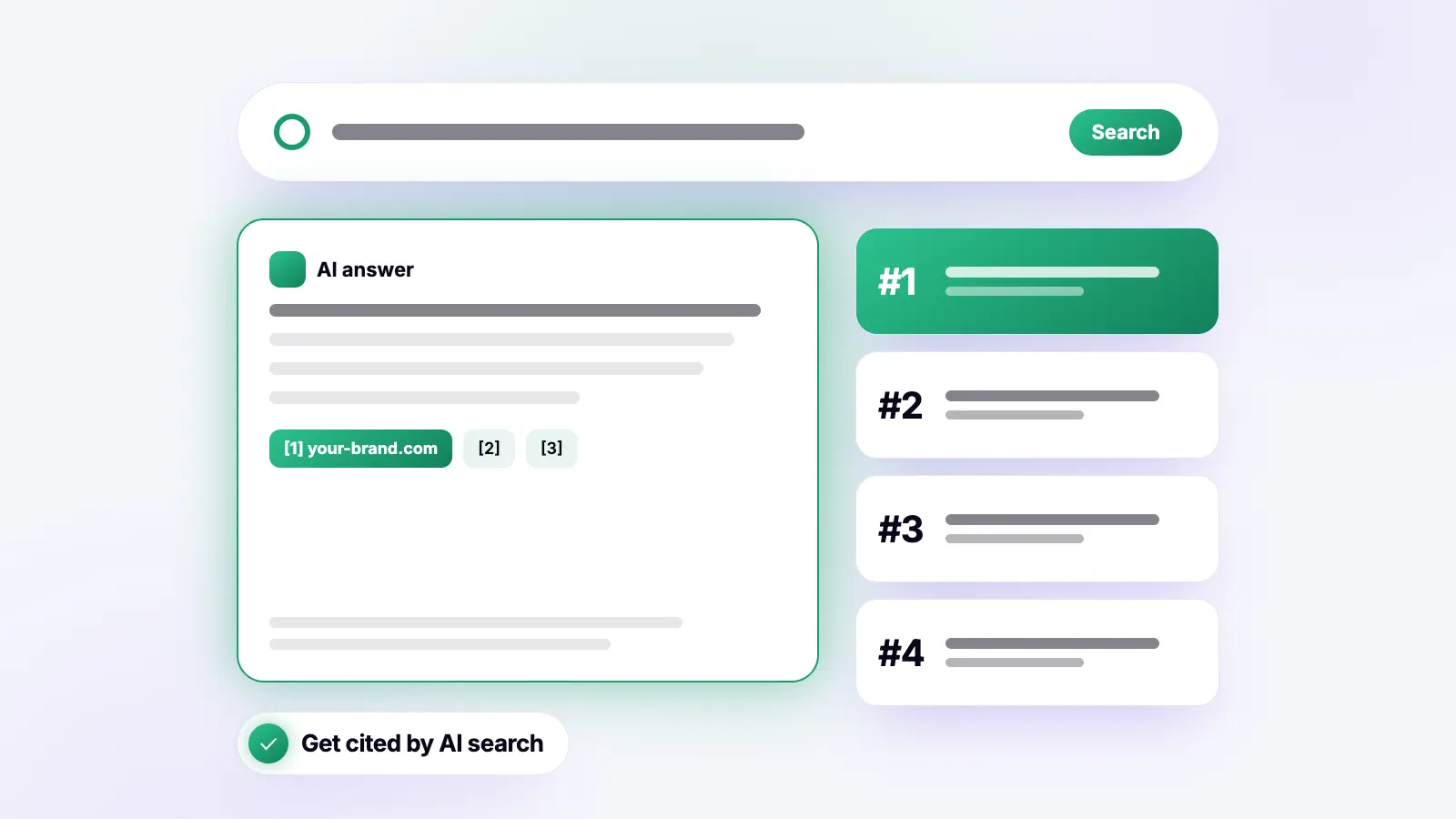
The workflow with the biggest 2026 upside once critical technical issues are fixed: making content genuinely citable inside AI-generated answers, not just rankable in traditional search.

The full workflow

Run a schema and GEO/AEO audit for [URL or set of URLs].

## Step 1: Schema detection and validation
Check what structured data currently exists on the page: Article,
Product, FAQPage, LocalBusiness, BreadcrumbList, or none.
Validate the existing JSON-LD for errors.
Identify what schema types SHOULD exist given the page's content type
but are missing.

## Step 2: E-E-A-T signal check
Does the page clearly show: who wrote it, their relevant expertise,
when it was published and last updated, and citable sources for any
factual claims? Flag any missing signal.

## Step 3: AI-citability audit
For the target query this page is meant to answer: does the page
contain a direct, quotable answer within the first 100 words? Is the
language specific and factual rather than vague marketing copy?
Would an AI system summarising this topic have a clear, extractable
sentence to cite from this page?

## Step 4: Generate missing schema
For each missing schema type identified in Step 1, generate valid
JSON-LD ready to paste directly into the page.

## Output
A prioritised list: schema to add (with the actual code), E-E-A-T gaps
to fix, and specific rewrite suggestions for the opening paragraph to
improve AI citability.
Section 6

Workflow 5: Competitor Content Gap to Editorial Calendar

Turning a raw competitive gap into an actual, sequenced content calendar rather than a static list of missed keywords.

The full workflow

Build a content calendar from a competitive gap analysis.

## Step 1: Gap analysis
Our domain: [DOMAIN]
Competitors: [LIST 2-3 COMPETITOR DOMAINS]
Find keywords competitors rank for (top 10) that we do not rank for at
all, or rank below position 20 for.
Filter to keyword difficulty under 40 and monthly volume over 200.

## Step 2: Cluster by topic
Group the resulting keyword list into topic clusters with a clear
pillar-plus-spokes structure. Each cluster should represent one
potential piece of content or a small content series.

## Step 3: Prioritise
Score each cluster on: estimated traffic potential, competitive
difficulty, and strategic relevance to our actual offer (a
high-traffic cluster with no connection to what we sell is lower
priority than a smaller, more relevant one).

## Step 4: Sequence into a calendar
Build a 90-day calendar: which cluster gets published when, sequenced
so that pillar pages publish before their supporting spoke articles
(so internal linking has somewhere to point).

## Output
content-calendar.csv: publish date, cluster, target keyword, content
type, priority score, and a one-line brief summary per piece.
Section 8

Workflow 7: Local SEO Audit for Multi-Location Businesses

For businesses with more than one physical location or service area: auditing local search presence across a whole footprint rather than one site at a time.

The full workflow

Run a local SEO audit for [BUSINESS NAME] across these locations:
[LIST LOCATIONS OR PASTE A LOCATION LIST]

## Step 1: Google Business Profile signals
For each location: is the profile fully complete (hours, categories,
services, photos)? Review count and rating versus the nearest
competitors in the local pack for relevant queries.

## Step 2: NAP consistency
Check Name, Address, Phone number consistency across the website, the
Google Business Profile, and any citation sources provided. Flag every
inconsistency found, since these directly hurt local ranking
confidence.

## Step 3: On-page local intent
Does each location have its own dedicated page (not just a shared
contact page listing all locations)? Does that page include the local
area name naturally in the content, not just stuffed into a title tag?

## Step 4: Citation footprint
Based on what citation data is available, identify major local
directories where the business is missing or has outdated information.

## Step 5: Local-pack rank check
For the core service queries plus "near me" and "[service] in [city]"
variants, note current local-pack rank per location if that data is
available.

## Output
A per-location scorecard: GBP completeness score, NAP consistency
issues, on-page gaps, citation gaps, and local-pack rank, with the
top 3 fixes ranked by expected impact per location.
Section 9

Workflow 8: Site Drift Monitoring (Baseline, Compare, History)

A "git for SEO" pattern: save a baseline, compare against it over time, and get a severity-coded regression report the moment something breaks.

The full workflow

# First run: establish the baseline
Crawl [DOMAIN] and record a full baseline: page count, meta title and
description per page, canonical tags, schema present per page,
ranking positions for [LIST TARGET KEYWORDS] if available, and
backlink count if available.
Save as ./baseline-[date].md

# Every subsequent run: compare against the baseline
Crawl [DOMAIN] again. Compare against ./baseline-[date].md.

Flag every change:
- New pages added or pages removed
- Meta title or description changes
- Canonical tag changes
- Schema added or removed
- Ranking position changes for tracked keywords (if data available)
- Backlink count changes (if data available)

Severity-code every change: CRITICAL (a canonical or noindex change on
a high-traffic page), WARNING (a meta change that could affect CTR),
INFO (a minor, likely-intentional change).

Save the new state as the updated baseline for next time.

## Output
drift-report-[date].md: every change found, severity-coded, with a
recommended action for anything CRITICAL or WARNING.
Section 10

Workflow 9: Cross-Tool Data Reconciliation

Cross-referencing data from multiple SEO tools in a single analysis, something none of the individual tools' own interfaces let you do natively.

The full workflow

Reconcile SEO data across tools for [DOMAIN] and target keywords:
[LIST KEYWORDS]

## Step 1: Paste data from each source
Ahrefs data: [PASTE keyword rankings, traffic estimates, backlink data]
Semrush data: [PASTE keyword rankings, traffic estimates, backlink data]
Google Search Console data: [PASTE actual clicks, impressions, average
position]

## Step 2: Identify discrepancies
Where do the tools disagree meaningfully on ranking position, traffic
estimate, or keyword difficulty? Note the size of the discrepancy for
each.

## Step 3: Find what neither tool surfaces alone
Compare the keyword universes each tool tracks: are there keywords one
tool sees ranking opportunity for that the other completely misses?
These cross-tool blind spots are frequently where the real opportunity
is, since a keyword invisible to only one tool's index is likely
under-competed by anyone relying on that tool exclusively.

## Step 4: Reconcile with actual GSC truth
GSC is ground truth for actual clicks and impressions, since it comes
directly from Google. Flag any case where Ahrefs or Semrush's estimate
significantly overstates or understates what GSC shows actually
happened.

## Output
A reconciled view: which numbers to trust for which purpose, and a
specific list of opportunities visible only when cross-referencing
multiple sources.
Section 11

Workflow 10: Weekly and Monthly SEO Reporting Automation

Turning raw performance data into a report that actually gets read, on a recurring schedule, without you rebuilding the report from scratch every time.

The full workflow

Build the [weekly/monthly] SEO report for [DOMAIN or CLIENT NAME].

## Data to paste or connect
Google Search Console export (clicks, impressions, average position,
CTR) for this period versus the previous period.
Any ranking tracker data for target keywords.
Any content published this period.

## Step 1: The headline number
What is the single most important change this period: organic traffic
up or down, and by how much. Lead with this, not with a wall of metrics.

## Step 2: What moved and why
For any significant traffic or ranking change, connect it to a likely
cause: a published piece, a technical fix, an algorithm-adjacent
fluctuation, or a competitor action if known.

## Step 3: Content performance
Which pieces published this period are gaining traction, which are
flat, and which underperformed expectations.

## Step 4: What's next
3 specific, prioritised actions for next period, each tied to a
specific expected outcome, not a vague "continue optimising."

## Output
A client-readable report under 400 words for the summary section, with
a full data appendix attached separately for anyone who wants the
underlying numbers. Translate any technical SEO jargon into plain
language in the summary; keep the technical terms only in the appendix.
Section 12

Quick Reference: All 10 Workflows and Pre-Built Skill Repos

All 10 workflows condensed, plus the real skill repos this lead mag draws from if you want the pre-built version instead of running the prompts manually each time.

All 10 workflows

  1. The Full 5-Phase Site Audit: crawl/index, on-page, competitive comparison, technical, content opportunities
  2. Technical Crawl and Index Audit: the highest-priority starting point, catches site-wide suppression issues
  3. Content Brief Generator with SERP Analysis: SERP intent, coverage gaps, evidence requirements, structure
  4. Schema and GEO/AEO Audit: the highest 2026 upside once technical issues are fixed
  5. Competitor Content Gap to Editorial Calendar: gap analysis sequenced into a real 90-day calendar
  6. Backlink Gap to Outreach List: enriched, ready-to-run outreach targets
  7. Local SEO Audit for Multi-Location Businesses: per-location scorecard across GBP, NAP, and citations
  8. Site Drift Monitoring: baseline, compare, severity-coded regression report
  9. Cross-Tool Data Reconciliation: finding what no single tool surfaces alone
  10. Weekly and Monthly SEO Reporting Automation: a report someone actually reads, on a schedule

Pre-built skill repos, if you want these installed rather than pasted

AgriciDaniel/claude-seo: 25 skills, 18 sub-agents, MIT licensed. Covers technical SEO, E-E-A-T, schema, GEO/AEO, backlinks, local SEO, semantic clustering, and international SEO, with optional DataForSEO and Firecrawl extensions for live data.

git clone https://github.com/AgriciDaniel/claude-seo.git

seranking/seo-skills (already fully documented in this workspace's Claude SEO Team lead mag): 26 production skills powered by the SE Ranking MCP, covering the same ground with live-data connections rather than pasted exports.

/plugin marketplace add seranking/seo-skills
/plugin install seo-skills@seranking

coreyhaines31/marketingskills: the seo-audit skill specifically, the most-forked single SEO skill on GitHub as of mid-2026.

npx skills add coreyhaines31/marketingskills --skill seo-audit

Where to start

Workflow 2 (technical crawl and index audit) first, always, on any site being worked on for the first time. Technical issues suppress everything else, so fixing them before running content workflows prevents wasted effort. Workflow 4 (schema and GEO) second, since it carries the highest upside for 2026-era AI Search visibility once the technical foundation is sound. Everything else runs on whatever cadence matches the actual need: content workflows weekly or monthly, drift monitoring continuously, reporting on whatever schedule the stakeholder actually reads.

8 sessions left · booking closes in

Build it live with a GTM engineer

45 minutes, screen shared, on your own list. You leave with a working campaign or agent, not a set of notes.

5/5 rated on Capterra·800+ agencies and sales teams·Set up in 5 minutes
8 GTM engineer sessions left this monthTry Prosp Free