


Section 1What Opus 5 Is: Release, Pricing, and Where It Sits
Source: Anthropic official blog post (anthropic.com/news/claude-opus-5, July 24, 2026) + Anthropic skills repo models.md (anthropics/skills)
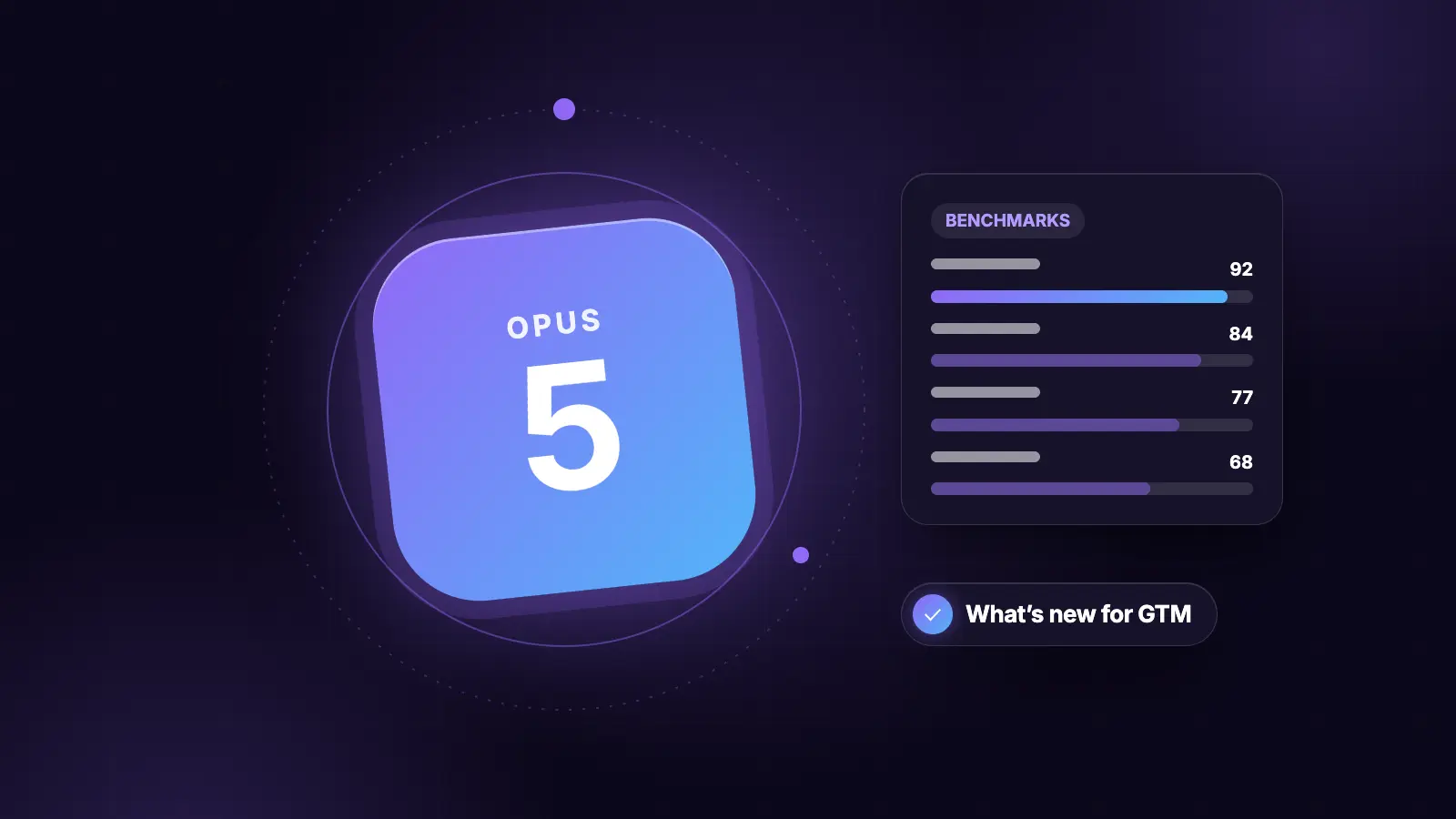
Claude Opus 5 released July 24, 2026. It is the fourth Claude 5 model in less than two months (after Mythos 5, Fable 5, and Sonnet 5 in June). It is Anthropic's positioning of a high-capability, everyday model for enterprises, knowledge workers, and developers at half the price of Fable 5.
The one-line pitch from Anthropic: thoughtful and proactive, comes close to the frontier intelligence of Fable 5 at half the price.
API string: claude-opus-5
Price: $5 per million input tokens, $25 per million output tokens (same as Opus 4.8)
Context window: 1M tokens (both default and maximum)
Max output tokens: 128K
Thinking: on by default
Fast mode: available at 2.5x default speed, at 2x base price
Default on: Claude Max
Strongest model on: Claude Pro
Data retention: no mandatory 30-day retention (unlike Fable 5)
What is launching alongside it:
- Mid-conversation tool changes (beta): change which tools Claude can use mid-conversation without invalidating the prompt cache
- Automatic fallbacks (beta): requests flagged by safety classifiers on Opus 5 or Fable 5 automatically route to the next best available model instead of being blocked
- Mid-task model switching: users can switch model mid-task to manage cost
Where Opus 5 sits in the model hierarchy
From the Anthropic skills repo models.md (sourced directly July 2026):
| Model | Alias | Price (in/out per MTok) | Context | Max output | Notes |
|---|---|---|---|---|---|
| Claude Fable 5 | claude-fable-5 | $10 / $50 | 1M | 128K | Most capable widely released, requires 30-day data retention |
| Claude Mythos 5 | claude-mythos-5 | $10 / $50 | 1M | 128K | Project Glasswing only |
| Claude Opus 5 | claude-opus-5 | $5 / $25 | 1M | 128K | NEW. Half Fable 5 price, near-Fable performance |
| Claude Opus 4.8 | claude-opus-4-8 | $5 / $25 | 1M | 128K | Superseded by Opus 5 |
| Claude Sonnet 4.6 | claude-sonnet-4-6 | — | 1M | 64K | Best speed/intelligence balance |
| Claude Haiku 4.5 | claude-haiku-4-5 | — | 200K | 64K | Fastest, cheapest |
Key distinction between Fable 5 and Opus 5:
- Fable 5 is Anthropic's most capable widely released model for the most demanding reasoning and long-horizon agentic work. It requires 30-day data retention and is not available under ZDR.
- Opus 5 approaches Fable 5 performance across most tasks at half the price. No data retention requirement. More relaxed guardrails than Fable 5 on cybersecurity tasks (85% fewer classifier interventions). Better suited as the everyday default for enterprise and GTM use.
Fable 5 vs Opus 5 on benchmarks:
- Frontier-Bench v0.1: Opus 5 surpasses all other models including Fable 5
- CursorBench 3.2: Opus 5 at max effort is within 0.5% of Fable 5 at half the cost per task
- ARC-AGI 3: Opus 5 scores three times higher than the next-best model
- Zapier AutomationBench: Opus 5 pass rate is 1.5x the next-best model at the same cost. At its lowest effort setting, Opus 5 passes more tasks than any other model.
- OSWorld 2.0: outperforms every model at any given cost, surpassing Fable 5's best result at just over one third of the cost
- Cyber tasks: intentionally behind Mythos 5 on exploit development
Section 2The Effort Dial, Fast Mode, and What Changed from Opus 4.8
Source: Anthropic blog (anthropic.com/news/claude-opus-5)
The effort dial is the most important new feature for GTM and marketing teams running multi-step agent workflows. It determines the token budget Opus 5 spends on reasoning before responding.
The effort dial
Opus 5 ships with a user-controllable effort setting. You choose how much compute the model devotes to a task. Lower effort uses fewer tokens and costs less. Higher effort gets more thorough reasoning.
| Effort level | Best for | Cost impact |
|---|---|---|
| Low | Drafting, formatting, simple classification, batch processing | Lowest |
| Medium | Most GTM workflows: content creation, lead qualification, CRM cleanup | Balanced |
| High | Complex analysis, competitive intelligence, multi-source research | Higher |
| Extra high | Deep debugging, architecture decisions, long-horizon agent tasks | High |
| Max | Most demanding agentic work, frontier-level reasoning | Highest |
Key insight from the benchmark data: at lower effort levels Opus 5 still outperforms Opus 4.8 at max. On Zapier AutomationBench, Opus 5 at its lowest effort setting passes more tasks than any other model at any effort. This means the right move for most GTM workflows is medium or high, not always max.
For GTM engineers managing token costs:
- Use low effort for: bulk email drafting, CRM field normalisation, subject line variants, caption writing
- Use medium effort for: personalised outreach, lead qualification, content repurposing, competitor analysis
- Use high effort for: strategy documents, campaign architecture, account research, complex pipeline analysis
- Use max effort for: long-horizon agentic runs, frontier-level coding, and any task where getting it right first time is worth the token cost
Fast mode
Opus 5 ships with Fast mode: runs at approximately 2.5x default speed at 2x base price on the Claude Platform, and through usage credits in Claude Code.
When to use Fast mode in GTM workflows: any task where latency matters more than maximum reasoning depth. Sending 50 personalised DMs, generating 30 social post variants, processing inbound leads in real time. Fast mode with medium effort is the default for most Prosp and outreach automation use cases.
API:
// Standard
const response = await client.messages.create({
model: "claude-opus-5",
max_tokens: 8192,
messages: [{ role: "user", content: "[YOUR PROMPT]" }]
});
// With effort level
const response = await client.messages.create({
model: "claude-opus-5",
max_tokens: 8192,
thinking: { type: "enabled", effort: "medium" },
messages: [{ role: "user", content: "[YOUR PROMPT]" }]
});
// effort options: "low" | "medium" | "high" | "xhigh" | "max"
// Note: do NOT pass thinking: { type: "disabled" } — this returns a 400
// Omit the thinking parameter entirely if you do not want to configure effort
What is different from Opus 4.8
From the Anthropic announcement and the skills repo migration notes:
Performance: Opus 5 more than doubles Opus 4.8 on Frontier-Bench at lower cost per task. On life sciences it outperforms Opus 4.8 on every evaluation. On financial modelling tasks: 9 percentage points higher accuracy, one third fewer turns and tool calls, 60% less time.
Alignment: Opus 5 scores 2.3 on overall misaligned behavior on Anthropic's automated behavioral audit, the lowest of all recent models. It adheres to Claude's Constitution better than Opus 4.8, Sonnet 5, or Fable 5. Lowest rates of deceptive behavior. Least susceptible to being tricked into misuse. Most aligned Opus model ever released.
Agentic behaviour: Opus 5 verifies its own work and iterates carefully until it succeeds. From early access testing at Zapier, Opus 5 took a raw account-health workbook and ran a full churn-prevention sequence end to end: flagging at-risk accounts, alerting the right owner, and summarising for retention ops. Previous models did not pass. Opus 5 hit 100%.
Cost efficiency: same price as Opus 4.8 ($5/$25 per MTok). Legal firm early access: similar performance to Opus 4.8 max while generating 26% fewer tokens on average. Trading firm: roughly one seventh of the reasoning tokens and under half the latency compared to Opus 4.8.
Safeguards change: cyber classifiers are proportionally less restrictive than Fable 5. Opus 4.8 was the fallback when Fable 5's classifiers blocked a request. Now Opus 5 is that fallback. Biology-related requests blocked on Fable 5 now route to Opus 5 instead of Opus 4.8. 85% fewer classifier interventions than Fable 5.
One API note: thinking is on by default. Do not pass thinking: { type: "disabled" } as this now returns a 400 error. Omit the thinking parameter if you do not need to configure effort. No data retention requirement (unlike Fable 5 which requires 30 days).
Section 3Opus 5 for GTM: The Workflows Where It Adds the Most Value
Source: Anthropic blog early access testimonials + Zapier AutomationBench data
Opus 5 is specifically designed to be the everyday enterprise model. These are the workflows where it adds the most value for GTM and marketing teams based on early access data.
Long-horizon GTM agent workflows
The defining characteristic of Opus 5 for GTM use: it verifies its own work and recovers from errors without intervention. This is the difference between a model that produces a draft and a model that produces a finished result.
Zapier AutomationBench result (from the Anthropic announcement): Opus 5 took a raw account-health workbook and ran a full churn-prevention sequence end to end. It flagged at-risk accounts, alerted the right owner, and summarised for retention ops. Previous models did not pass. Opus 5 hit 100%.
For GTM engineers this means: outbound sequences, lead qualification pipelines, CRM hygiene runs, and competitive monitoring workflows that previously required checkpoints and human review can now run further without intervention. Opus 5 finds the edge case the first model missed, checks its own output before completing, and reports what it did with sufficient detail to audit.
Example GTM agent prompts at medium effort:
# Lead qualification and pipeline routing
"Read the inbound leads from [CRM/NOTION DATABASE].
For each lead:
1. Check their LinkedIn profile and company website
2. Score against ICP: [PASTE YOUR ICP CRITERIA]
3. Flag disqualifiers: [LIST]
4. Write a recommended first message angle based on their specific situation
5. Route: hot leads to [OWNER], warm to [SEQUENCE], cold to [ARCHIVE]
Verify your scoring logic on the first 3 leads before processing the rest.
If any lead has ambiguous data, flag it for human review rather than guessing."
# Account health and churn prevention (Zapier-style)
"Analyse the account health workbook in [FILE PATH].
For each account:
1. Identify accounts with engagement signals below threshold
2. Check last interaction date against our SLA
3. Flag accounts at churn risk with the specific signal that triggered the flag
4. Draft a one-sentence summary for the account owner
5. Output a prioritised list: high risk / medium risk / healthy
Do not output anything until you have processed all accounts.
Check your output before returning it."
Content production at effort-matched cost
Opus 5 at low effort outperforms Opus 4.8 at max on most content tasks. This means the cost of producing a LinkedIn post, a cold email, or a campaign brief with Opus 5 at low effort is substantially less than it was with Opus 4.8.
From Gamma (early access): biggest gains on longer-horizon work such as building a full deck then revising it. Better visual understanding, cleaner formatting, fewer slide issues.
# Batch content production at low effort
"Using the brand-voice.md skill and this week's content calendar,
write the following at low effort (this is a formatting and drafting task, not reasoning):
- 3 LinkedIn posts for [ACCOUNTS] on topics [LIST]
- Subject lines for each: 3 variants per post
- Buffer scheduling commands for each
Apply the content rules from CLAUDE.md throughout.
Output each post as a separate section. Check for em dashes before returning."
# Competitive intelligence at high effort
"Research [COMPETITOR] at high effort.
Sources: their website, G2 reviews last 90 days, LinkedIn content last 30 days,
job postings, recent press.
Return:
1. Current positioning (in their words)
2. Top 5 customer complaints from G2
3. What their hiring signals tell us about their roadmap
4. One claim we can make that they cannot make back
5. What to say when their name comes up on a discovery call
Verify any pricing or feature claims before including them."
Financial and analytical work
Early access data from financial services firms:
- Box: Opus 5 outperforms Opus 4.8 by 8% overall, with 11% improvement in data analysis workflows and 17% improvement in due diligence workflows
- A financial research firm: 9 percentage points higher accuracy on financial modelling tasks, with one third fewer turns and tool calls and 60% less time
- A trading firm: one seventh of the reasoning tokens, under half the latency vs Opus 4.8
- A law firm: first-turn redlines scored highest of any model tested, nearly double Opus 4.8, with 26% fewer tokens at max reasoning
For GTM teams: revenue modelling, pipeline forecasting, deal desk analysis, pricing decisions, and any workflow involving numerical reasoning in spreadsheets or databases.
# Pipeline forecast and deal analysis
"Read the pipeline CSV in [FILE PATH].
For each open deal:
1. Calculate weighted probability using our standard formula: [FORMULA]
2. Flag any deal where the stage has not changed in [N] days
3. Flag any deal with a close date in the past
4. Calculate total weighted pipeline by rep and by segment
5. Write a one-paragraph executive summary of where the quarter is tracking
Check your arithmetic on the totals before returning.
Do not invent numbers. If data is missing, flag the gap."
Section 4Skills, Prompting Guide, and Migration from Opus 4.8
Source: Anthropic skills repo (anthropics/skills, anthropics/claude-code) + Anthropic prompting guide
Official Opus 5 prompting guide
Anthropic published a prompting guide specifically for Opus 5 at launch. Find it at:
platform.claude.com/docs/en/build-with-claude/prompt-engineering/prompting-claude-opus-5
Key behaviours to know from the migration guides in the skills repo:
Opus 5 follows system prompts more closely than earlier models. Prompts written to overcome earlier model reluctance are now too aggressive. If the model is overtriggering a tool or skill, dial back the language rather than adding more guardrails.
Do not pass thinking: { type: "disabled" } — this now returns a 400 error. Omit the thinking parameter entirely if you do not need to configure effort. If you are seeing issues related to the word "think" in your prompts without the thinking parameter set, replace it with alternatives like "consider", "evaluate", or "assess".
For longer agent runs at higher effort: if the model explores more before answering and burns too many thinking tokens, lower effort first before adding prose instructions to constrain reasoning. Medium is often the right default.
For content quality: Opus 5 is more likely to push back on a design or direction it thinks is wrong, and it will not fold immediately when you push back. From a developer testimonial in the launch announcement: "it explained exactly what was valuable in my idea, narrowed its objection to a single design question, and proposed a compromise that kept the good part while fixing the flaw." This is useful in marketing contexts where you want Claude to catch weak positioning or a flawed campaign angle before it ships.
Model migration: upgrading from Opus 4.8
From the Anthropic skills repo model-migration.md and the claude-opus-4-5-migration plugin:
The Opus 4.8 to Opus 5 migration is primarily a model ID swap. No new breaking changes from the Opus 4.8 API surface, but with a prompt re-tuning pass recommended.
# Step 1: Update model string
# Before
model: "claude-opus-4-8"
# After
model: "claude-opus-5"
# Step 2: Remove thinking: { type: "disabled" } if present
# This now returns a 400. Omit the thinking parameter entirely instead.
# Step 3: Re-tune prompts for closer instruction-following
# Remove CRITICAL: YOU MUST language — Opus 5 follows prompts closely without it
# Remove tool-overtriggering guardrails — dial down the language instead
# If you see the model overthinking: lower effort first, then adjust prose
# Step 4: Test at medium effort before going to max
# Opus 5 at medium often matches or exceeds Opus 4.8 at max
# Start there and only increase effort if the task genuinely requires it
For Bedrock users: model IDs carry the anthropic. provider prefix. Apply the same rename (claude-opus-4-8 to claude-opus-5) then keep the prefix. Do not write a first-party claude-* ID for a Bedrock client.
Mid-conversation model switching (new in beta): you can now switch from Opus 5 to Haiku mid-conversation to cut costs on simpler follow-up tasks. Example: use Opus 5 at high effort for the analysis pass, then switch to Haiku for the formatting and CSV output pass.
Automatic fallbacks: what changed for GTM workflows
Two fallback changes that affect GTM workflows:
- Opus 5 replaces Opus 4.8 as the fallback model: previously, when Fable 5 classifiers blocked a request, it fell back to Opus 4.8. Now it falls back to Opus 5. For GTM workflows using Fable 5, this means blocked requests now get a meaningfully better fallback.
- Automatic fallbacks (beta): API users can enable automatic routing so flagged requests go to the next best available model instead of returning an error. Enables in API settings. Useful for high-volume outbound automation where individual classifier interventions would otherwise break a batch run.
# Enable automatic fallbacks on API requests
# Claude.ai, Claude Code, and Claude Cowork enable this by default for Opus 5
# API users: configure in platform settings or pass anthropic-beta: "automatic-fallbacks-2026-07-24"
Section 5Quick Reference: Opus 5 Specs, GTM Prompts, and Model Routing
All key information in one place. No em dashes.
Model quick reference
# Opus 5 basics
Model ID: claude-opus-5
Price: $5 input / $25 output per MTok
Context: 1M tokens
Max output: 128K tokens
Thinking: On by default
Fast mode: 2.5x speed, 2x price
Data retention: Not required (unlike Fable 5)
Default on: Claude Max
Strongest on: Claude Pro
API released: July 24, 2026
# Key benchmarks vs Fable 5
Frontier-Bench v0.1: Opus 5 surpasses Fable 5
CursorBench 3.2: Within 0.5% of Fable 5 at max effort, half the cost
ARC-AGI 3: 3x the next-best model
Zapier AutomationBench: 1.5x next-best at same cost, 100% pass rate
OSWorld 2.0: Beats Fable 5's best at one third of the cost
Cybersecurity: Intentionally behind Mythos 5 on exploit development
# Effort levels (thinking parameter)
low: Simple drafting, formatting, classification
medium: Most GTM workflows (DEFAULT RECOMMENDATION)
high: Deep research, competitive analysis, multi-source tasks
xhigh: Complex agent runs
max: Frontier-level reasoning, hardest agentic coding
# WARNING: do NOT use this
thinking: { type: "disabled" } # Returns 400 error
# Instead: omit the thinking parameter entirely
# Migration from Opus 4.8: one-line change
"claude-opus-4-8" -> "claude-opus-5"
# Then re-tune prompts: remove CRITICAL/MUST language, lower effort before adding prose constraints
GTM prompt library for Opus 5
# LEAD QUALIFICATION (medium effort)
"Score these leads against my ICP: [PASTE ICP]
For each: score 1-10, heat (hot/warm/cold), recommended DM angle.
Verify your scoring on the first 3 before continuing.
Flag anything with missing or ambiguous data rather than guessing.
Write results to [NOTION DATABASE]."
# COMPETITIVE BRIEF (high effort)
"Research [COMPETITOR] from their website, G2 last 90 days,
LinkedIn last 30 days, job postings, and recent press.
Return: current positioning, top 5 customer complaints,
hiring signals, one claim we can make they cannot, what to say when their name comes up.
Verify any pricing or feature claims before including them."
# CONTENT BATCH (low effort)
"Write 5 LinkedIn posts on [TOPIC] for [BRAND VOICE from CLAUDE.md].
Apply: no em dashes, no hashtags in bodies, one idea per line.
For each post: include one specific detail that only we could have written.
Check for banned words before returning."
# ACCOUNT HEALTH (medium effort)
"Read [ACCOUNT CSV]. For each account:
Flag churn risk with specific signal, flag stale deals, calculate weighted pipeline.
Output: executive summary paragraph plus a prioritised list.
Check your arithmetic on totals before returning.
Do not invent numbers. Flag missing data."
# CAMPAIGN ARCHITECTURE (high effort)
"Plan a [TYPE] campaign for [PRODUCT/OFFER] targeting [ICP].
Before drafting: what is the one assumption this campaign lives or dies on?
What is the cheapest test to validate it before we build everything?
Then: messaging hierarchy, channel sequence, content needed per stage,
success metrics per channel, week-by-week timeline.
Push back if any part of this brief has a logical flaw."
# EMAIL BATCH WITH PERSONALISATION (medium effort)
"Read [LEADS CSV]. For each lead, write a cold email:
- First line references their specific signal from the signal column
- Under 100 words, no em dashes, one CTA
- Score each email 1-10 before including it
- Only return emails scoring 7 or above. Rewrite the others.
Output as a new CSV with email_subject and email_body columns."
# MID-CONVERSATION MODEL SWITCH (beta)
# Use Opus 5 for analysis, switch to Haiku for output formatting
# Configure via anthropic-beta: "mid-conversation-model-2026-07-24"
Model routing table for GTM teams
| Task | Model | Effort | Why |
|---|---|---|---|
| Lead qualification scoring | Opus 5 | Medium | Judgment + ICP edge cases |
| Bulk email drafting | Opus 5 | Low | Outperforms Opus 4.8 max at lower cost |
| Competitive intelligence brief | Opus 5 | High | Multi-source synthesis |
| Campaign architecture | Opus 5 | High | Strategic judgment, pushback on flawed brief |
| CRM data cleanup | Sonnet 4.6 or Opus 5 Low | Low | Structured execution, no reasoning needed |
| Content repurposing | Opus 5 | Low | Strong content quality at minimal cost |
| Long-horizon outbound agent | Opus 5 | High or Max | Self-verifying, recovers without intervention |
| Pipeline forecast and analysis | Opus 5 | High | Numerical reasoning, checks own arithmetic |
| Sub-agent data gathering | Haiku 4.5 | N/A | Speed and cost for structured lookups |
| Strategy / architecture decisions | Fable 5 | High | Only where frontier intelligence is the difference |
| Cybersecurity tasks | Fable 5 or Opus 5 with CVP | Max | Classifier routing applies |