


1:1 with a GTM engineerBuild any workflow in this course with an engineer · 8 sessions left · closes in Book your session

Claude Opus 4.8 Playbook for GTM

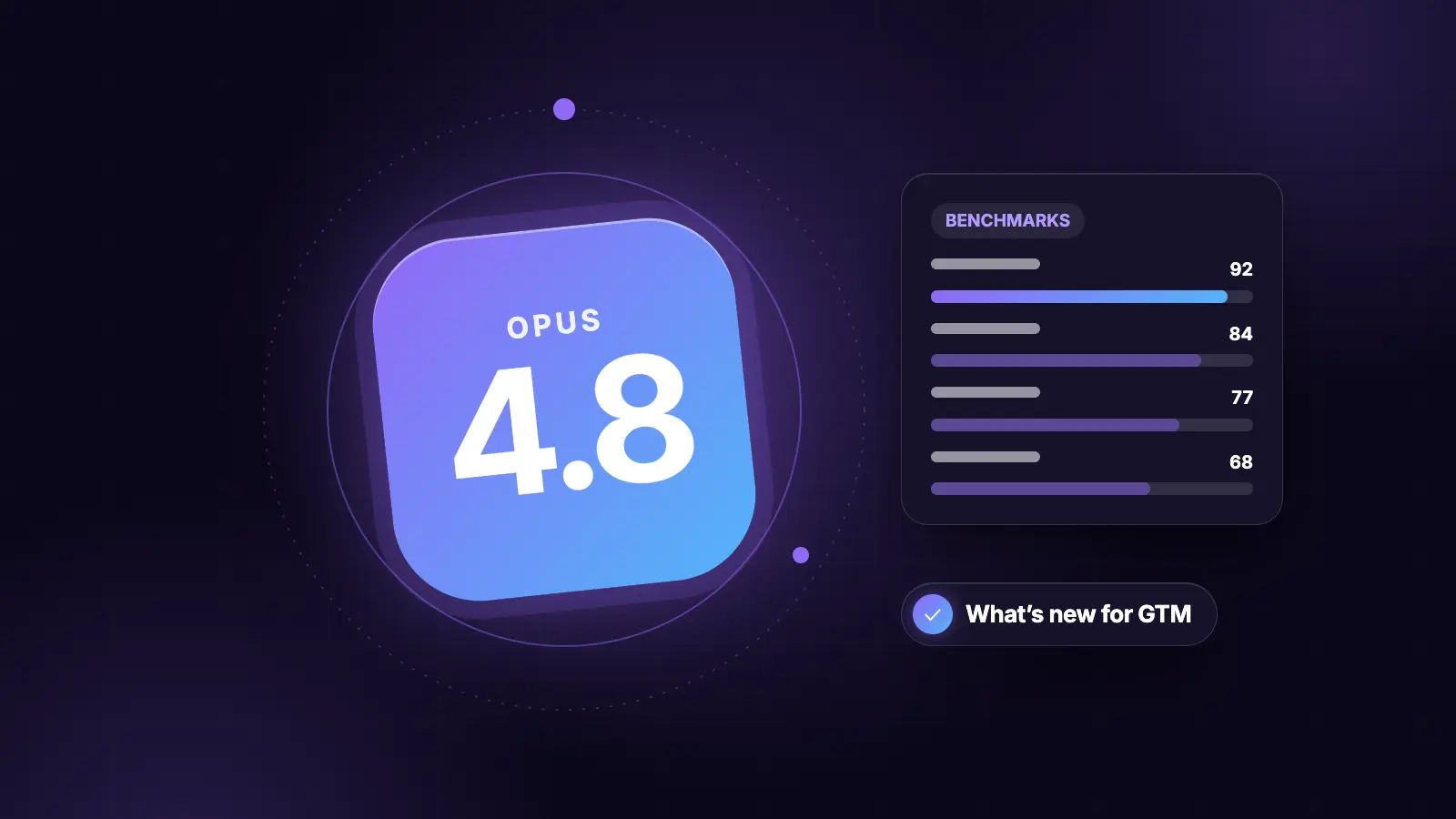
Released May 28th 2026. Same price as Opus 4.7. Two new capabilities: Dynamic Workflows (parallel sub-agents on complex tasks) and Ultra Code (autonomous workflow activation).

Try Prosp Free45 minutes, on your own data · 8 sessions left
5/5 rated on Capterra·Used by 800+ agencies and sales teams
Playbook6 sections

Released May 28th 2026. Same price as Opus 4.7. Two new capabilities: Dynamic Workflows (parallel sub-agents on complex tasks) and Ultra Code (autonomous workflow activation).

Six effort levels now control how hard Claude works. Four specific model improvements over 4.7: honesty upgrade, sustained autonomy on long tasks, fewer hallucinations, better tone.

This playbook covers every change that matters for GTM engineers, how to upgrade existing workflows safely, and the prompting adjustments that produce better results in 4.8.

Section 1

What Changed in Opus 4.8 That GTM Engineers Actually Care About

Released May 28th 2026. Same price as Opus 4.7. This page covers every change that matters for GTM engineers — the ones in the announcement and the ones that weren't.

The headline changes

Same price. Better model. Two new capabilities.

The model improvements that matter for GTM work

Four specific improvements over 4.7 that affect daily GTM workflows

What did not change

Things you do not need to re-learn or reconfigure

Section 2

Effort Levels: The Number One Lever You Are Not Using

Effort is now the primary lever for controlling how Opus 4.8 behaves. If you have never adjusted it, you are leaving significant performance on the table. If you always run on max, you may be wasting tokens on tasks that don't need it.

The six effort levels

Low, Medium, High (default), Extra High, Max, Ultra Code

How to set effort levels

In the UI, in the terminal, and in the Claude Code extension

The practical rule for GTM work

High by default. Extra High when the plan matters. Max when you cannot afford a wrong approach.

Section 3

Dynamic Workflows: Running a GTM Agent Swarm

Dynamic workflows let Claude Code break any large task into pieces and run multiple sub-agents on each piece simultaneously. Previously, Claude worked through tasks one step at a time. Now it can run tens to hundreds of helpers in parallel — each working on a different piece of the problem, each checking the others' work before the result reaches you.

What dynamic workflows actually do

One instruction. Multiple agents. Work that used to take a day completes before lunch.

GTM use cases for dynamic workflows

Where this changes the scale of what GTM engineers can actually do

How to invoke dynamic workflows manually

Two paths: type workflows in Claude Code, or activate Ultra Code

Section 4

Ultra Code: When to Use It and When to Leave It Off

Ultra Code gives Claude Code permission to decide autonomously when to activate dynamic workflows. Instead of you triggering a workflow manually, Claude reads the task, assesses its complexity, and spins up sub-agents if it determines the job warrants them. Only relevant on the $200/month plan.

What Ultra Code is and is not

Ultra Code is Extra High effort plus autonomous dynamic workflow activation

When to use Ultra Code

Use it for big tasks. Leave it off for everyday work.

How to activate it

Toggle in the Claude Code desktop UI or via the effort slider in terminal

Section 5

How to Upgrade Your Existing GTM Workflows to Opus 4.8

How to move your existing GTM workflows from Opus 4.7 to 4.8 without breaking them. Plus the one setup change worth making immediately.

The safe upgrade sequence

Switch Claude Code first. Wait 24 hours before switching agents like Hermes or Open Claw.

One setup change to make immediately

Turn on remote control as the default for every session

Effort calibration pass on existing workflows

Run each major workflow at High first. Adjust based on output quality.

Section 6

Prompting Changes: What Works Differently in Opus 4.8

Opus 4.8 behaves differently enough from 4.7 in a few specific ways that some prompting adjustments produce noticeably better results. None of these require overhauling your existing prompts. They are additions and adjustments.

Tell it what to do, not what not to do

Positive instructions outperform negative ones in 4.8

Give the why behind instructions

Context makes rules stick better in 4.8

Reasoning before tools: what this means in practice

4.8 thinks before it acts. This is usually good. Sometimes you want to override it.

Response length and verbosity

4.8 calibrates its own response length based on task complexity

AI Driven, Personalized Outreach on LinkedIn: Prosp 💜

Start a 14 Day Free Trial 💜 Watch Full Tutorial ▶️

8 sessions left · booking closes in

Build it live with a GTM engineer

45 minutes, screen shared, on your own list. You leave with a working campaign or agent, not a set of notes.

5/5 rated on Capterra·800+ agencies and sales teams·Set up in 5 minutes
8 GTM engineer sessions left this monthTry Prosp Free