


LinkedIn automation, run for you200 messages sent for you, in your voice · 10 places left · closes in Run my first campaign

The LinkedIn Profile-to-Pipeline Playbook

Sources: the LinkedIn Growth Playbook and 1M ARR LinkedIn SOPs already in this workspace, the LinkedIn Profile Optimizer skill lead mag (linkedin-authority-builder), and the…

Try Prosp Free200 messages sent for you · 10 places left
5/5 rated on Capterra·Used by 800+ agencies and sales teams
Playbook7 sections
Section 1

Overview: Why Profile-to-Pipeline, Not Just Profile Optimisation

Sources: the LinkedIn Growth Playbook and 1M ARR LinkedIn SOPs already in this workspace, the LinkedIn Profile Optimizer skill lead mag (linkedin-authority-builder), and the profile-audit / headline-rewrite / about-section-writer skills from the 48-skill LinkedIn library. Prosp is covered in full as the conversion layer once the profile is actually driving inbound.

The core idea: most profile advice treats the profile as a one-time setup task. This playbook treats it as a conversion funnel with a measurable before-and-after, then covers what happens after someone actually converts, since a great profile that never gets followed up on is wasted work.

5 modules:

  1. The Profile as a Landing Page
  2. The Full Conversion Audit
  3. Rewriting Every Section for Pipeline
  4. The Featured Section as Your Lead Magnet Shelf
  5. From Profile Visit to Booked Call: Where Prosp Fits

Why "profile-to-pipeline" and not just "profile optimisation"

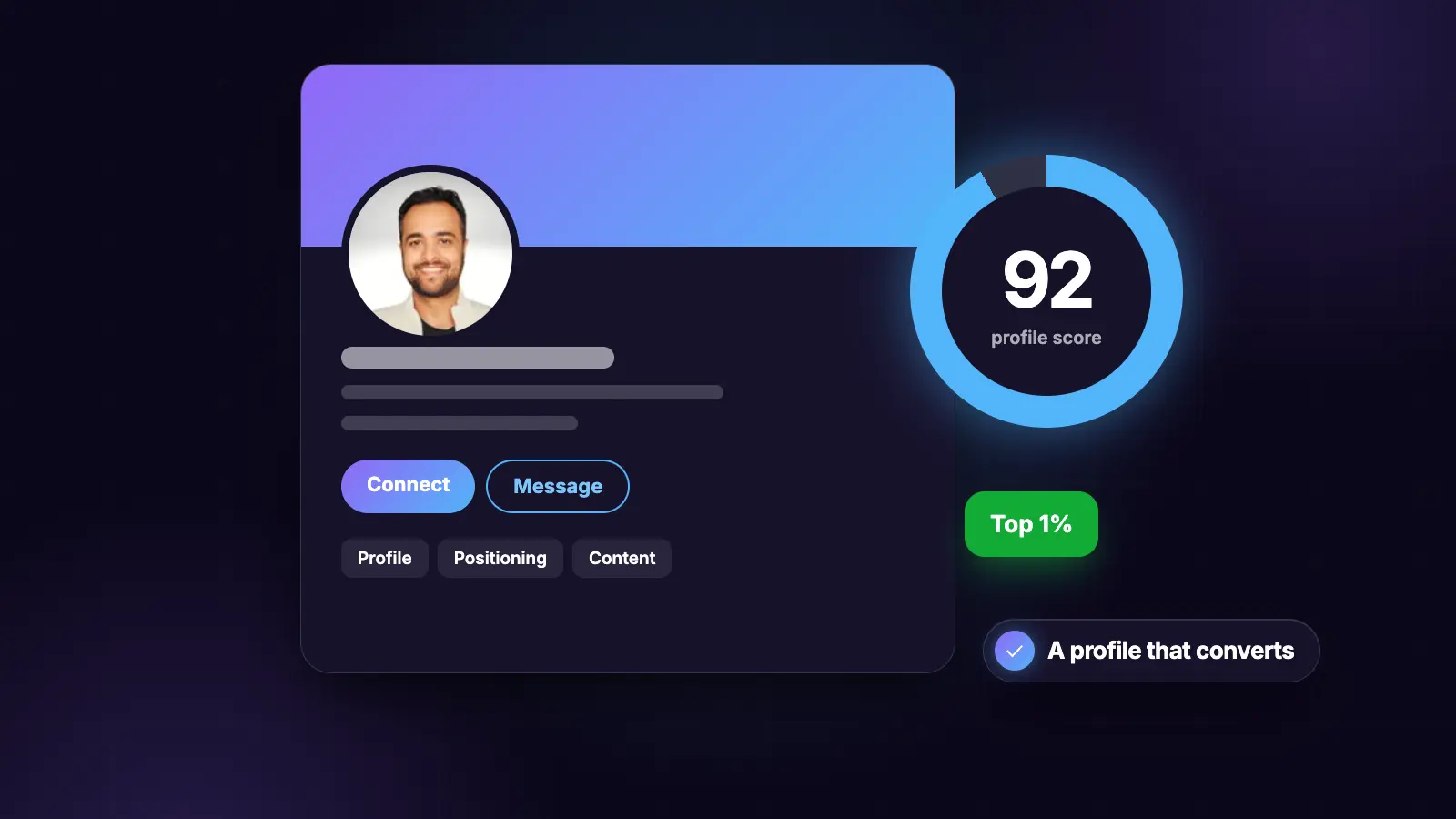
A profile visit is not the end goal. It is the midpoint of a funnel that starts with a piece of content and ends with a booked call. Most profile advice stops at "make your headline better" without ever connecting that headline change to what actually happens next: does the visitor follow, click the featured link, or send a DM? This playbook treats every profile element as a conversion step with a specific next action attached, not a static description of who you are.

Section 2

Module 1: The Profile as a Landing Page

The framing from the LinkedIn Growth Playbook applies directly here: content is the ad, your profile is the landing page it points at.

The 10-second gut check

The moment a comment or post works, a stranger clicks through to your profile and makes one fast decision: do I understand what this person does, and is it for me? If the answer isn't obvious within about 10 seconds, they leave, often permanently. Every element on the profile either earns another few seconds of attention or loses the visitor entirely.

The exact scan order

The photo (approachable, zoomed to the face), the banner sitting right next to it, the headline, and only then, if the headline convinced them, the About section. The first lines of the About section function as a hook in their own right, earning the read of everything below them. Anything below the fold competes with a visitor who has already half-decided to leave.

A real result from fixing two things

An SEO consultant with an existing 20,000-follower audience changed exactly two things: the headline and the About section. Same posts, same frequency, same topics as before. Reach increased 226%, engagement increased 327%, and a lead arrived the same day. The single variable that changed was the landing page the existing ads (the posts) were pointing at. This is the entire argument for treating the profile as infrastructure, not decoration.

Featured section: LinkedIn owns your followers, not your booking calendar

The featured section should never be your best-performing post shown off purely for vanity metrics. It should point somewhere you actually own: a lead magnet, a newsletter, a booking link. LinkedIn owns your followers. It does not own your email list or your booking calendar, which is exactly why every profile element should be pushing traffic toward something you control.

Section 3

Module 2: The Full Conversion Audit

The unflinching audit from the linkedin-authority-builder skill, applied section by section.

The full audit checklist

Go through the profile and flag every instance of:

  1. Claims with no evidence: any sentence that asserts skill or achievement without a number, name, or checkable fact attached.
  2. The invisible reader: an About section written about the person rather than to the person reading it. Check for third-person distance and a lack of any direct address.
  3. The dead end: no clear next action anywhere on the profile. A reader who is convinced has nowhere obvious to go.
  4. The pile-up: a skills section or experience list so long and undifferentiated that nothing in it stands out.
  5. The stale signal: no recent activity, an outdated photo, or a banner that does not match the level of seniority being claimed.
  6. The keyword gap: no language in the headline or first two lines of the About section that would actually surface in a relevant search.
  7. The broken trail: any linked resource (portfolio, case study, personal site) that does not actually work or lead anywhere useful.

Report findings plainly. Do not soften a real gap into a minor suggestion. The value of this audit is in naming what is actually weak, not in being agreeable.

Full skill: profile-audit

mkdir -p .claude/skills/profile-audit

---
name: profile-audit
description: >
  When auditing an existing LinkedIn profile before a rewrite, load this skill.
---

Audit this profile against: headline structure, About section
(problem-solution-proof-CTA), Featured section relevance, Experience
bullet quality, skills list focus, and the 7 audit categories: claims
with no evidence, the invisible reader, the dead end, the pile-up, the
stale signal, the keyword gap, the broken trail.

Rank issues by priority: which single fix would most change whether a
visitor follows or clicks through.

Rules: never soften a real gap into a minor suggestion. If a section
genuinely works, say so plainly rather than manufacturing a critique.
Section 4

Module 3: Rewriting Every Section for Pipeline

The rewrite formulas from linkedin-authority-builder and the LinkedIn Growth Playbook's profile checklist, combined into one working set.

Headline

Structure: who you help + the specific outcome you deliver + one credibility marker or keyword. Avoid a bare job title. A job title tells a reader where someone works. It does not tell them why that matters to the reader specifically. This travels with every post and comment you make, so it is working for you even in threads you are not personally active in.

About section

Four-part structure: open with the specific problem the reader has, in language they would actually use, not marketing language. State plainly what you do about that problem. Back it with one real, specific proof point. Close with one clear, low-friction next step. Write in first person, directly to the reader. Cut anything that could be said by literally anyone in the same field with the names swapped out.

Experience

Rewrite every bullet using: what was done, plus the specific context or scale, plus the measurable result. Weak: "Responsible for marketing campaigns." Stronger: "Built and ran the campaign that took monthly signups from X to Y in a specific timeframe." Adapt the emphasis by role type: builder roles emphasise what got shipped and at what scale, leadership roles emphasise the decision made and its outcome, teaching or advisory roles emphasise the specific transformation delivered.

Skills section

Remove any skill so generic it applies to nearly everyone in the field. Group related, fragmented skills into a smaller number of stronger, named clusters that map to the core identity. Land on a final list short enough that every item on it is actually doing work, rather than a long list where nothing stands out.

Full skill: headline-and-about-rewriter

mkdir -p .claude/skills/headline-and-about-rewriter

---
name: headline-and-about-rewriter
description: >
  When rewriting a LinkedIn headline or About section based on audit
  findings, load this skill.
---

Input: current headline and About section, ICP, and any real proof
points available.

Headline: 3 options following who-you-help + outcome + credibility marker.
About: full rewrite following hook, problem, proof, CTA. First person,
direct address, primary keywords in the first 2 lines.

Rules: never invent a number or proof point the user did not provide.
Cut anything that could be said by anyone in the same field.
Section 6

Module 5: From Profile Visit to Booked Call, Where Prosp Fits

A great profile drives traffic. What happens after that traffic arrives is a separate system, and this is where Prosp does the heaviest lifting in this playbook.

Reply speed and the warm-signal follow-up

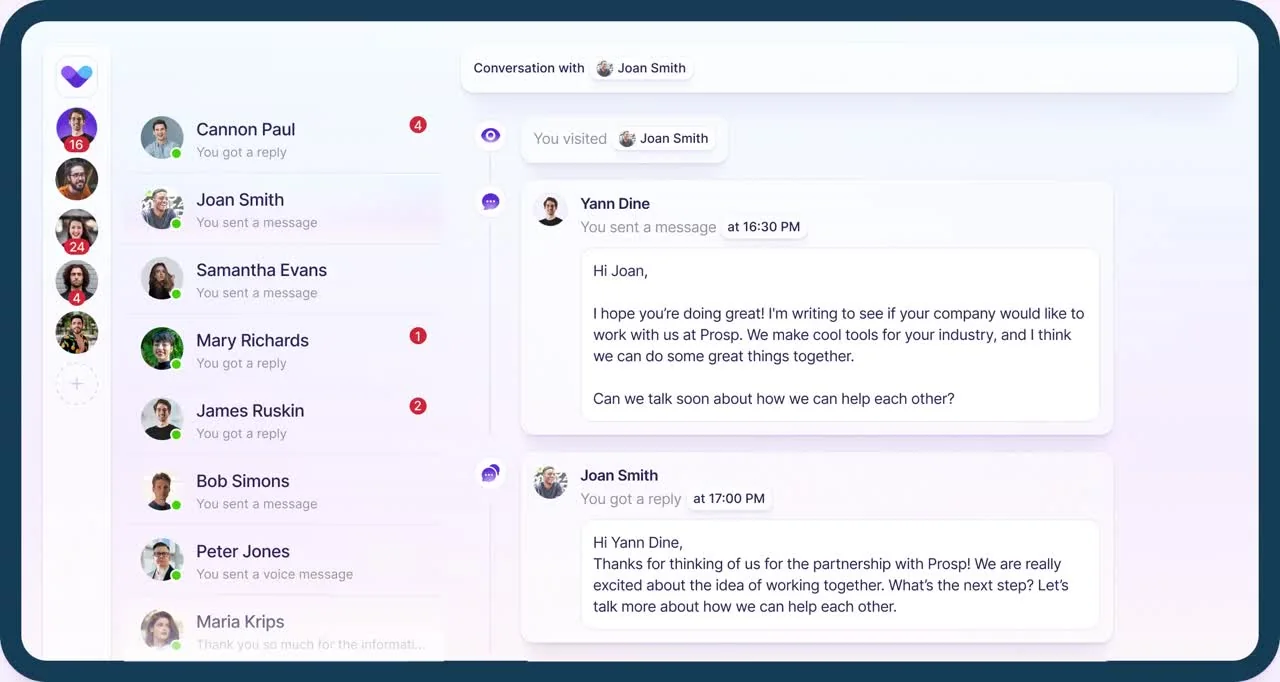
A DM took weeks of comments, profile clicks, and consistent posting to generate, and trust built that slowly cools quickly if a reply is delayed. Same-day, ideally within-hours reply protects the return on that entire upstream journey.

The same logic applies before a DM ever arrives. By the point someone has been commenting for weeks, saving posts, or repeatedly viewing a profile from within the exact ICP, that is a warm signal worth acting on directly rather than waiting passively. A message as simple as noticing someone consistently in the comments and asking what they are working on opens more doors than a colder, more polished outbound sequence, precisely because the relationship already exists in some form.

Where Prosp fits across this entire journey

The comment-list system, the warm-signal detection at the close of the profile-to-DM journey, and the operational discipline of following up on every genuine profile visit and comment all describe the same underlying need once volume grows past what a single person can track manually in Sales Navigator lists and memory: a system that knows who has been engaged with, what stage each relationship is at, and what the next message should say.

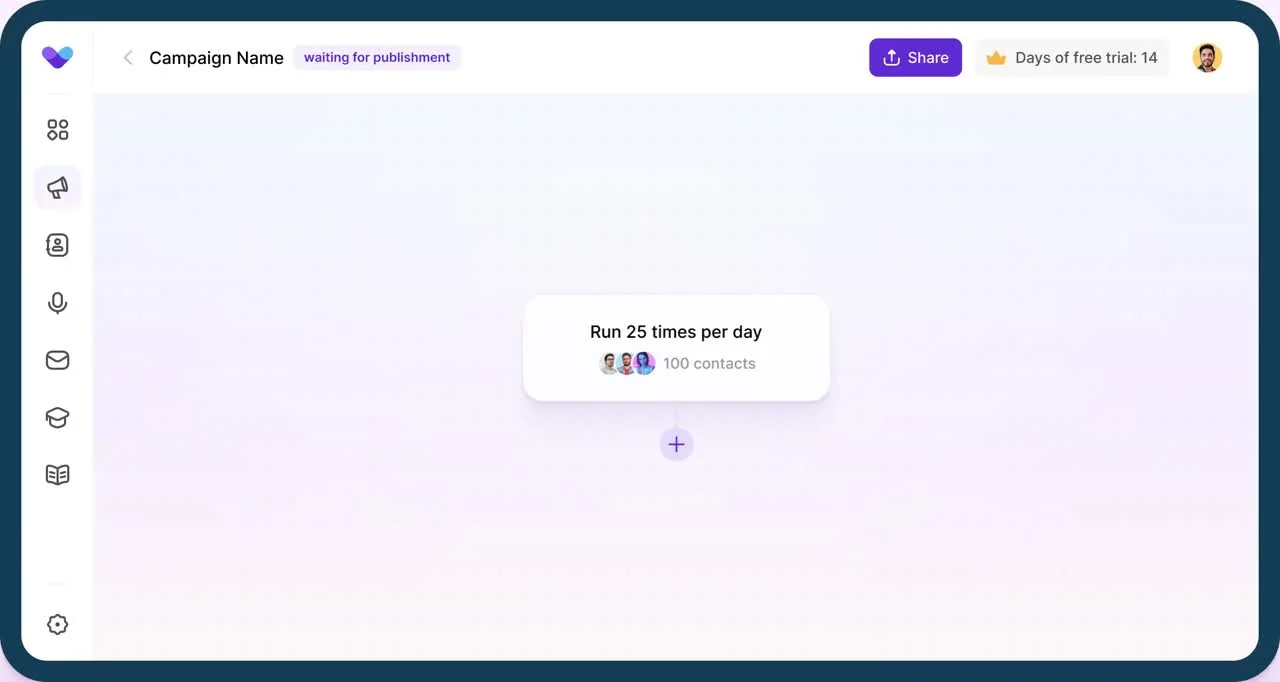
This is the layer Prosp is built for in this playbook's existing GTM system: it manages the sequencing and structured follow-up once a prospect has gone warm, whether that warmth came from a comment, a profile view, or a DM reply that went quiet. A founder or GTM engineer running the full journey in this playbook manually through Sales Navigator lead lists can reach the same operational discipline described elsewhere in this workspace, but Prosp is the tool that removes the ceiling on how many warm relationships can be tracked and followed up on at once without anything falling through.

The specific handoff point: Claude (or the creator themself) does the judgement-heavy work covered across the modules above, deciding whether a profile rewrite is genuinely working, what a Featured section item should say, and what a specific, personalised DM should reference when someone converts. Prosp picks up once that first touch has happened, managing the structured, multi-touch sequencing (the DM-sent, responded, meetings-scheduled, nurture, and closed-lost stages from a standard Sales Navigator workflow) so that volume does not mean any individual relationship gets dropped.

The conversion flow in full

Step 1: Content gets seen. Someone reads it and feels understood.

Step 2: They click your profile. The profile confirms the trust the content started building.

Step 3: They see the lead magnet in your featured section. They want it.

Step 4: They comment or DM to get it. You capture their email.

Step 5: They are on your email list, or in Prosp's pipeline if the relationship stays LinkedIn-native. You own that relationship either way.

Step 6: You (or Prosp, on your behalf) send value consistently until they are ready to buy.

Step 7: When you have an offer, you run a timed, sequenced campaign. The list, or the Prosp pipeline, converts.

The money is not in the post. It is in the follow-up. LinkedIn is the top of funnel. What happens after the profile visit, run manually or through Prosp once volume demands it, is where the revenue lives.

Section 7

Quick Reference: The Full Build Order

The full audit-to-rewrite-to-conversion sequence in one place.

The build order

Step 1: run profile-audit against the current profile. Get the honest list of what is actually weak.

Step 2: run headline-and-about-rewriter against the top-priority findings from the audit.

Step 3: rebuild the Featured section around one real lead magnet, removing anything that is there purely for vanity.

Step 4: rewrite the top 3-5 Experience bullets using the action-plus-result formula, prioritising the roles most relevant to the current ICP.

Step 5: measure. Track profile views, follower growth, and DM volume for 30 days after the rewrite, the same way the 226%/327% real-world result was measured.

Step 6: once DM and comment volume exceeds what you can track manually, move the follow-up layer into Prosp so no warm relationship goes cold from sheer volume.

10 pilot places left · closes in

Run a free pilot on your own list

We source the list, write the messages in your cloned voice and send 200 of them. You approve every draft and keep every reply.

5/5 rated on Capterra·800+ agencies and sales teams·Set up in 5 minutes
10 free pilot places left this monthTry Prosp Free