


1:1 with a GTM engineerBuild any workflow in this course with an engineer · 8 sessions left · closes in Book your session

LinkedIn Growth Playbook: The Client Journey from Stranger to DM

Sources: two 2026 LinkedIn strategy breakdowns, one on the full client journey from stranger to DM, one a year-long personal case study of sending 25 LinkedIn DMs a day. Prosp is…

Try Prosp Free45 minutes, on your own data · 8 sessions left
5/5 rated on Capterra·Used by 800+ agencies and sales teams
Playbook11 sections
Section 1

Overview: The Journey, Not a List of Tactics

Sources: two 2026 LinkedIn strategy breakdowns, one on the full client journey from stranger to DM, one a year-long personal case study of sending 25 LinkedIn DMs a day. Prosp is referenced throughout wherever the source material's own logic points to a sequencing or outreach-management need.

Most LinkedIn advice is a list of tactics. This playbook follows one thing instead: the actual path a future client takes from never having heard of you to sending you a DM, in the order it happens. Every mechanic below sits at a specific point on that path.

8 stages, plus the DM conversion layer once someone actually reaches out:

  1. Why your next client meets you in a comment section, not your own posts
  2. The Authority Paradox: why expertise and attention are different currencies
  3. Building a 20 to 30 creator list whose audience is full of your buyers
  4. Why your profile is the landing page your content points at
  5. What LinkedIn's 2026 feed rebuild changed and why it favours smaller accounts
  6. Total Addressable Content: the five formats that borrow reach you have not earned yet
  7. The 50-word algorithm audition every post has to pass
  8. The four-bucket content funnel that turns readers into pipeline
  9. The DM layer: a year-long 25-DMs-a-day case study distilled into 10 rules

The core idea holding the whole playbook together

Posting something valuable does not equal getting attention. Those are two separate skills. A genuine subject matter expert with real results can post the sharpest insight in their field and get single-digit engagement, while someone with an inch of knowledge and a good grasp of format and distribution outperforms them by a wide margin. The goal of this playbook is combining the two: real depth, paired with a distribution system, which is what actually earns attention rather than deserving it.

Section 2

Stage 1: Why Your Next Client Meets You in a Comment Section First

The first time a future client sees your name is almost never on your own post. When you are starting out, your own posts reach almost nobody. It is far more likely to happen in the comment section of someone your ICP already follows.

Why the reciprocity effect makes this work

A genuinely useful comment on someone else's post is not engagement farming. It works because of a well-documented behavioural pattern: when someone gives you something of value, there is a quiet, almost involuntary pull to reciprocate. A comment that adds real value gets noticed by the original poster and their audience, who then check out the commenter's profile.

A good comment does one of three things: it adds a genuinely useful angle or experience the original post did not cover, it disagrees with real nuance rather than reflexive contrarianism, or it tells a short, relevant story. What a good comment never does is restate the post back in different words, which is the exact failure mode of most AI-generated comments, and one the platform has started actively working against.

The list-building mechanic

Build two lists. First, 20 to 30 creators whose audience already matches your ICP. Second, 20 to 30 real prospects you have started noticing active in the comments of those creators' posts. Every day before posting anything yourself, spend roughly 30 minutes commenting on their content.

Every comment you leave carries your headline with it. That headline is doing work in rooms you are not personally in, which is exactly why the profile itself (covered next) has to be right before you start this at all.

Section 3

Stage 2: The Authority Paradox

Expertise and attention are two different currencies. You can be genuinely rich in one and completely broke in the other, and LinkedIn rewards only the second one until you learn to generate it deliberately.

The three types of people on LinkedIn

The subject matter expert: deep, real knowledge and results, but close to nobody knows they exist.

The creator: understands hooks, formats, and the whole distribution game, but the underlying knowledge is often shallow.

The thought leader: the combination of both. Same depth as the expert, same reach as the creator. This is the position the whole playbook is built to move you toward.

The more someone genuinely knows, the more they tend to assume people will simply notice and care, and on a platform where attention is a separate skill from expertise, that assumption is exactly what keeps real experts invisible.

Section 4

Stage 3: Your Profile Is the Landing Page

The moment a comment works, the stranger clicks through to your profile and makes one fast gut check: do I understand what this person does, and is it for me? If the answer is not obvious within about 10 seconds, they leave, often permanently.

Content is the ad, profile is the landing page

The exact order someone scans a profile: the photo (approachable, zoomed to the face), the banner sitting right next to it, the headline, and only then, if the headline convinced them, the About section. The first lines of the About section function as a hook in their own right, earning the read of everything below them.

The featured section should never be your best-performing post shown off purely for vanity metrics. It should point somewhere you actually own: a lead magnet, a newsletter, a booking link. LinkedIn owns your followers. It does not own your email list or your booking calendar, which is exactly why every profile element should be pushing traffic toward something you control.

A real result from fixing two things

An SEO consultant with an existing 20,000-follower audience changed exactly two things: the headline and the About section. Same posts, same frequency, same topics as before. Reach increased 226%, engagement increased 327%, and a lead arrived the same day. The single variable that changed was the landing page the existing ads (the posts) were pointing at.

The profile element checklist

Headline: the specific problem you solve and who you solve it for, in the exact language your buyers actually use and search. This travels with every post and comment, so it is working for you even in threads you are not personally active in.

About section structure: problem, solution, proof, CTA. Show the pain, position yourself as the fix, back it with a real number, then tell the reader exactly what to do next.

Featured section and custom button: move visitors one step into a world you own, never a vanity metric screenshot.

Fix this before publishing anything else. A post with a broken profile behind it is an ad pointing at a page that will not convert regardless of how good the post is.

Section 5

Stage 4: What LinkedIn's March 2026 Feed Rebuild Changed

LinkedIn went public in March 2026 about a rebuild of how its feed actually works, described directly by the platform's own VP of Engineering. Two details from that announcement change how content should be built starting now.

What actually changed

LinkedIn replaced a set of separate ranking systems with one unified model that understands what a piece of content is actually about and who would genuinely want to see it, and can now surface it to people who do not already follow the author.

First change: the system stopped weighing raw engagement counts and now converts performance into percentiles instead (this post is in the 71st percentile of views for its category). That single shift reportedly made matching roughly 30 times more accurate. Genuine engagement quality moves a post up a percentile; artificial engagement pods do not.

Second, and more actionable: LinkedIn's own testing showed the rebuild produces a lift specifically for accounts with fewer connections. The system is structurally tilted in favour of smaller accounts right now, which removes the common excuse of waiting to "get bigger" before taking the platform seriously.

Section 6

Stage 5: Total Addressable Content and the Five Borrowed-Reach Formats

The same way a business has a total addressable market, content has a total addressable audience: whatever that audience is already watching, reading, and reacting to right now. Five formats let you put your expertise inside a conversation that already has momentum, rather than starting from zero attention.

The five formats

Brand-jacking: use a brand that already carries more credibility than your name does as the frame for your own insight. Breaking down a major AI lab's announcement borrows their reach; your analysis carries the actual value.

Newsjacking: when something breaks in your industry, be among the first credible voices explaining what it actually means for your specific readers, rather than simply summarising the news itself. This works in any niche, not only marketing or tech.

Meme-jacking (referencing a known figure): reference someone your audience already follows and add something genuinely additive to the conversation, ideally specific enough that the person themselves might notice or respond. The person referenced does not need millions of followers; they need to be someone your specific audience already recognises.

Hot takes: a genuinely held belief that contradicts what your industry accepts as true, stated plainly enough that readers have to pick a side. The comment section itself becomes the distribution mechanism as people argue both directions.

Trend-riding: the first four start from a brand, a story, a person, or a belief. This one starts from a format. When a specific post structure starts spreading across the platform, pour your own substance into that shape while it is still climbing, since the format itself is what is currently getting distribution. The window is short: once a format saturates, it stops working entirely.

Section 7

Stage 6: The 50-Word Algorithm Audition

Once a post reaches the feed, it has a few seconds to pass two audiences at once: the human deciding whether to tap See More, and the algorithm's own retrieval system, which reads roughly the first 50 words before deciding whether the post even enters the candidate pool at all.

Write the hook last, not first

Trying to write the hook before the rest of the post exists is like cutting a trailer before the film has been shot. Write the full post first: the story, the numbers, the framework. Then read it back and find the single sharpest line already doing the heavy lifting inside it, and move that line to the top.

The hook is almost always already hiding somewhere inside a well-written post. If a full read-through turns up nothing worth pulling to the top, the actual problem was never the hook. It was the post itself, and the fix is to rewrite the post, not to keep fiddling with opening lines.

Section 8

Stage 7: The Four-Bucket Content Funnel

One post converts nobody. What happens across the following weeks, as a stranger sees a handful of different posts, is where a content system either compounds or collapses.

The four buckets

40% Growth: brings in new attention. Formats built for reach, often using the five borrowed-reach mechanics from Stage 5.

30% Authority: a framework, a client result, a genuine demonstration of expertise. Builds the belief that you actually know what you are talking about.

20% Conversion: shows the reader the door at the moment they are actually ready to walk through it.

10% Personal: makes you memorable as a human being rather than someone perpetually trying to sell something.

The common failure pattern in each direction: a genuine expert posting 100% authority content to an audience that does not know them yet is handing out business cards in an empty room. A creator posting 100% growth content builds an audience that never converts, because nothing in the mix ever demonstrates real capability or asks for anything.

The thread running through all four buckets

A genuine point of view, something you actually believe that contradicts what your industry keeps repeating, is the one thing running underneath every bucket that a competitor cannot copy and that generic AI-generated content cannot produce, because it is not a fact, it is a stance built from real experience.

Section 9

Stage 8: The DM Layer, 10 Rules from a Year of 25 DMs a Day

Source: a year-long, day-by-day personal case study, roughly 25 LinkedIn DMs sent every weekday, over 100 booked meetings, and a consistent 20 to 30% reply rate distilled into 10 repeatable rules.

Why LinkedIn DMs outperform cold email and cold calling right now

Cold email deliverability has degraded to the point that a large majority of cold emails either land in spam or never get opened at all. Cold calling requires hours of dialling to book enough meetings given how low pickup rates have fallen. LinkedIn has neither problem in the same way once a connection is accepted: no spam filter applies to DMs between connections, and it reaches buyers on a platform they already spend real time on.

The 10 rules, condensed

  1. Skip InMail. Paid messaging credits read as sales spam in a LinkedIn inbox at this point; a connection request earns the right to send a genuine DM instead.
  2. Voice notes build rapport faster than text, used strategically: as a follow-up to non-responders, to re-engage cold leads, or as a first message to high-propensity prospects who are visibly active.
  3. Video DMs are the strongest trust-builder available precisely because almost nobody else is using them, reserved for high-priority non-responders, warm leads that went dark, and event or referral re-engagement.
  4. Sales Navigator functions as a lightweight social-selling CRM: separate lead lists for cold, DM-sent, responded, meetings-scheduled, nurture, and closed-lost, which is what makes 25 personalised DMs a day achievable in under an hour.
  5. Give value before pitching. A DM built around observation, implication, a free value offer, then a low-friction ask consistently outperforms a DM that opens with what you sell.
  6. Be specific. A generic compliment is recognisable as generic and actively signals you did not do the homework; referencing an exact recent post, hire, or company update signals the opposite.
  7. Ask exactly one question per message, ideally binary, clarifying, or permission-based, never open-ended, multiple choice, or compound. Every additional question in the same message measurably reduces reply rate.
  8. Make the message about them, not you. A simple test: count uses of I, we, our, my against uses of you and your. If the first count is higher, rewrite before sending.
  9. Mirror the prospect's own communication style and pace, fast and casual for fast casual responders, slower and more formal for slower formal responders, since mirroring builds trust at a subconscious level.
  10. Always end with a clear, specific next step (a deliverable, a deadline, a proposed time), never an open-ended "let's stay in touch," and offer two specific time options rather than a calendar link once a conversation is ready to book.

The three principles behind the gap between a 5% and a 25% reply rate

Relevance: the message has to be genuinely about their challenges and goals, not a description of your service.

Specificity: a real, referenced detail from their actual activity is the clearest available proof that a message was not sent to 10,000 other people.

A system: 25 DMs a day is 125 a week and roughly 6,000 across a year. Most people send twenty good messages, see no immediate result, and stop. Consistency compounds; intensity without consistency does not.

Section 10

The Conversion Layer: The 24-Hour Window and Where Prosp Fits

Once someone actually sends a DM, or once your own outreach identifies a warm signal, the next 24 hours decide whether that interaction becomes revenue or a dead thread. This is the stage where a dedicated outreach and sequencing layer earns its place in the stack.

Reply speed and the warm-signal follow-up

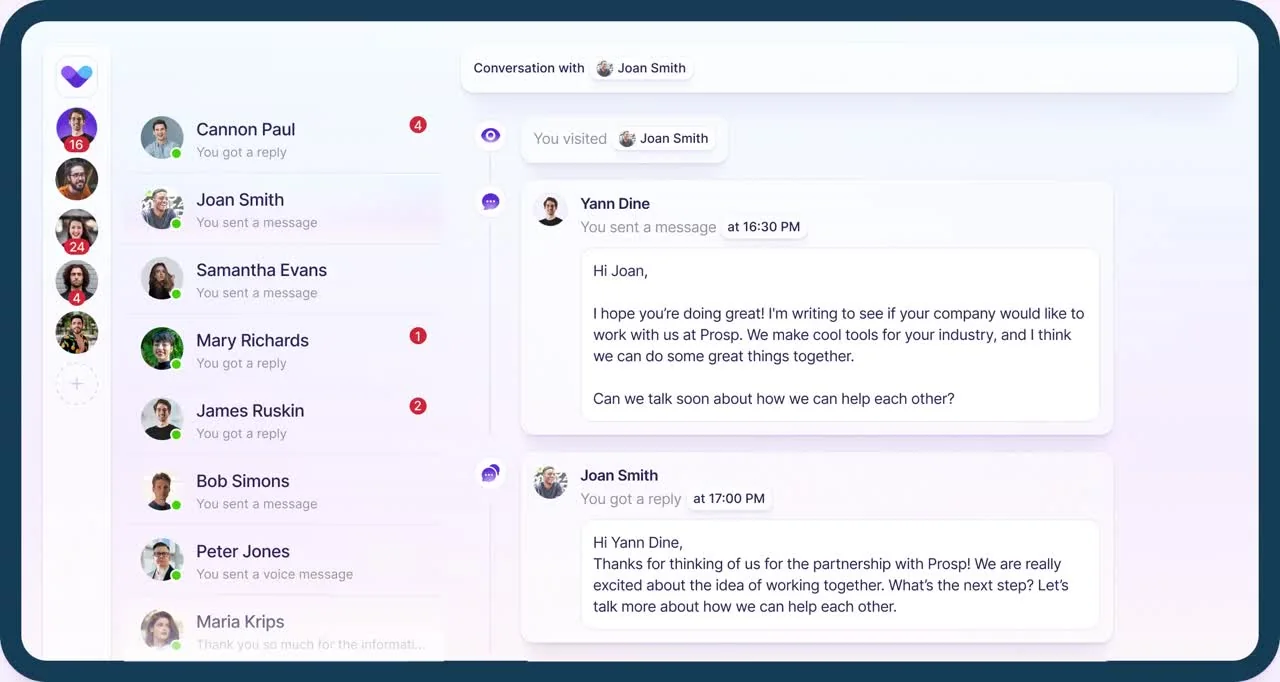
A DM took weeks of comments, profile clicks, and consistent posting to generate, and trust built that slowly cools quickly if a reply is delayed. Same-day, ideally within-hours reply protects the return on that entire upstream journey.

The same logic applies before a DM ever arrives. By the point someone has been commenting for weeks, saving posts, or repeatedly viewing a profile from within the exact ICP, that is a warm signal worth acting on directly rather than waiting passively. A message as simple as noticing someone consistently in the comments and asking what they are working on opens more doors than a colder, more polished outbound sequence, precisely because the relationship already exists in some form.

Where Prosp fits across this entire journey

The comment-list system in Stage 1, the warm-signal detection at the close of the DM layer, and the 25-DMs-a-day operational discipline in Stage 8 all describe the same underlying need once volume grows past what a single person can track manually in Sales Navigator lists and memory: a system that knows who has been engaged with, what stage each relationship is at, and what the next message should say.

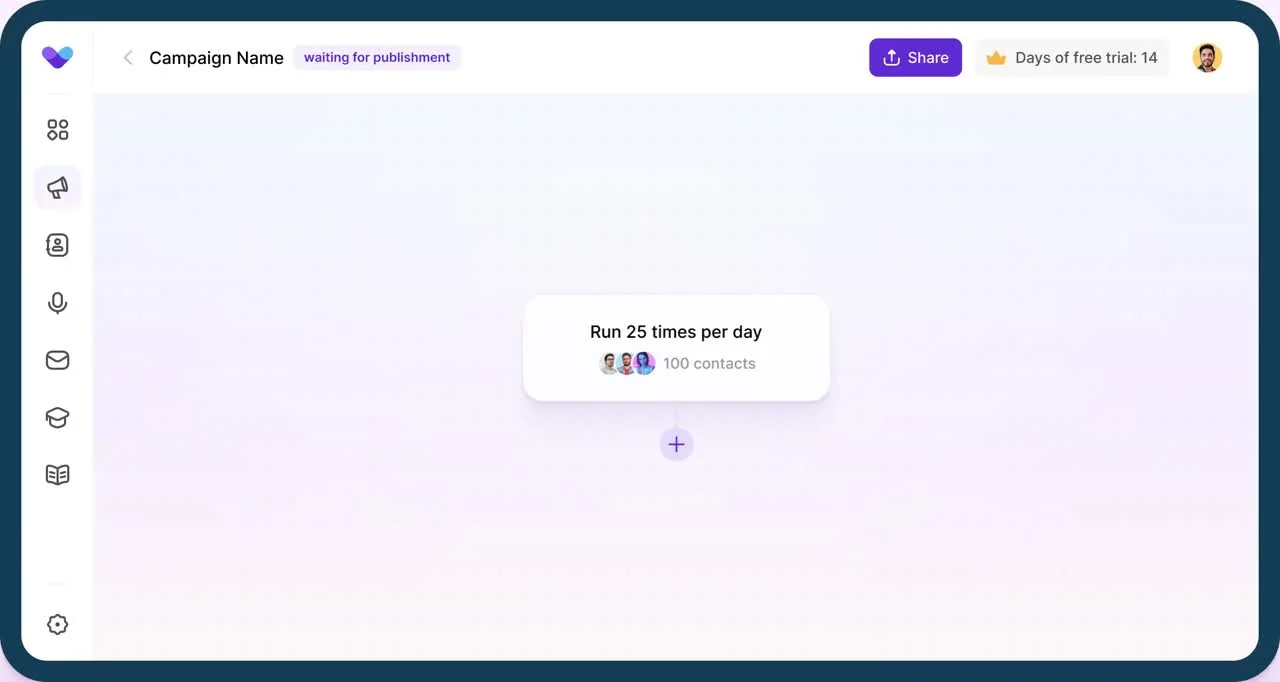
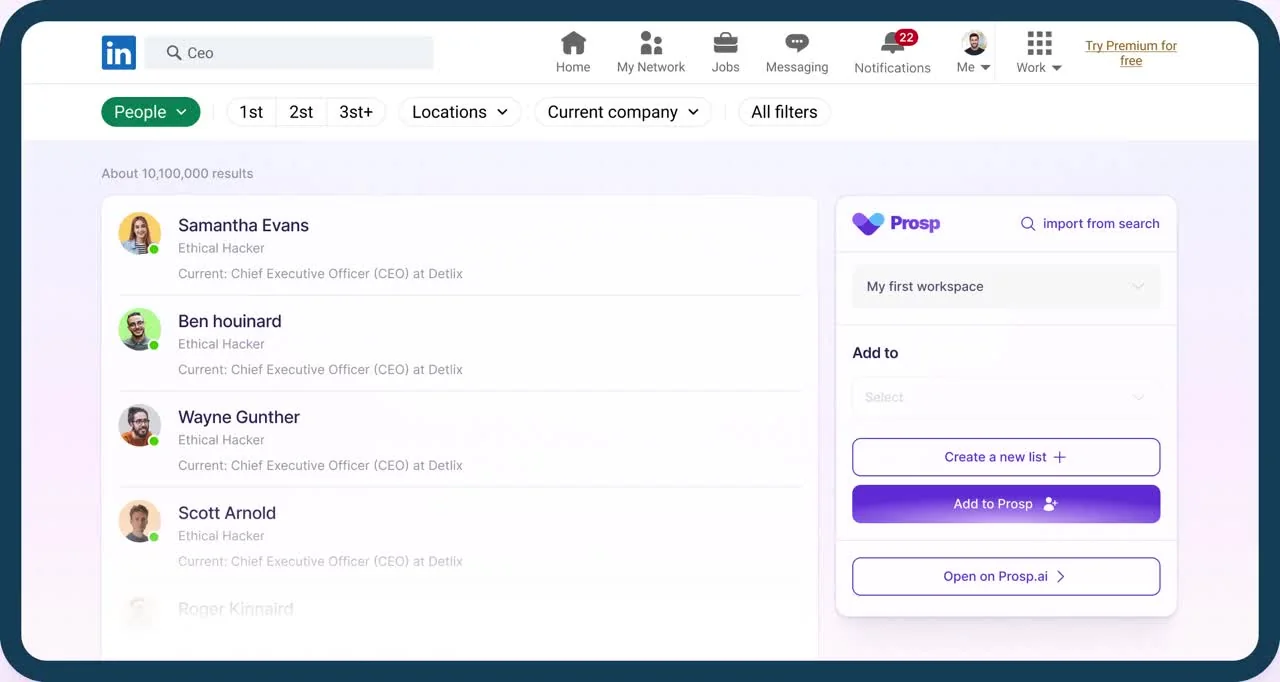
This is the layer Prosp is built for in this playbook's existing GTM system: it manages the sequencing and structured follow-up once a prospect has gone warm, whether that warmth came from a comment, a profile view, or a DM reply that went quiet. A founder or GTM engineer running the full journey in this playbook manually through Sales Navigator lead lists can reach the same operational discipline described in the 25-DMs-a-day case study, but Prosp is the tool that removes the ceiling on how many warm relationships can be tracked and followed up on at once without anything falling through.

The specific handoff point: Claude (or the creator themself) does the judgement-heavy work covered across Stages 1 through 8, deciding who is worth commenting on, what a genuinely valuable comment says, and what a specific, personalised DM should reference. Prosp picks up once that first touch has happened, managing the structured, multi-touch sequencing (the DM-sent, responded, meetings-scheduled, nurture, and closed-lost stages from the Sales Navigator workflow in Stage 8) so that volume does not mean any individual relationship gets dropped.

Section 11

Quick Reference: The Full Journey, Stage by Stage

The full journey condensed into one operating sequence.

The build order

Week 1: fix the profile (headline, About section structure, featured section pointing somewhere you own) before publishing anything else. Build the two lists: 20 to 30 creators whose audience matches your ICP, and 20 to 30 real prospects active in their comments.

Week 2: run the 30-minute daily comment routine before posting. Start writing posts with the full body first, hook pulled from inside it last. Pick one of the five Total Addressable Content formats to test.

Week 3: build a two-week content calendar following the 40/30/20/10 bucket split. Track which posts pass the 50-word algorithm audition (measured by whether they clear a reasonable view threshold in the first hour) versus which stall immediately.

Week 4: begin the outbound layer. Set up Sales Navigator lead lists matching the stages in the DM case study (cold, DM sent, responded, meetings scheduled, nurture, closed lost). Apply the 10 DM rules to a small daily volume before scaling to 25 a day.

Ongoing: reply to inbound DMs same day. Act on warm signals (repeat commenters, profile viewers) proactively rather than waiting. Once volume across comments, posts, and DMs exceeds what manual tracking supports, move the sequencing and follow-up layer into Prosp so nothing goes cold from sheer volume.

8 sessions left · booking closes in

Build it live with a GTM engineer

45 minutes, screen shared, on your own list. You leave with a working campaign or agent, not a set of notes.

5/5 rated on Capterra·800+ agencies and sales teams·Set up in 5 minutes
8 GTM engineer sessions left this monthTry Prosp Free