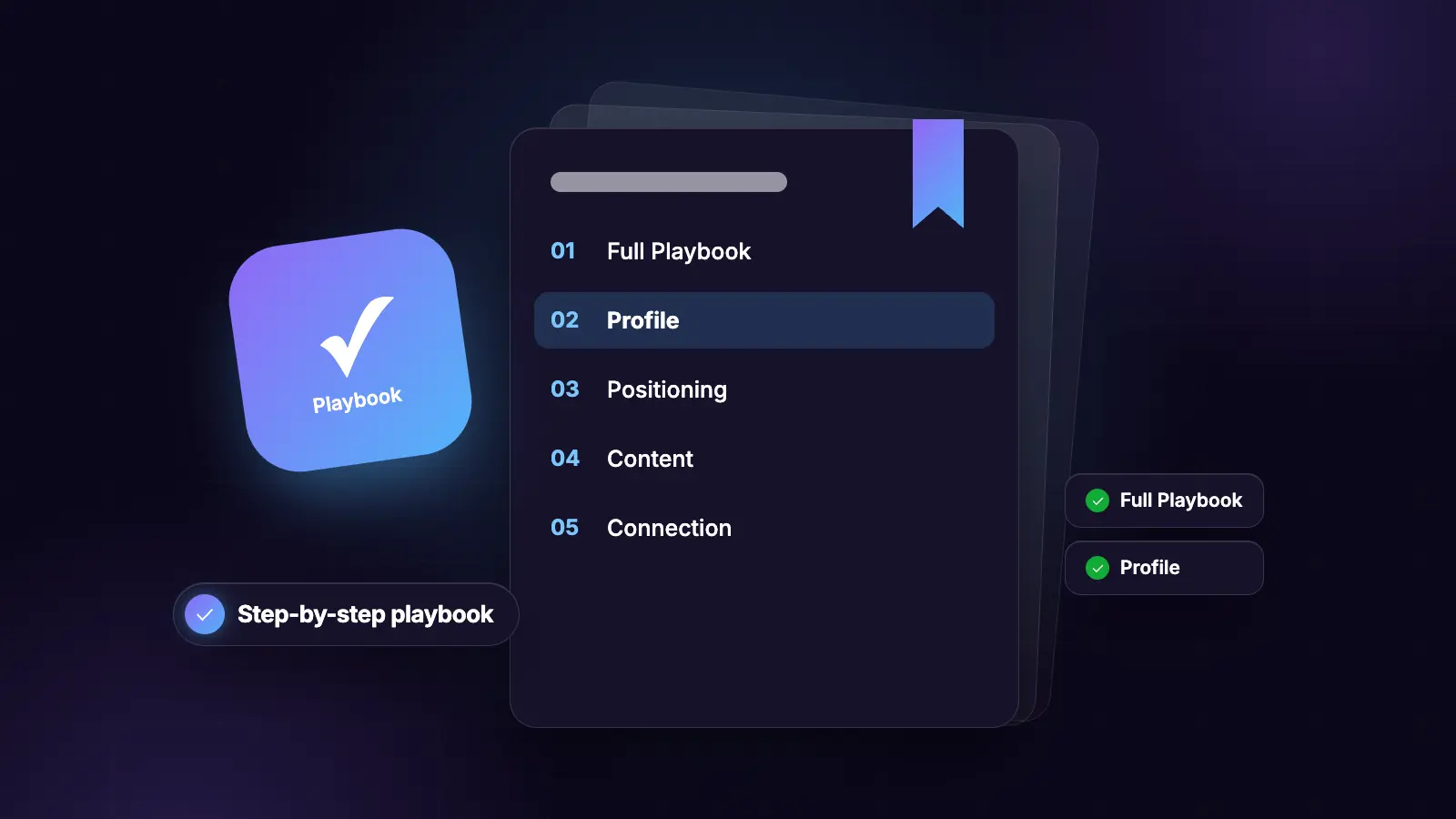



60+ copy-paste prompts for marketing, SaaS, and B2B. Organised into 6 categories. Every prompt is ready to use - just swap in your details and run.
Section 1The AI Prompt Vault: 60+ Copy-Paste Prompts for Marketing, SaaS, and B2B
Section 2Positioning, Messaging, and Market Research
Everything in this section helps you find out what your market actually thinks, what words they use, and where your messaging is broken before you spend a pound on distribution.
Homepage copy audit
When to use
The prompt
Voice of customer mining
When to use
The prompt
Proprietary framework builder
When to use
The prompt
Brand voice bible
When to use
The prompt
Competitor ad deconstruction
When to use
The prompt
RITE prompt framework
When to use
The structure
Devil's advocate campaign review
When to use
The prompt
ICP research document
When to use
The prompt
Section 3Content, LinkedIn, and Social
Prompts for writing LinkedIn posts, repurposing content across formats, building carousels, and generating a week of content from a single source.
LinkedIn post framework
The prompt
Content repurposing - 4 formats from one article
When to use
The 4 prompts
LinkedIn engagement machine - full 4-prompt chain
How to use
Prompt 1: Ideation engine
Prompt 2: Writing system
Prompt 3: Polish filter
Prompt 4: Lead magnet builder
Transcript to content angles
The prompt
LinkedIn carousel from any content (Gemini + Gamma)
Step 1 - Extract angles
Step 2 - Generate carousel outline
Deep research for content strategy
The prompt
Section 4Email, Ads, and PR
Prompts for email marketing, paid advertising, and PR data studies.
Email imperfections - make AI emails feel human
When to use
The prompt
Subject line battle test
The prompt
5-angle ad brief
When to use
The prompt
PR data study - 8-step prompt chain
What this builds
Step 1: Find your question
Step 2: Choose your data source
Step 4: Analyse with AI
Step 5: Verify findings
Step 6: Write the findings report
Step 7: Build the press pack
Step 8: Public page
Section 5Live Business Dashboards (7 Artifacts)
Seven self-refreshing dashboards for Claude Cowork, each pulling live data from your tools so you stop tab-hopping every morning. Build each one by pasting the prompt into a Cowork session with the relevant connectors active.
1. Competitor move tracker
Connectors needed
The prompt
2. Daily command centre
Connectors needed
The prompt
3. Daily financial position
Connectors needed
The prompt
4. SEO pulse
Connectors needed
The prompt
5. Support pulse
Connectors needed
The prompt
6. Sales pulse
Connectors needed
The prompt
7. YouTube morning brief
Connectors needed
The prompt
Section 6Sales, Prospecting, and Agency Workflows
Prompts for building client intelligence, running AI audits, scraping prospect data, and setting up Cowork-powered agency workflows.
Client intelligence brief
When to use
The prompt
AI audit questionnaire
When to use
The prompt
AI implementation roadmap
When to use
The prompt
Web scraping for lead lists
Setup needed
Local business scrape
Vibe prospecting - enrich with decision makers
Job description scrape for research
Research report from scraped data
Cowork use cases - 5 prompt templates
Hiring manager
SEO auditor
Customer intelligence builder
Content strategist
Group travel agent
Section 7AI Skills, Cowork Projects, and Tool Setup
Prompts for building Claude skills, setting up Cowork projects, migrating from ChatGPT, and building websites with AI.
Build a Claude skill from any prompt
When to use
The prompt
Decision council skill
What it does
The prompt to build it
Framework reverse engineer skill
What it does
The prompt to build it
Brand applicator skill
What it does
The prompt to build it
ChatGPT to Claude migration
When to use
The prompt
Build a professional website in 20 minutes - 4-prompt chain
How to use
Prompt 1: Business context
Prompt 2: Extract design inspiration
Prompt 3: Brand identity
Prompt 4: Generate Lovable spec
Section 8Annual Review and Goal Planning
Prompts for annual business and personal reviews, goal-setting, roadmap planning, and building an interactive tracking dashboard.
Annual review - full 4-prompt chain
How to use
Prompt 1: Reflect
Prompt 2: Extract patterns and blind spots
Prompt 3: Envision
Prompt 4: Roadmap and dashboard
AI Driven, Personalized Outreach on LinkedIn: Prosp 💜
Section 9Claude for RevOps: The Complete Cheatsheet
Section 10What Claude Can (and Can't) Do for Your GTM Team
Most GTM teams use Claude like a slightly smarter Google. This is the list of what it's actually capable of when used properly - and where it breaks down so you don't waste time expecting the wrong things.
What Claude can do for GTM teams
Pipeline and forecasting
Lead gen and outbound
Deal reviews and pipeline management
GTM strategy and planning
What Claude cannot do
Hard limits to know before you start
Section 11Which Claude Model and Mode for Which GTM Task
Not every Claude task needs the same setup. Using Opus for a quick email draft wastes your token budget. Using Chat for a complex multi-week pipeline project loses all your context. Here's how to match the right model and mode to the right GTM task.
Model: Sonnet vs Opus
Use Sonnet (claude-sonnet-4) for:
Use Opus (claude-opus-4) for:
Mode: Chat vs Projects vs Co-work vs API
Chat - for quick one-off tasks
Projects - for ongoing GTM workstreams
Co-work - for multi-step agentic execution
API - for automation and scale
Which mode for your role
Sales reps and AEs
GTM managers and directors
Founders and heads of GTM
Section 12How to Give Claude the Right Context About Your Sales Org
Claude is only as useful as the context you give it. If it doesn't know your ICP, your sales motion, your territory, or your fiscal calendar, it gives you generic output. Feed it the right context once - in a Project or as a preamble - and everything it produces becomes specific and usable.
The context Claude needs about your GTM org
Company and ICP
Segments and territories
Sales methodology
Fiscal calendar
Tech stack and tooling
Output audience
How to provide this context efficiently
The system prompt approach
Section 138 Prompt Templates for GTM and Pipeline Work
Copy, paste, adapt. Fill in the bracketed variables before sending. These are the highest-leverage GTM prompts - the ones that would otherwise take 30-60 minutes to do manually.
Pipeline report summary
When to use
The prompt
MEDDIC gap analysis
When to use
The prompt
Call transcript to opportunity update
When to use
The prompt
Pre-meeting brief
When to use
The prompt
Deal risk signals message
When to use
The prompt
QBR narrative builder
When to use
The prompt
Lead routing logic doc
When to use
The prompt
ICP scoring rubric
When to use
The prompt
Section 14Integrations, Output Formats, and When Not to Trust the Output
Claude is powerful but not infallible. Here's how to connect it to your GTM stack, how to format outputs for different audiences, and where it breaks down so you don't build workflows on shaky foundations.
Connecting Claude to your GTM stack
CRM (Salesforce or HubSpot)
Workflow automation (Zapier, n8n, Make)
GTM AI tools (Clay, Instantly, HeyReach)
Output format guide: match the format to the audience
Always tell Claude who's reading the output
Where Claude breaks down
What it will get wrong
When not to trust the output
How to verify before it ships
Section 15How to Make Viral LinkedIn Posts with Claude Code (Step by Step)
AI Driven, Personalized Outreach on LinkedIn: Prosp 💜
Section 16Step 1: Build Your profile.md File So Claude Writes in Your Voice
If you want Claude Code to write content that sounds like you, you have to tell it who you are. Not once in a prompt - permanently, in a file it reads every time. That file is your profile.md and it's the single most important setup step in this whole workflow.
What goes in your profile.md
Two sections
What Claude does with it
Keep it updated
It's a living document
Section 17Step 2: Build a hooks.md File for Stronger LinkedIn Openers
The hook is the first two sentences of your LinkedIn post. It determines whether anyone reads the rest. Claude Code pulls from a hooks.md file to decide how to open each post - which means the quality of your hooks file directly determines the quality of your posts.
What a hooks file is
A reference library of strong openers
What makes a strong hook for LinkedIn
Numbers and specifics outperform vague statements
What to avoid
Section 18Step 3: Run the Skill File to Generate, Review and Approve Your Posts
The skill file runs the whole process. You give it a topic or a script, it reads your profile and hooks files, generates three post options, and lets you review, edit, approve, or regenerate each one before anything gets published. You stay in control. Claude does the drafting.
Two ways to create a post
Option A: From a YouTube script or existing piece of writing
Option B: From a topic or idea
Reviewing the three drafts
You review every post before it's approved
What to look for when reviewing
The photo selection system
Name your photos as descriptions
Section 19Step 4: Auto-Publish and Schedule to LinkedIn with Playwright MCP
Once you've approved your posts, Claude Code can publish them directly to LinkedIn using Playwright MCP - a tool that controls your browser automatically. It navigates to LinkedIn, pastes the post, uploads the photo, and schedules it for your preferred time. You don't touch it.
How it works
Playwright MCP controls your browser
What you set in the skill file
Publish now or schedule for later
Your two options per post
If you'd rather post manually
It takes under a minute
What the full workflow looks like in practice
One hour, 3-4 quality posts
Section 20Claude Co-work Live Artifacts: Build Dashboards That Update Themselves
Section 21What Live Artifacts Are and How to Build One
A static artifact in Claude Co-work goes stale the moment it's generated. Every time you want fresh data - new emails, updated calendar, latest CRM entries - you have to tell Claude to pull everything again and regenerate the whole thing from scratch. That burns tokens every time.
Live artifacts fix this. They connect directly to your apps and update automatically without you asking Claude to refresh anything.
What a live artifact actually is
Plain English
What you can connect
How to build one
Requirements
Connect your apps first
Build the artifact
Token saving
Section 22Build a Daily Operating System Dashboard That Runs Without You
Instead of opening Gmail, then your calendar, then your CRM, then your project tool every morning - build one live artifact that pulls all of it into a single dashboard. Check one thing, know everything you need to know, and start working.
What to put in a daily operating system dashboard
Inbox triage
Calendar for the week
Top priorities
Ongoing conversations that need replies
The prompt to build it
What to say to Claude
Accessing it every day
Where it lives
AI Driven, Personalized Outreach on LinkedIn: Prosp 💜
Section 23LinkedIn B2B Outreach: The 40-Skill Claude Code Playbook
AI Driven, Personalized Outreach on LinkedIn: Prosp 💜
Section 24What This Plugin Does That 40 Standalone Skills Can't
40 outbound skills that share one brief file. Every session opens with your company, ICP, value props, personas, and competitors already loaded. You describe the business once. Every skill reads the same source. This is the gap between a skills library and a skills system.
Source: github.com/henriquecaner/next-level-outreach
The problem with standalone skills
You re-explain the business every session
What drifting artefacts cost you
What outreach-brief.md is
One file. All context. Updated once.
What it looks like in practice
How the SessionStart hook loads it automatically
You open Claude Code. The brief is already there.
The outreach-strategist agent
Your Head of Growth virtual. Coordinates skills into plans.
What changes when all 40 skills read the same brief
Consistency compounds fast
Section 25How to Run /nl-outreach:onboard in Under 60 Seconds
One command. Eight skills run in sequence. You describe the company. Claude Code builds the brief. From the next session on, it loads automatically. Total time: under 60 seconds of your attention.
Source: github.com/henriquecaner/next-level-outreach
Step 1: Install the plugin
Three paths. Pick the one that matches how you work.
Step 2: Run /nl-outreach:onboard
Type this. Answer the questions. Done.
The 8 skills the command runs in sequence
What each one does and what it writes to the brief
What to do when things change
The brief is a living document. Update it the same day.
Section 26How to Define Your ICP Down to Buying Signals
Most ICP definitions describe who to reach. This plugin defines when to reach them. The icp-definer skill builds ICPs around triggers, not demographics. The difference between "VP Sales at 50-200 person SaaS" and "VP Sales who posted two SDR roles in the last 30 days" is the gap between a list and a pipeline.
Source: github.com/henriquecaner/next-level-outreach
icp-definer: trigger-based ICP, not demographics
How to invoke it
What it outputs
What most ICP definitions get wrong
persona-definer: contact-level detail by seniority
Same ICP, different angle by seniority level
persona-insights-analysis: extract intelligence from call transcripts
Your best ICP data comes from calls, not desk research
trigger-finder: detect buying signals before you prospect
The signals that predict pipeline, not just presence
pain-identifier: from growth and hiring signals to specific pains
Pain is always tied to a signal. Find the signal, find the pain.
Section 27How to Build a List From ICP Filters Without Manual Research
company-finder translates your ICP definition into exact filter configurations for lemlist, Apollo, and Clay. You don't need to know where to click. You describe who you want. It tells you how to find them.
Source: github.com/henriquecaner/next-level-outreach
company-finder: ICP filters into platform config
How to invoke it
people-finder: contact-level filter to find the exact persona
Same platform, contact-level config
list-builder: pull and format the final prospect list
From filters to usable CSV
niche-data-finder: sources beyond the obvious platforms
Your ICP is in communities, not just databases
value-prop-lister and offer-definer: what you sell, in the buyer's language
Features don't sell. Outcomes do.
Section 28How to Write Cold Email Copy That Hits 8.5%+ Reply Rates
The copywriting-analyzer benchmarks your email against data from 244,000+ outbound campaigns before you send a single one. Eight copywriting skills cover every email type, seniority level, and scenario. Stop writing copy that sounds like outreach. Write copy that sounds like a person.
Source: github.com/henriquecaner/next-level-outreach
The copywriting framework this plugin uses
Every skill reads the brief. Every email sounds like it comes from someone who did the research.
copywriting-first-touch: the first cold email
Short. Signal-led. One ask.
copywriting-follow-up: touches 2 and 3
Each follow-up adds a new angle. Never bump the previous email.
copywriting-ic-sequence, copywriting-manager-sequence, copywriting-vp-sequence: tone by seniority
The same product, three different ways to talk about it
copywriting-refiner and copywriting-analyzer: score before you send
Never send copy that hasn't passed the refiner and the analyzer.
cta-designer: CTAs that start conversations, not request demos
The ask at the end of your email is the most underthought part
Section 29How to Run LinkedIn Outreach and Cold Calls From One Brief
Three skills. One brief. Three channels. linkedin-outbound-angle reads the prospect's profile and proposes the angle. linkedin-sequence writes the 2-DM follow-up. cold-call-script builds a 6-part call framework. Everything consistent because all three read outreach-brief.md before running.
Source: github.com/henriquecaner/next-level-outreach
linkedin-outbound-angle: profile to angle in one command
Read the profile. The skill tells you how to open.
What makes a LinkedIn angle different from a cold email angle
linkedin-sequence: the 2-DM follow-up after connection
Connected. Now what?
cold-call-script: 6-part framework from the brief
Nobody buys off a cold call. But the call opens the conversation that leads to the meeting.
Running all three channels in parallel
Multi-thread the same ICP across email, LinkedIn, and phone
Section 30How to Architect a Full Campaign Before Writing the First Email
campaign-angle-finder generates three distinct campaign angles before you write a word. outbound-campaign-architect designs the full sequence from ICP, channels, and performance data. You design the campaign at the strategy layer first. Then you write.
Source: github.com/henriquecaner/next-level-outreach
campaign-angle-finder: three distinct angles before you write anything
Most teams run one angle and wonder why half the list doesn't respond
outbound-campaign-architect: the full campaign design
Sequence structure, channel split, timing, and copy direction in one output
deep-company-analyser: account-level research before high-value outreach
For named accounts, the campaign architect isn't enough. You need a deep dive.
gtm-action-thinker: stress-test your GTM idea before executing it
Most outbound ideas sound good until you think through the second and third order effects
Section 31How to Handle Replies, Debug Pipeline, and Read Campaign Data
reply-handler maps every reply type to the right response. outbound-analyst benchmarks your reply rate, open rate, and bounce rate against 244,000+ real campaigns and tells you what to fix. pipeline-analysis gives you a visual dashboard of where deals are stalling. You don't have to guess why a campaign is underperforming.
Source: github.com/henriquecaner/next-level-outreach
reply-handler: every reply type, mapped to the right response
Most reps handle two reply types well. The other six they wing.
outbound-analyst: benchmark against 244k+ campaign data
Your numbers don't mean anything without a benchmark
pipeline-analysis: visual dashboard, stall detection
Where in the funnel are deals dying
claap-sales-opportunity-detector: upsell and expansion from call transcripts
Revenue hiding in calls your team already had
crm-duplicate-detector: clean the CRM before you scale
Scaling a dirty database scales the problems in it
Section 32How to Build n8n Workflows and Scrape Data Without Leaving Claude Code
Describe the n8n workflow you need. n8n-workflow-builder outputs exportable JSON. Describe the website to scrape. website-scraper outputs a working Python script. Describe the error. n8n-debugger fixes it. Three skills that remove the gap between "I need this automated" and it actually being automated.
Source: github.com/henriquecaner/next-level-outreach
n8n-workflow-builder: describe it, get exportable JSON
You don't need to know how n8n works. You need to know what you want.
GTM workflows you can build with this skill today
n8n-debugger: paste the error, get the fix
n8n errors are opaque. This skill makes them readable.
website-scraper: describe the target, get a working Python script
No developer required. Describe what you want scraped. Get the script.
prompt-engineering: take any rough prompt to production-ready
A better prompt is worth more than a better model
Section 33How to Install Next Level Outreach on Claude Code and Cowork
Five install paths. Claude Code CLI, marketplace, clone, Cowork admin, Cowork individual. Pick the one that matches your setup. Three minutes or less for any of them.
Source: github.com/henriquecaner/next-level-outreach
Option 1: Git clone (fastest for developers)
Three lines. Plugin active in under 60 seconds.
Option 2: Marketplace install (recommended for teams)
Add the repo as a marketplace. Install the plugin. Works for the whole team.
Option 3: Claude Cowork admin upload (full plugin for the org)
Upload once. Every team member gets all 40 skills.
Option 4: Claude Cowork individual upload (skills only, no admin needed)
No admin access required. Upload the skills you want. Keep them private to your account.
Option 5: Plugin dir for testing (temporary session only)
Test a skill edit before rolling it out
Known Cowork limitations
What doesn't work in Cowork and how to work around it
Section 34The Claude GTM Plugin: 131 Skills for GTM Teams
Section 35What the Claude GTM Plugin Is
The Problem It Solves
Claude gives generic marketing advice out of the box. This plugin gives it the frameworks, workflows, and domain knowledge of an experienced GTM team.
With it installed, Claude can: write outbound copy in your brand voice, audit your SEO like a consultant, plan launches like a PMM, build cold email sequences like an SDR, and execute competitor research like an analyst - all without you re-explaining context every session.
What It Contains
131 skills across 11 GTM domains:
- Outbound & Email: 14 skills
- Social Media (LinkedIn, Twitter/X, YouTube): 19 skills
- Content & Copywriting: 14 skills
- Growth & Product: 47 skills
- Analytics & Research: 21 skills
- Strategy & Positioning: 15 skills
- SEO & Search: 10 skills
- AI Search & GEO: 5 skills
- Sales: 7 skills
- Ads & Paid: 9 skills
- CRM & Automation: 5 skills
Plus one /bootstrap command that onboards Claude to your brand, voice, and ICP once - and every skill reads that context automatically from then on.
How Skills Activate
Skills trigger automatically when Claude detects a matching task. You just describe what you need:
"Write a cold email sequence for enterprise CTOs" → activates cold-email-sequence-generator + startup-icp-definer
"Plan a Product Hunt launch for next month" → activates product-hunt-launch + launch-marketing
"Write a LinkedIn post about our new feature" → activates linkedin-content + copywriting
"Audit the SEO on my landing page" → activates seo-audit
"Help me figure out pricing for my SaaS" → activates pricing-strategy
Skills cross-reference each other. A cold email task pulls from your brand positioning, your personal voice, and your ICP simultaneously - not from a generic template.
Compatible Platforms
- Claude Code (primary)
- Claude Cowork
- Any agent that supports the Agent Skills spec
Section 36Installing the Plugin: 4 Methods
Method 1: Claude Cowork (Easiest)
Go to claude.com/plugins. Search for GTM Skills. Click install. Done. The plugin is immediately available in all your Cowork sessions. No terminal required.
Method 2: Claude Code Marketplace
Install everything in two commands:
claude plugin marketplace add mbajaj/gtm-plugins
claude plugin install gtm-skills@gtm-plugins
Install individual domain plugins instead
Method 3: Skills CLI (npx)
Install all skills: npx skills add mbajaj/gtm-plugin
Install specific skills only: npx skills add mbajaj/gtm-plugin --skill seo-audit copywriting founder-sales
List what's available first: npx skills add mbajaj/gtm-plugin --list
Method 4: Clone Locally
Clone the repo: git clone https://github.com/manojbajaj95/claude-gtm-plugin.git
Then open Claude Code in that directory. The plugin loads automatically.
Add as a git submodule for easy updates
Section 37The /bootstrap Command: Start Here
What It Does
Run /bootstrap once in any project directory. Claude runs an agency-style onboarding interview - asking about your brand, audience, voice, and goals. When done, it generates four foundational context files that every skill reads before doing anything.
You do this once. Every future session and every skill inherits that context automatically.
What Claude Asks You During Bootstrap
The interview covers:
- Your brand: positioning, messaging, who you are, what you sell
- Your audience: ICP definition, who you're trying to reach
- Your voice: writing style, tone, what sounds like you vs what sounds like AI
- Your goals: what you're trying to achieve with GTM right now
- Your competitors: who you're up against and how you're different
The 4 Files It Generates
CLAUDE.md
BRAND.md
SOUL.md
MEMORY.md
How Routing Works After Bootstrap
As you work with Claude, it routes new information to the right file automatically:
→ Brand info (positioning, messaging, audience insights) − BRAND.md
→ Personal info (writing preferences, quirks, reference examples) − SOUL.md
→ Operational progress (campaigns launched, results, decisions) − MEMORY.md (appended, dated)
You never have to tell Claude where to save something. It figures it out.
Section 38Outbound, Email & Sales Skills
Outbound & Email Skills (12)
cold-email-sequence-generator
cold-outreach-generator
outbound-sequences
outbound-plays
outbound-optimizer
gtm-outbound
email-sequence
email-template-generator
newsletter
newsletter-curation
events-webinars
bd-email
Sales Skills (7)
startup-icp-definer
founder-sales
enterprise-sales
sales-qualification
product-led-sales
building-sales-team
sales-compensation
Section 39LinkedIn, Social & Content Skills
LinkedIn Skills (6)
linkedin-content
writing-linkedin-posts
linkedin-post-optimizer
linkedin-personal-branding
linkedin-automation
Other Social Skills (9)
twitter-x
YouTube skills (5)
social-repurposer
social-media-analyzer
social-graphics
Content & Copywriting Skills (7)
copywriting and copy
content-strategy
content-brief
content-optimizer
blog-writer, blog-writing, blog-post-writer
technical-blog-writing
webinar-to-content-multiplier
Section 40SEO, AI Search & Analytics Skills
SEO Skills (8)
seo-audit
keyword-research
keyword-expansion
programmatic-seo
seo-optimizer
backlink-analyzer and seo-backlink-strategy
serp-analysis
seo-geo
AI Search & GEO Skills (5)
aeo-optimization
aeo-scorecard
ai-search-optimization
geo-aeo-optimization
project-aeo-monitoring-tools
Analytics & Research Skills (5)
apify-market-research
apify-content-analytics
apify-lead-generation
dataforseo-backlinks-api
qr-code-generator
Analytics & Research Skills (8)
competitor-analysis, competitor-teardown, business-competitor-analysis
competitor-price-tracker and competitive-ads-extractor
market-researcher and market-research-reports
analytics-tracking, analytics-interpretation, google-analytics, posthog-analytics, product-analytics
roi-analyzer
utm-builder
app-store-optimization
keyword-cluster-builder
Section 41Strategy, Growth, Ads & CRM Skills
Strategy & Positioning Skills (7)
startup-go-to-market and Go-to-Market-Planner
positioning-messaging and brand-messaging-architecture
storybrand-messaging
pricing-strategy and pricing-strategist
product-strategy and product-strategist
working-backwards
technical-launch-planner
Growth & Product Skills (Conversion, Retention & Testing) (8)
lead-magnet
product-hunt-launch and producthunt
funnel-analysis and funnel-validator
onboarding-cro
growth-loops
retention-engine and retain
buyer-persona-generator
ab-test-setup
Ads & Paid Skills (4)
ad-copy-generator
landing-page, landing-page-copywriter, landing-page-guide-v2
cro-methodology
pitch-deck and pitch-deck-visuals
CRM & Automation Skills (4)
crm-integration
hubspot-crm
intercom-crm
marketing-automation
Section 42Growth Skills: Lead Gen, Launch, Community & Retention
Core Growth Strategy Skills (4)
growth
growth-strategy
growth-product-manager
x-impact-checker
Product-Market Fit Skills (2)
product-market-fit
measuring-product-market-fit
Launch Skills (4)
launch-gtm-execution
launch-marketing
ph-community-outreach
ph-content-recycling
Lead Generation Skills (4)
lead-generation
lead-research-assistant
leadgenius-api
marketing-leads-generation
Marketing Execution Skills (5)
marketing
marketing-demand-acquisition
marketing-ideas
marketing-strategy-pmm
running-marketing-campaigns
Referral & Community Skills (5)
referral-program
community-builder
community-building
community-building-strategist
community-architect
Funnel & Personalisation Skills (2)
challenge-funnel
personalization-at-scale
Customer Success & Onboarding Skills (3)
customer-success
customer-success-manager
user-onboarding
Specialist Growth Skills (7)
free-tool-strategy
gtm-pricing
executive-dashboard-generator
webinar-content-repurposer
pr-specialist
skill-navigator
ui-ux-audit
Using Prosp.ai with Claude to book 15 calls/week from LinkedIn