


Done-for-you buildA specialist builds your first campaign · 6 build slots left · closes in Claim a build slot

Claude Code Skills for Viral LinkedIn Posts

Source: github.com/sergebulaev/linkedin-skills (MIT licence, 374 stars, 54 forks, 15 releases, latest v1.0.14)

Try Prosp Free3 working days to live · 6 slots left this week
5/5 rated on Capterra·Used by 800+ agencies and sales teams
Skills6 sections
Section 1

What This Is and How to Install It

Source: github.com/sergebulaev/linkedin-skills (MIT licence, 374 stars, 54 forks, 15 releases, latest v1.0.14)

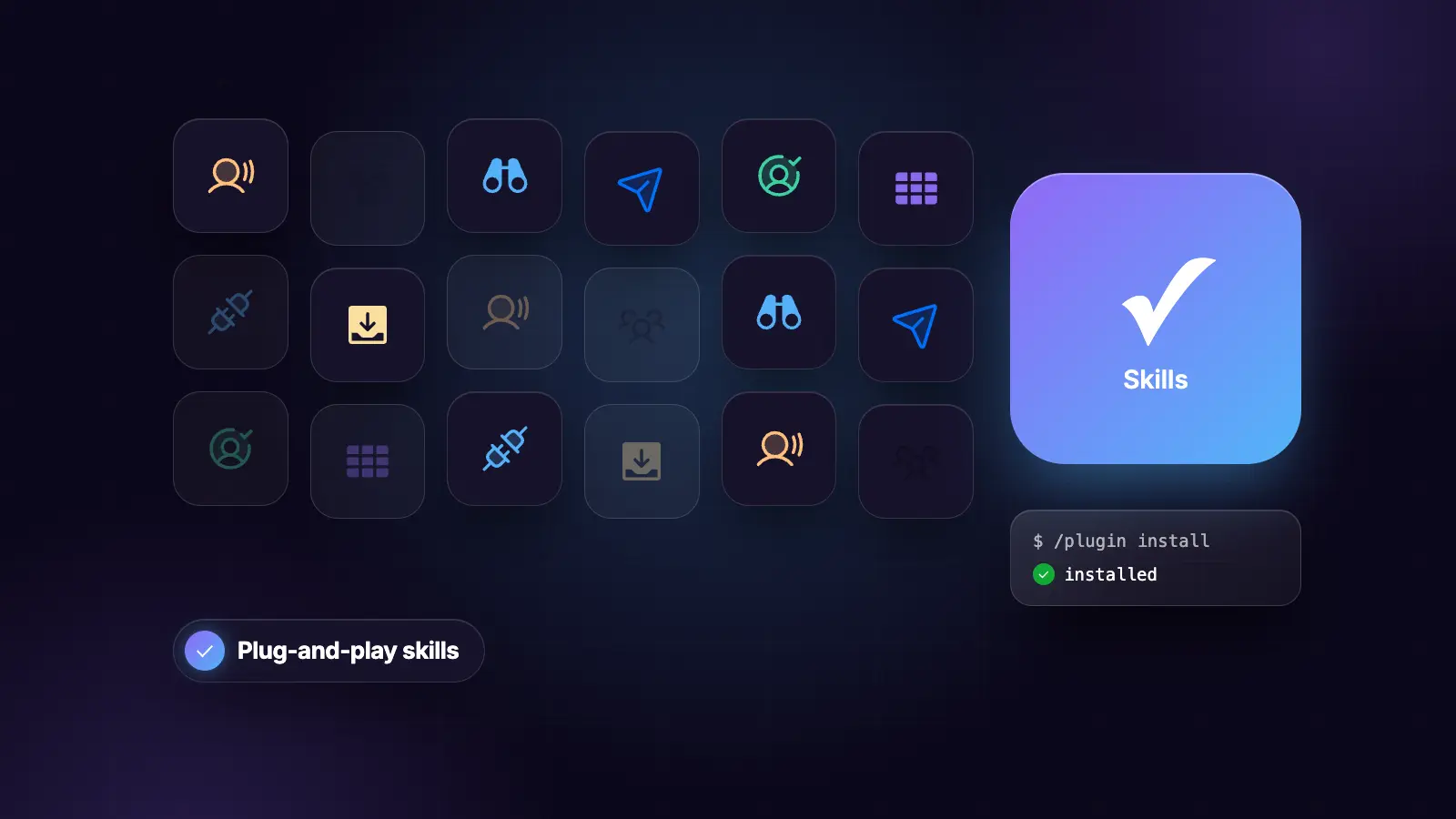
11 skills that help Claude Code and Codex write LinkedIn posts, comments, and replies in a human voice. They draft content, strip AI tells, and wait for approval before anything gets published. No coding required to use them day to day.

Every skill shows a draft first and waits for explicit approval before doing anything. Nothing gets posted without sign-off.

Compatible with Claude Code (CLI, Desktop, Web, IDE), Codex CLI, Anthropic Managed Agents, and manually with OpenClaw, Cursor, Cline, and Aider.

Install

Claude Code (CLI / VS Code / JetBrains):

/plugin marketplace add sergebulaev/linkedin-skills
/plugin install linkedin-skills@linkedin-skills

claude.ai (web): open claude.ai/code, go to Skills in the sidebar, click Add from GitHub, paste sergebulaev/linkedin-skills.

Claude Desktop (Mac/Windows): Customize > + next to Personal plugins > Create plugin > Add marketplace > Add from a repository > paste sergebulaev/linkedin-skills > install.

Codex CLI:

codex plugin marketplace add sergebulaev/linkedin-skills
codex plugin add linkedin-skills@linkedin-skills

Any agent that reads SKILL.md files (Claude Code, Codex, Cursor, others), one universal command:

npx skills add sergebulaev/linkedin-skills

OpenClaw: clone the repo into your working directory, then add this to your system prompt:

You have LinkedIn marketing skills in ./linkedin-skills/.
For any LinkedIn task, read the relevant skills/*/SKILL.md first.
Use lib/url_parser.py for URL parsing,
    lib/apify_client.py for reading posts / comments / engagers,
    lib/publora_client.py for publishing actions.

What you can ask for once installed

The right skill activates automatically based on what you ask:

"Write me a LinkedIn post about why AI agencies are replacing traditional ones. Make it viral."

"Comment on this post: [URL] — I want to add a thoughtful take."

"Audit this post draft for AI tells and algorithm issues: [paste text]"

"What hook formula does this post use? [URL]"

"Create a 7-day LinkedIn content plan. I'm a B2B SaaS founder targeting VPs of Marketing."

"Optimize my LinkedIn profile for inbound leads: [profile URL]"

"Humanize this text: [paste AI-generated draft]"

Section 2

Skills 1 to 4: Writing Posts, Comments, and Replies

Content generation skills: writing posts, comments, replies, and reverse-engineering what makes a viral post work.

Post Writer

Drafts viral-ready posts using 16 proven hook formulas: anaphora, the R.I.P. obituary format, year-over-year pivot, curiosity gap, emotional cold-open, named-gratitude, and 10 more. The formula picked depends on your stated engagement goal rather than being applied at random.

Comment Drafter and Reply Handler

Comment Drafter drafts a comment on any LinkedIn post directly from its URL.

Reply Handler drafts a reply to any comment, correctly handling LinkedIn's 2-level thread flattening. LinkedIn collapses reply threads to two levels, so when replying to a reply, the parentComment field must point to the top-level comment URN rather than the reply's own URN. This skill handles that distinction automatically so replies land in the right place in the thread.

Hook Extractor

Reverse-engineers the hook formula from any viral post you paste in a URL for, then returns a blank template with that same formula so you can fill it in with your own topic.

Section 3

Skills 5 and 6: Post Audit and the Humanizer

The skills that keep output from reading as AI-generated, and check it against current algorithm behaviour before anything goes live.

Post Audit

Checks your draft against current algorithm rules and AI-detection patterns before you publish, catching issues before the post is live rather than after.

Humanizer

Strips em dashes, AI vocabulary ("leverage", "delve", "harness"), rule-of-three lists, and other AI fingerprints from a draft. Bundles three sub-tools:

An AI-emoji density scorer, checking whether emoji usage patterns read as artificial.

A multi-detector spread tester that checks the text against GPTZero, Originality.ai, ZeroGPT, Sapling, and Copyleaks, so you know how the draft scores across several detectors rather than just one.

A rule-explainer reference, useful for defending specific stylistic choices if a client or colleague questions why a draft is written a certain way.

The voice rules every skill follows automatically

1. No em dashes. The single biggest AI tell right now.
2. Capitalize names, always. Lowercase reads as disrespectful.
3. No AI vocabulary: leverage, fundamentally, streamline, harness, delve, unlock, foster.
4. Specific numbers beat adjectives. "$14,200" beats "significant savings".
5. One sharp insight per comment beats three vague ones.
6. 200-350 characters for comments, 900-1,300 characters for posts.
Section 4

Skills 7 to 11: Content Planner, Engagement Monitor, Profile, Advocacy, Repurposer

Planning, tracking, and profile-level skills for running LinkedIn as an ongoing system rather than one post at a time.

Content Planner

Creates a 7-day plan with daily post topics, formats, hooks, posting times, and comment targets, so a week of content is planned in one pass rather than decided post by post.

Engagement Monitor

Two read-side workflows in one skill: it tracks your comment threads for author replies and drafts follow-ups inside the 6-24 hour window when a reply is most likely to still be relevant, and it pulls the likers and commenters on any post and groups them by ICP fit (peer, aspirational, or prospect), so engagement data becomes a usable list rather than just a notification feed.

Profile Optimizer

Rewrites your headline, About section, Featured section, and Experience for current conversion patterns, rather than treating the profile as a static CV.

Employee Advocacy

Plans a full team LinkedIn programme: a 14-day launch, a posting cadence for the team, brand governance rules, and ROI tracking, for founders or marketers who want multiple people at a company posting in a coordinated way rather than one founder carrying all of it.

Repurposer

Turns content from another platform (a tweet, a thread, a YouTube video, a blog post, a newsletter) into a native LinkedIn post. It re-hooks the opening for LinkedIn's fold, expands the content to the 900 to 1,300 character sweet spot, moves any links to the first comment rather than the post body, and runs the humanizer pass automatically before returning the draft.

Section 5

Optional Integrations: Reading Live Data with Apify and Auto-Posting with Publora

Two optional integrations that upgrade four skills from paste-in-text mode to live-data mode, and enable direct publishing instead of copy-paste.

Reading live LinkedIn data with Apify

Four skills (Comment Drafter, Reply Handler, Hook Extractor, Engagement Monitor) can read post bodies, comment threads, your own recent comments, and the people who liked or commented on any post. Without an Apify token, they fall back to asking you to paste the relevant text. With one, they fetch automatically.

Apify's free tier ships with $5/month of credit, which covers meaningful usage at $1 to $5 per 1,000 results. Four no-cookies actors are used:

Use case Actor Cost
Post body by URL supreme_coder/linkedin-post $1 / 1,000
Comments and replies on a post apimaestro/linkedin-post-comments-replies-engagements-scraper-no-cookies $5 / 1,000
Your own recent comments apimaestro/linkedin-profile-comments $5 / 1,000
Likers and commenters on any post scraping_solutions/linkedin-posts-engagers-likers-and-commenters-no-cookies $5 / 1,000

Setup: add APIFY_TOKEN=apify_api_... to your .env file. A typical creator running daily comment activity plus a weekly engager-analytics sweep stays under $2/month, comfortably inside the free tier.

Auto-posting with Publora

By default, skills draft content for you to copy-paste into LinkedIn manually. Connecting a publishing API lets Claude Code or Codex publish directly to LinkedIn (and optionally X, Threads, Instagram). Free tier gives 15 posts per month. Setup takes about 2 minutes.

# Step 1: sign up (free)
# Step 2: Channels > Add Channel > LinkedIn > authorize
# Step 3: Channels > click your LinkedIn account, copy the Platform ID
#         (looks like linkedin-ABC123DEF, copy the whole thing)
# Step 4: Settings > API > Create Key, copy the sk_... string

# Step 5: create a .env file in the linkedin-skills folder
PUBLORA_API_KEY=sk_paste_your_key_here
LINKEDIN_PLATFORM_ID=linkedin-paste_your_id_here

# Step 6: install dependencies
pip install requests python-dotenv

# Step 7: test it
"Schedule a test LinkedIn post 24 hours from now:
'testing the API connection, will cancel in dashboard'."

If the test returns a scheduled-post ID, the connection works. Cancel the test post in the dashboard before it goes live.

Troubleshooting

# Skills don't activate when asking about LinkedIn
# -> confirm install via Skills panel, /plugin install, or codex plugin add
# -> start a new conversation

# "Publora API key not provided"
# -> .env file missing or in the wrong folder (must be in linkedin-skills/ root)

# "401 Unauthorized" from Publora
# -> API key expired, create a new one in Settings > API

# "404 on comment/post"
# -> LINKEDIN_PLATFORM_ID is wrong, re-copy the full linkedin-... string from Channels

# "400 reactionType" error
# -> known quirk, handled automatically by the skills
# -> if calling the API manually: use PRAISE not CELEBRATE, INTEREST not INSIGHTFUL

# pip install fails
# -> use a virtual environment:
python -m venv venv && source venv/bin/activate && pip install requests python-dotenv
Section 6

Quick Reference: All 11 Skills, Install Commands, and Voice Rules

All 11 skills, the voice rules, and everything you need to reference technically.

All 11 skills in one table

Skill What it does
Post Writer Drafts viral-ready posts using 16 hook formulas, picked by engagement goal
Comment Drafter Drafts a comment on any LinkedIn post from its URL
Reply Handler Drafts a reply, correctly handling LinkedIn's 2-level thread flattening
Post Audit Checks a draft against current algorithm rules and AI-detection patterns
Humanizer Strips AI fingerprints, includes emoji density scorer, multi-detector spread tester, rule explainer
Hook Extractor Reverse-engineers the hook formula from any viral post, returns a fillable template
Content Planner Builds a 7-day plan with topics, formats, hooks, posting times, comment targets
Engagement Monitor Tracks reply windows and groups likers/commenters by ICP fit
Profile Optimizer Rewrites headline, About, Featured, and Experience for current conversion patterns
Employee Advocacy Plans a 14-day team launch, posting cadence, governance, ROI tracking
Repurposer Converts content from another platform into a native, re-hooked LinkedIn post

Install commands, all methods

# Claude Code
/plugin marketplace add sergebulaev/linkedin-skills
/plugin install linkedin-skills@linkedin-skills

# Codex CLI
codex plugin marketplace add sergebulaev/linkedin-skills
codex plugin add linkedin-skills@linkedin-skills

# Universal (Claude Code, Codex, Cursor, others)
npx skills add sergebulaev/linkedin-skills

# claude.ai web: Skills sidebar > Add from GitHub > paste repo name

# Claude Desktop: Customize > + Personal plugins > Create plugin
#                 > Add marketplace > Add from a repository > paste repo name

The voice rules, in full

1. No em dashes. Biggest AI tell right now.
2. Capitalize names, always.
3. No AI vocabulary: leverage, fundamentally, streamline, harness, delve, unlock, foster.
4. Specific numbers beat adjectives.
5. One sharp insight beats three vague ones.
6. 200-350 characters for comments, 900-1,300 characters for posts.

Reference material bundled with the repo

references/industry-benchmarks.md: engagement rates, time-per-post, and reach multipliers across industries.

references/engagement-metrics-taxonomy.md: what to measure at the post, account, team, and business level.

Licence: MIT. Runtime is pure Python plus markdown, so the lib/ folder works in any agent runtime and references/ works as plain context in any tool, even ones without native skill auto-discovery (Manus, LangChain, AutoGen).

6 build slots left · closes in

Have your first campaign built for you

Send us your ICP and a Prosp specialist sources the list, writes the sequence and clones your voice. You review every draft before a single message sends.

5/5 rated on Capterra·800+ agencies and sales teams·Set up in 5 minutes
6 done-for-you build slots left this weekTry Prosp Free