


The 2026 LinkedIn Algorithm: What Actually Changed and How to Win

LinkedIn replaced its entire ranking system with a single AI algorithm called 360 Brew. It reads and understands your content semantically. The old system needed explicit follows and engagement signals — the new system cares about relevance. Everything that worked last year works less well now. This guide covers what actually changed and the exact moves that work in 2026.

What 360 Brew Is and the 5 Things That Actually Changed

Source: Chris Donnelly, 1.2M LinkedIn followers, founder of three 8-figure businesses.

  1. LinkedIn replaced its entire ranking system. The old system worked on explicit signals: follows, likes, engagement history. If someone followed you, they saw your content. If they engaged, they saw more. The new system (360 Brew) is a language model — it reads your content semantically and matches it to individual profile experience. It no longer needs an explicit relationship to serve content; it matches content to profiles based on relevance. Practically: your content can now reach people who have never heard of you if it matches their profile, and your content can stop reaching your own followers if it stops being relevant to them.

  2. Profile optimisation is now the foundation. Because the algorithm matches content to profile experience, your profile is now a targeting signal as much as it is a landing page. The algorithm gives 3 to 5 times more processing attention to the first one or two sentences of your profile — your headline is now doing distribution work, not just impression work. Your profile must clearly signal who you are, who you help, and what topic area you operate in. If the algorithm cannot classify you, your distribution suffers.

  3. 80% of your content must stay within 3 core topics. The algorithm is now classifying your account by topic. If you post within a consistent topic cluster, the algorithm learns who to serve your content to and distributes it to matching profiles. If you post outside your core topics for likes or virality, the algorithm gets confused about who you are, and distribution on your core posts suffers as a result. Practical rule: pick your 3 topics. 80% of posts stay within those 3. 20% can flex. Never post outside your area just for engagement.

  4. The algorithm now prioritises saves over likes and comments. Likes are cheap. Comments saying "great post" are noise. The algorithm now treats saves as the highest-quality signal that content is valuable — a save tells the algorithm this person wanted to come back to this content later, a strong signal of genuine value. Content that gets saved is educational, practical, and specific: lists of frameworks, step-by-step guides, cheat sheets, and reference posts. Motivational quotes and personal stories get liked but not saved.

  5. Depth and dwell time beat volume and frequency. The algorithm now factors in how long someone spends on your content. A post someone reads for 45 seconds tells the algorithm more than a post that gets 500 likes in 30 seconds. Longer, deeper content that makes people stop and read beats short content that gets quick reactions and is forgotten — this is why carousels and infographics are outperforming text posts: people spend more time on them. Depth and educational value are the actual ranking signals now. Not volume. Not frequency. Depth.

Profile Optimisation: Make the Algorithm Classify You Correctly

Your profile is now your distribution engine. The 360 Brew algorithm reads it to understand who you are and matches your content to profiles with similar experience. A weak profile is a weak distribution mechanism.

Your profile is now a landing page for your ICP

Two questions your profile must answer immediately:

  1. Who are you and what do you sell?
  2. What specific pain point do you fix?

Not vague. Not impressive-sounding. Specific.

✅ "Agency coach that helps agencies build more profitable businesses" ✅ "Marketing manager that helps brands make more profitable campaigns" ❌ "Passionate about growth and helping people reach their potential" ❌ "Building the future of B2B sales"

If someone lands on your profile and cannot tell exactly who you help and what result you produce in 5 seconds, your profile is failing.

The headline: where distribution starts

The algorithm gives 3 to 5 times more processing attention to your first one or two sentences than to the rest of your profile. Your headline is the most important field on your profile for both distribution and conversion.

The headline formula that works: [What you are] that helps [who] [specific outcome]

✅ Founder of [Company] | I help [ICP] [specific result from AI SEO] ✅ SDR Manager | Building outbound systems that book meetings without re-briefing Claude every session ✅ Agency owner | I help B2B founders turn LinkedIn into a pipeline channel

Your headline must contain your core topic keyword — the algorithm uses this to classify your account and decide who sees your content.

The About section: credibility and depth

Include:

  • Your specific background and why it gives you credibility on your topic
  • The specific result you produce for clients (with a number if you have one)
  • The type of person you help most
  • One proof point: a result, a number, a company you have worked with

Do not include:

  • Generic mission statements
  • A long career history no one will read
  • Soft language: passionate, driven, results-oriented

Topic selection: the distribution lever most people ignore

LinkedIn lets you select topics on your profile. The algorithm uses these to classify your account and decide which feeds to serve your content into. LinkedIn shows which topics are performing best on the platform right now — use that data to pick topics that (a) match your ICP's interests and (b) are already performing well in the algorithm.

For founders, agency owners, and SDR managers doing outreach, strong topic choices: B2B Sales, Outbound Sales, LinkedIn Marketing, Lead Generation, Sales Strategy, Business Development. Pick the 3 that most precisely match what you post about. Consistency beats cleverness here.

The Featured section: your conversion layer

The Featured section is prime real estate — it sits high on your profile and can contain links, posts, or lead magnets. Design the buttons to look like clear CTAs. If your goal is to generate pipeline from LinkedIn, your featured section should link directly to your lead magnet, your booking page, or your best-performing educational post. Do not waste it on a link to your company website homepage.

The Formats That Win in 2026: Carousels, Infographics, and Why

Carousels and infographics are the highest-performing content format on LinkedIn in 2026. This is not opinion, it is the data.

Why format matters more than most people think

Carousels and infographics convert the highest into followers because people spend more time on them. They scroll through slide by slide, read each one, extract the value, and save them for later. That dwell time tells the algorithm the content is valuable. Videos get watched and scrolled past. Carousels get read and saved — this is why carousels beat everything else for follower growth right now. Time on content is the signal. Carousels maximise time on content.

The format hierarchy in 2026 (ranked by follower conversion rate)

  1. Infographics — highest follower conversion. People save them, reference them later, and follow the account that created them.
  2. Carousels — high follower conversion. Same dwell-time and save behaviour as infographics.
  3. Video — high views, lower follower conversion. People watch and move on. Less save behaviour.
  4. Text posts — declining. Good for engagement but weak for follower growth.

If follower growth and pipeline generation are your goals, 70% of your content should be carousels and infographics. The rest can be text.

How to produce carousels without making it a design project

  1. Pick a framework or step-by-step process your ICP struggles with.
  2. Write the slides in Claude using this prompt:
Write a LinkedIn carousel on [TOPIC] for [ICP].

Slide structure:
- Slide 1: Hook. Bold claim or specific number. Not a question.
- Slides 2-8: One point per slide. Each point is actionable.
- Slide 9: Summary or key takeaway
- Slide 10: CTA

Rules:
- Every slide must stand alone. Someone should get value from a single slide.
- No theory. Every slide tells them what to do or what to think differently.
- Under 30 words per slide.
- First slide hook must stop someone scrolling. Be specific.

Topic: [YOUR TOPIC]
ICP: [YOUR AUDIENCE]
My point of view: [WHAT YOU BELIEVE ABOUT THIS TOPIC]
  1. Take the slide copy into Claude Design or Canva and apply your brand template.
  2. Post with a text hook above the carousel that matches slide 1.

The adaptability rule

Formats change. When carousels are the top format, post carousels. When video becomes the top format, shift to video. The creator who adapts fastest compounds the fastest. Check which formats are performing best every quarter — LinkedIn shows you the data. Use it.

Educational Content: Why It Wins and How to Brand It as Yours

Educational content drives more followers and more views than any other content type. Not personal stories. Not opinions. Education.

Why education beats personality for growth

Personality content (selfies, personal stories, vulnerability posts) drives engagement from people who already know you. Educational content drives followers from people who do not know you yet. Follower growth comes from people discovering your content, getting genuine value from it, and deciding they want to see more — that only happens when the content gives them something they can use. The algorithm rewards saves, and saves come from educational content: post a step-by-step guide to a problem your ICP has, they save it, the algorithm serves it to more people like them.

How to brand educational content as yours

James Clear did not invent the concept of habits — dozens of books covered the same ground before Atomic Habits. What he did was brand the concept with his own framework (1% gains), give it a memorable name (atomic habits), and post about it consistently. Every conversation about habits now references James Clear — not because he invented the topic, because he owned it with a specific framework and a clear name. Simon Sinek did the same with Start With Why.

You do not need to invent new ideas. You need to:

  1. Pick a topic your ICP already cares about.
  2. Build a specific framework around how you approach it.
  3. Give the framework your own name.
  4. Post about it consistently.

For founders, agency owners, and SDR managers doing LinkedIn outreach, topics your ICP cares about: how to write cold DMs that get replies, how to build a personal brand that generates pipeline, how to use AI for outreach without sounding like AI, how to turn LinkedIn connections into revenue, how to qualify prospects faster. Pick one. Build a specific framework. Give it a name. Post a step-by-step guide to that framework once a week. Over time, you will own that topic in your ICP's feed.

The depth rule: longer and deeper beats shorter and frequent

If someone spends time on your content, the algorithm registers it as valuable and distributes it further — the same mechanic as Instagram: hover on a video for a few seconds and you see that creator's content repeatedly in your feed. A post someone reads for 45 seconds generates more distribution than a post that gets 500 likes in 30 seconds. Go deeper. Write longer guides. Build more detailed frameworks.

Content types that generate the most dwell time:

✅ Step-by-step guides (people read each step) ✅ Framework carousels (people go through each slide) ✅ Checklists with context (people compare against their own situation) ✅ Before/after breakdowns with numbers (people study the difference) ✅ Annotated examples (people read the example and the annotation)

❌ Short takes and opinions (read in 5 seconds, scrolled past) ❌ Motivational quotes (zero dwell time, zero saves) ❌ Generic "here are 5 things" lists without context (skimmed not read)

Pre-Validation: How to Build Content That Works Before You Post It

Pre-validation means studying what has already worked before creating your own version. It is not copying — it is being strategic about what you produce. This is the fastest way to create content that performs from day one.

What an outlier is and why it matters

An outlier is a piece of content that receives 5 to 10 times more views than the creator's normal output. If a creator gets 1,000 likes per post and suddenly gets 10,000 likes on one post, that post is an outlier. An outlier tells you something important: the content itself is the hero, not the creator's audience size. The idea landed — that is replicable.

How to pre-validate content before you create it

  1. Find creators with a similar ICP audience to yours (similar follower count, similar topic area, similar buyer).
  2. Study their last 60 posts. Find the outliers — the ones with 5 to 10 times their normal engagement.
  3. Identify what made the outlier work: the format, the framework, the specific angle, the hook structure.
  4. Build your own version using that framework, renamed and adapted to your voice and your specific perspective.
  5. Post it. The idea is pre-validated — you are starting with proof of concept.

Do not study big accounts. Big accounts have massive audiences that give them a natural distribution lift; their outliers may be outliers because of audience size, not content quality. Study creators at a similar scale to you.

Claude prompt to find and adapt outlier content:

I want to pre-validate a LinkedIn post idea.

I have found this outlier post from a creator with a similar audience to mine:
[paste the post or describe it]

What I want you to do:
1. Identify the framework or structure that made this work
2. Identify the hook pattern
3. Identify what the ICP found valuable enough to save or share
4. Write my version of this post adapted to my topic and my voice

My topic: [YOUR TOPIC]
My ICP: [YOUR AUDIENCE]
My perspective on this topic: [WHAT YOU BELIEVE]

Rules:
- Must feel completely different in execution even if the structure is similar
- My voice: [describe your tone]
- No em dashes, no corporate language

How to Sell on LinkedIn: The 3-Layer Funnel and Lead Magnet Strategy

Growing followers is the foundation. Converting followers into revenue is the point. This section covers the LinkedIn sales funnel, how to structure conversion content, and why getting people off LinkedIn and onto your email list is the most important long-term move.

The LinkedIn sales funnel: 3 content layers

Layer 1 — Awareness (top of funnel). Purpose: introduce who you are to people who have never heard of you. Format: broad educational posts on your core topics, easily understood, easy to engage with. Expected result: reach, impressions, follows from new people, low direct conversion. For LinkedIn outreach professionals: posts about how outbound has changed, why most DMs fail, the framework behind a good connection request.

Layer 2 — Education (middle of funnel). Purpose: deepen the relationship with people who found you through awareness content. Format: your specific frameworks, step-by-step guides, detailed breakdowns. Expected result: saves, shares, follows from people who want to keep learning from you, and some direct outreach from people ready to buy. For LinkedIn outreach professionals: your 5-step engagement ladder, your DM sequence framework, your ICP qualification process.

Layer 3 — Conversion (bottom of funnel). Purpose: convert followers who already know and trust you into customers. Format: case studies, testimonials, results posts, proof. Expected result: low reach, high conversion from the people already in your funnel — this content won't perform in likes or impressions, and that's fine, it's not for new people. Buyers need to experience your brand 5 to 7 times before they buy; conversion content is what closes the loop.

Lead magnets: the highest-leverage conversion tool

In 2026, content saturation is high — more people are posting more than ever. The differentiator is no longer who posts the most, it's who gives the most value in the moment. A lead magnet that feels like it is worth paying for is worth more to your pipeline than 10 posts that do not give immediate value.

Best lead magnets for this ICP:

  • A complete skill file for Claude that solves a specific outreach problem
  • A swipe file of 10 to 15 connection requests that have worked with specific contexts
  • A framework for qualifying LinkedIn prospects in under 60 seconds
  • A full 5-step engagement sequence template with explanations
  • A Claude prompt pack for LinkedIn content (hooks, posts, DMs)

Make it feel like something they would pay for. If you would not pay $50 for it yourself, it is not a lead magnet — it is a PDF.

Deplatforming: get people off LinkedIn and onto your list

LinkedIn is rented land. The algorithm changes. Reach changes. Accounts get restricted. If your entire audience lives on LinkedIn, you are one algorithm update away from losing access to them. The goal of all LinkedIn content is to move people off LinkedIn and onto a channel you own — email is the most reliable.

The value exchange: give them something genuinely valuable (a lead magnet, a framework, a template, a playbook) in exchange for their email address. The rule: if you are giving away something for free, it must feel like it is worth something they would have paid for.

The comment-to-DM funnel — the most effective LinkedIn lead magnet mechanism right now:

  1. Post educational content on your core topic.
  2. End the post with: "Comment [KEYWORD] and I'll send you [RESOURCE]"
  3. DM everyone who comments the keyword with the resource and a brief personal note.
  4. In the DM, include a link to subscribe to get more resources like this.
  5. They go from commenter to email subscriber in one exchange.

Claude prompt for this:

Write a LinkedIn post to promote my lead magnet.

Lead magnet: [DESCRIBE IT]
ICP: founders, agency owners, and SDR managers doing LinkedIn outreach
Keyword CTA: comment [KEYWORD]

Post structure:
- Hook: specific claim about the problem this lead magnet solves
- Body: 3 to 5 specific things they will get from it
- CTA: comment [KEYWORD] and I'll DM it to you, must be following

Rules: no em dashes, no hashtags, hook must be a specific statement not a question

Claude Prompts and Skills for the 360 Brew Algorithm

The Claude tools that apply directly to acting on what the 360 Brew algorithm rewards: better content, stronger carousels, smarter outreach, and profile optimisation.

Prompts

LinkedIn outreach sequences

Create LinkedIn outreach sequences.

Context:
- Target persona: [TITLE at COMPANY TYPE]
- My product: [WHAT YOU SELL]
- LinkedIn activity level: [ACTIVE / OCCASIONAL / RARE POSTER]
- Mutual connections: [YES/NO]

Create 3 different sequences:

Sequence 1: Connection + Message (for active LinkedIn users)
- Connection request
- Day 1 message
- Day 3 follow-up
- Day 7 value add

Sequence 2: Content-First (for thought leader types)
- Engage with their content (comment strategy)
- Connection request after engagement
- Message referencing their content

Sequence 3: Mutual Connection Path
- Identify mutual connection angle
- Soft introduction request
- Direct follow-up

For each message:
- Character count (must be under LinkedIn limits)
- Why it works
- Common responses and how to handle

Multi-channel outreach sequence

Create a multi-channel outreach sequence.

Context:
- Target persona: [TITLE at COMPANY TYPE]
- My product: [WHAT YOU SELL]
- Key pain point: [MAIN PROBLEM YOU SOLVE]
- Best case study: [PROOF POINT]
- Sequence length: [2-3 WEEKS]

Channels to use:
- Email (primary)
- LinkedIn (connection + messages)
- Phone (calls + voicemails)

Create a 12-touch sequence that:
1. Starts with email (low friction)
2. Adds LinkedIn on Day 2
3. Introduces phone on Day 4
4. Varies the angle each week
5. Ends with a clear breakup

For each touch:
- Channel and timing
- Subject/hook
- Key message
- CTA

Outreach objection response bank

Create an objection response bank for outreach.

Context:
- My product: [WHAT YOU SELL]
- Price range: [BALLPARK]
- Main competitor: [PRIMARY COMPETITOR]

Generate responses for these common objections:

1. "Not interested"
2. "Send me some info"
3. "We already have a solution"
4. "No budget"
5. "Call me next quarter"
6. "How did you get my info?"
7. "I'm not the right person"
8. "We're too small/big for this"
9. "Just email me"
10. "I don't take cold calls"

For each objection:
- Phone response (real-time)
- Email response (written)
- The psychology behind their objection
- Red flag that means stop vs. just pushback

Skills

Skill 1: /setup-linkedin-project — walks you through 8 questions and auto-generates a CLAUDE.md for your LinkedIn content project. Run once; every future session loads it automatically so Claude always writes in your voice.

# Skill: /setup-linkedin-project

## Trigger
/setup-linkedin-project

## Description
Sets up a CLAUDE.md for a LinkedIn content project by walking through a short questionnaire. Generates a complete project context file Claude loads on every future session.

## Instructions
Ask these questions one at a time. Wait for each answer before proceeding.

1. What is the name of this content workspace?
2. Who is the target audience? Job title, company type, day-to-day problems.
3. What is the brand voice? (Professional and direct / Conversational and candid / Technical and authoritative / Warm and educational)
4. What topics does this account cover? List 3-5 core themes.
5. What topics should this account NEVER cover?
6. What is the LinkedIn handle or profile name?
7. What is the standard CTA at the end of posts?
8. What carousel format do you prefer?
   - Option A: 5-7 slides, educational, numbered tips
   - Option B: 3-5 slides, story-led, problem > insight > action
   - Option C: describe your own

Once answered, generate a CLAUDE.md:

# CLAUDE.md: [Workspace Name]

## Project
[One sentence on what this workspace is for]

## Target Audience
[Job title, company type, day-to-day problems]

## Brand Voice
[Voice descriptor + 3 words that describe the tone]

## Content Themes
[3-5 core topics]

## Never Cover
[Topics this account avoids]

## Profile
LinkedIn handle: [handle]

## Standard CTA
[Default CTA for posts]

## Carousel Format
[Preferred structure]

## Rules
- Match the brand voice exactly
- Always use the standard CTA unless specified otherwise
- Never generate content outside defined themes
- No em dashes anywhere

Skill 2: /linkedin-carousel — generates a complete B2B LinkedIn carousel from a topic or brief. Reads your CLAUDE.md for brand context, writes slide-by-slide copy in your voice, and produces a ready-to-paste caption. This is the skill that executes what the 360 Brew algorithm rewards: deep, educational, save-worthy content in the highest-performing format.

# Skill: /linkedin-carousel

## Trigger
/linkedin-carousel

## Description
Generates a complete B2B LinkedIn carousel from a topic or brief. Reads CLAUDE.md for brand context. Outputs slide copy and a LinkedIn caption.

## Instructions

### Step 1: Read context
Read the CLAUDE.md in the current working folder. All output must match the brand voice, carousel format, and content themes defined there.

### Step 2: Get the topic
If no topic provided, ask: "What is this carousel about? Give me the topic, the main insight, and who it's for."

### Step 3: Plan the structure
Default structure:
- Slide 1 (Cover): Hook. Specific, concrete claim or number. No vague openers.
- Slides 2-5 (Body): One insight or action point per slide. Short. Specific. No padding.
- Final slide (CTA): Single clear next step using the standard CTA from CLAUDE.md.

### Step 4: Write the slide copy
Rules:
- Cover hook: under 10 words, specific, no adjectives like "powerful" or "incredible"
- Body slides: headline (under 8 words) + 1-2 sentences max
- No filler words, no AI tells, no emojis
- Match the brand voice from CLAUDE.md exactly
- No em dashes

### Step 5: Generate caption
Structure:
- Opening line: mirrors or expands the cover hook
- 2-3 lines of context
- Standard CTA from CLAUDE.md
- No hashtags
- Under 300 characters total if possible

### Step 6: Save and confirm
Save:
- `carousel-[topic-slug]-copy.md`: all slide copy
- `carousel-[topic-slug]-caption.txt`: the LinkedIn caption

Show caption and slide copy in chat for immediate review.

More prompts for the new algorithm

Write a carousel that satisfies 360 Brew

Write a LinkedIn carousel that is built to perform under the 360 Brew algorithm.

Load my LinkedIn content writer skill and ICP skill before starting.

Topic: [YOUR TOPIC]
Audience: founders, agency owners, and SDR managers doing LinkedIn outreach
Goal: saves and follows from people who have never heard of me

Algorithm requirements I need to satisfy:
- Educational content that gives immediate, actionable value
- Deep enough that someone spends 60+ seconds reading it
- Save-worthy: specific enough that they will come back to it
- Aligned with my 3 core topics: [YOUR TOPICS]

Slide structure:
- Slide 1: Hook. A specific number, claim, or counterintuitive fact. Under 10 words.
- Slides 2-6: One actionable point per slide. Headline under 8 words. 1-2 sentences max.
- Slide 7: Summary of the key takeaway
- Slide 8: CTA — comment [KEYWORD]

After writing:
1. Score the hook out of 10 on specificity
2. Identify the slide most likely to be saved and why
3. Suggest one alternative hook

Audit my profile for 360 Brew

Audit my LinkedIn profile for the 360 Brew algorithm.

Here is my current profile information:
- Headline: [PASTE YOUR HEADLINE]
- About section: [PASTE YOUR ABOUT]
- Current topics selected: [LIST YOUR TOPICS]
- My ICP: [DESCRIBE WHO YOU SELL TO]
- My 3 core content themes: [LIST THEM]

Check these specifically:
1. Does my headline contain my core topic keyword so the algorithm can classify me?
2. Does it answer who I help and what result I produce in under 10 words?
3. Does my About section give depth without generic language?
4. Are my selected topics the highest-performing ones that also match my ICP?
5. Is my profile consistent: does what I say I do match what I post about?

Return:
- Score 1-10 on each check
- The one change that would most improve my distribution
- Rewritten headline (3 variants)
- One paragraph rewrite of my About opener

Pre-validate a content idea using the outlier method

Help me pre-validate this LinkedIn content idea using the outlier method.

Content idea: [DESCRIBE YOUR IDEA]
My core topic: [YOUR TOPIC]
My ICP: founders, agency owners, and SDR managers doing LinkedIn outreach

Do the following:
1. Tell me what type of outlier content typically performs best on this topic (format, angle, hook style)
2. Identify the framework structure that most high-performing posts on this topic use
3. Write my version of this content adapted to my voice and my specific ICP
4. Identify the pre-validated hook pattern from successful posts on this topic
5. Score the idea on save potential (1-10) with reasoning

My voice: [DESCRIBE YOUR TONE]
Banned: em dashes, corporate language, questions as hooks

Build my 3-layer content funnel

Build a 3-layer LinkedIn content funnel for my account.

Load my ICP skill and LinkedIn content writer skill.

My business: [WHAT YOU SELL]
My ICP: [DESCRIBE]
My 3 core topics: [LIST]
Posting frequency: [X per week]

Produce a content plan with:

Layer 1 - Awareness (top of funnel): [X] posts
Goal: reach people who have never heard of me
Format: carousels and infographics on broad topic-level education
Each post: hook + post type + core message

Layer 2 - Education (middle of funnel): [X] posts
Goal: deepen trust with people who found me through Layer 1
Format: specific frameworks, step-by-step guides, my unique perspective
Each post: hook + framework name + 3 key points

Layer 3 - Conversion (bottom of funnel): [X] posts
Goal: convert warm followers into leads
Format: case studies, results, testimonials, specific client outcomes
Each post: hook + result + CTA

For every post: note which algorithm signal it is optimised for (saves / dwell time / follows)

AI-Driven, Personalized Outreach on LinkedIn: Prosp

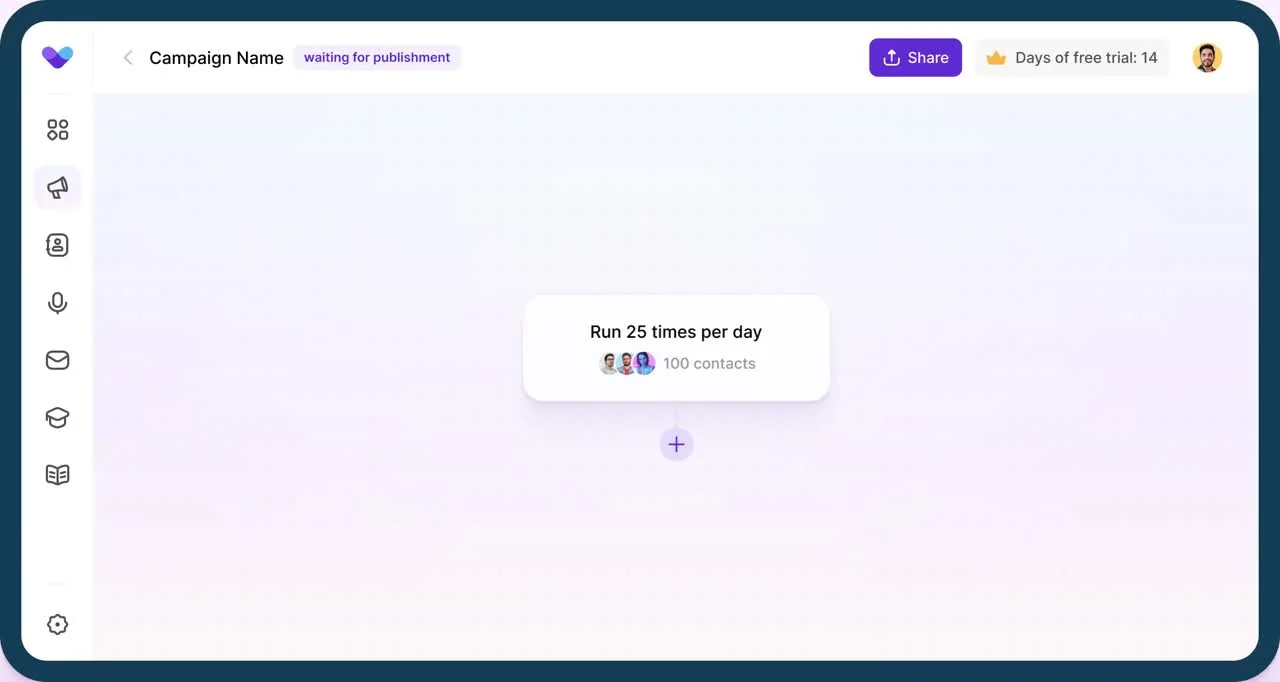
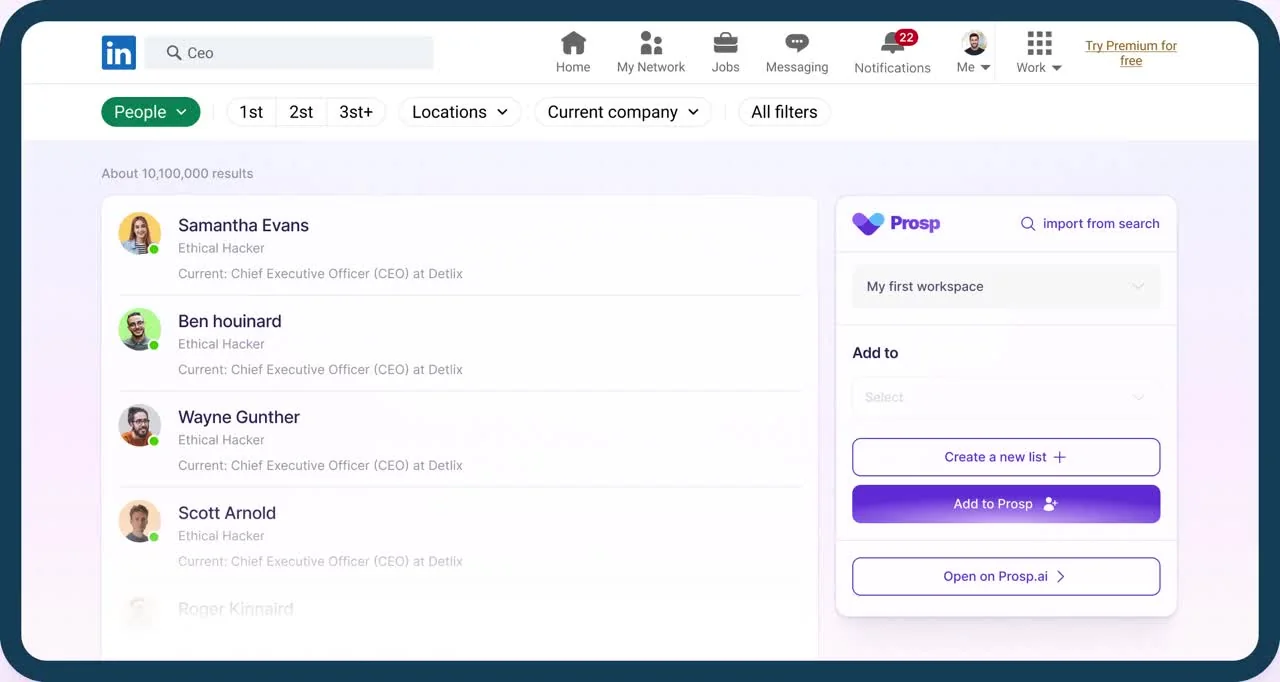
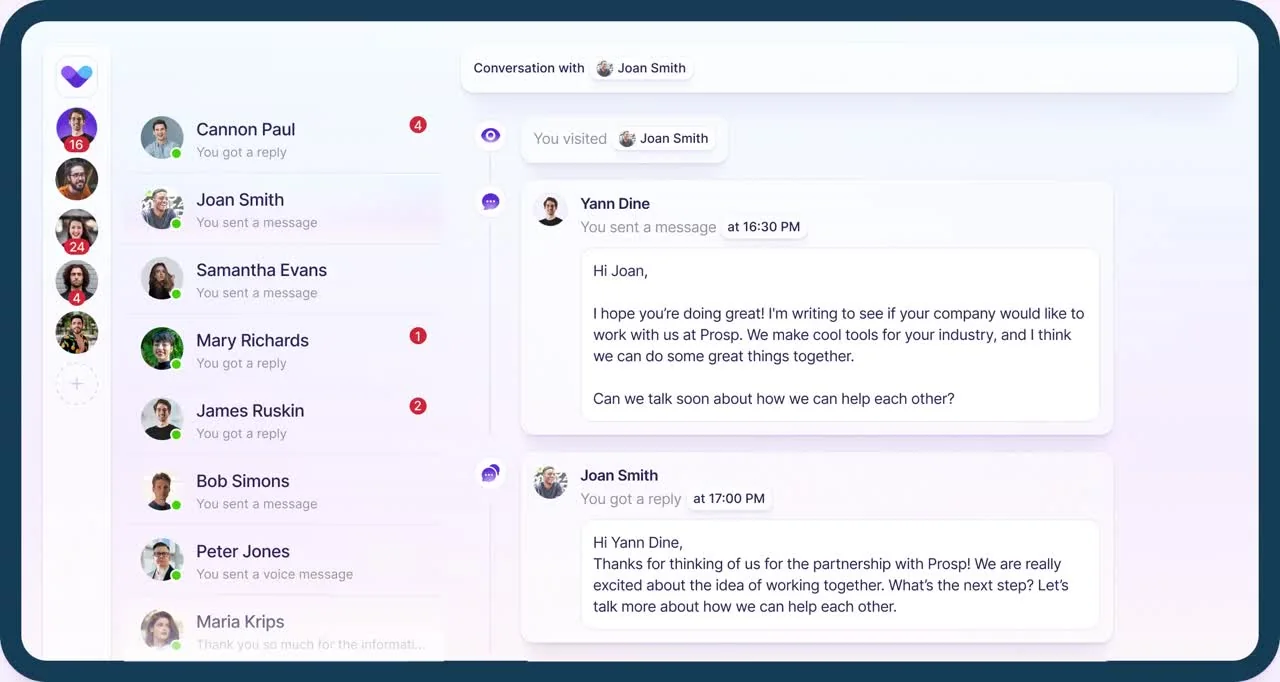
Everything in this guide gets you distribution. Prosp turns that distribution into pipeline — AI-personalized LinkedIn messages, sent from the profile you just optimised.

Start a 14-day free trial →

Want outreach this consistent?

Prosp finds leads and sends AI-personalized LinkedIn messages that get replies.

Try Prosp →