


1:1 with a GTM engineerBuild any workflow in this course with an engineer · 8 sessions left · closes in Book your session

Claude for Ad Scriptwriting: 10 Prompts, Anti-AI Rules, and Worked Examples

Claude has quietly become one of the strongest tools for direct-response ad scriptwriting, not because it writes a perfect script in one shot, but because it can hold a specific…

Try Prosp Free45 minutes, on your own data · 8 sessions left
5/5 rated on Capterra·Used by 800+ agencies and sales teams
Prompt Pack7 sections
Section 1

Overview: Why Claude Works for Ad Scriptwriting

Claude has quietly become one of the strongest tools for direct-response ad scriptwriting, not because it writes a perfect script in one shot, but because it can hold a specific voice, a specific structure, and a specific set of constraints across dozens of variations without drifting back into generic AI phrasing.

This playbook covers the actual system: 10 tested prompt structures for different ad and hook types, the anti-AI-tell rules that strip out the phrasing patterns that make a script read as machine-written, worked examples showing before and after, and how this plugs into video ad production and distribution.

Six modules:

  1. Why most AI-written scripts get flagged as AI-written
  2. The 10 core scriptwriting prompts
  3. The anti-AI-tell rules
  4. Worked examples: before and after
  5. From script to finished video ad
  6. Distribution and testing at scale

Why this matters more than people think

Most people trying Claude for ad scripts get one of two bad outcomes. Either the script is generic and forgettable, because the prompt was too vague and Claude defaulted to safe, average phrasing. Or the script is technically fine but reads as obviously AI-written, because it contains the small verbal habits that language models fall back on when they are not explicitly told to avoid them.

The fix for both is the same: specific prompts that force a real angle, paired with an explicit list of banned phrasing patterns applied as a pass after the first draft.

Section 2

Module 1: The 10 Core Scriptwriting Prompts

These are the 10 prompt structures that consistently produce usable first drafts rather than generic ad copy. Each is built around a specific psychological angle rather than a generic "write me an ad" instruction.

Prompts 1 to 5

  1. The specific-result hook: ask Claude to open with one real, specific outcome (a number, a timeframe, a before-and-after) rather than a general claim, then build the rest of the script around explaining how that result happened.
  2. The objection-first script: ask Claude to open by naming the exact objection or skepticism the viewer already has about this category of product, address it directly in the first line, then pivot into the pitch. This works because it disarms the scroll-past reflex.
  3. The relatable-problem script: ask Claude to open with a scenario so specific to the target customer's daily frustration that they recognise themselves immediately, using their own likely internal language rather than marketing language.
  4. The myth-busting script: ask Claude to open by stating a common belief in the category, then immediately contradict it with a reason the belief is wrong, before introducing the product as the resolution.
  5. The founder-story script: ask Claude to write from a first-person founder perspective, including one specific detail about why the product was built (a personal frustration, a failed alternative tried first) that could not be generated generically.

Prompts 6 to 10

  1. The comparison script: ask Claude to structure the script as a direct comparison between the old way of solving the problem and the new way, without naming a specific competitor, focused on the friction of the old method.
  2. The social-proof lead script: ask Claude to open with a specific, quantified claim about how many people have already gotten a result, then explain the mechanism.
  3. The urgency-without-hype script: ask Claude to create genuine urgency tied to a real constraint (limited slots, seasonal relevance, a real deadline) rather than fake scarcity language.
  4. The demonstration script: ask Claude to write a script structured around showing the product actually being used step by step, with the copy describing what is happening on screen rather than making abstract claims.
  5. The UGC-style testimonial script: ask Claude to write in the voice of a specific customer persona (name, role, situation) recounting their experience conversationally, including one moment of doubt before the product worked, since a testimonial with zero doubt reads as fake.

How to structure the prompt itself

For any of the 10 prompts above, always include: the specific product or offer, the specific target customer (not "everyone"), the platform and length constraint (a 30-second UGC video reads very differently from a static ad caption), and one real detail about the product or customer that Claude cannot invent on its own. That last piece is what prevents the output from reading as generic.

Section 3

Module 2: The Anti-AI-Tell Rules

Run every script through this pass after the first draft. This is the difference between a script that sounds like a person and a script that sounds like it came out of a language model.

Phrasing patterns to remove

The triple-adjective stack: AI-written copy tends to string three adjectives or benefits together in a row ("fast, reliable, and affordable"). Real speech uses one strong claim, not three softened ones.

The em-dash pause: overuse of the em dash to create a dramatic pause is one of the most common tells. Replace with a full stop or a comma and let the sentence breathe naturally instead.

The "it's not just X, it's Y" construction: this reframing pattern appears constantly in generated copy and rarely appears in real spoken scripts. Say the thing directly instead.

The rhetorical question opener: "Ever wondered why..." and its variants are an instant AI tell at this point because the pattern has been so overused. Open with a statement instead.

Perfectly balanced sentence structure: real speech is uneven. Short sentence, then a longer one, then a fragment. AI defaults to evenly-paced sentences of similar length; deliberately break that rhythm.

Generic superlatives with no specificity attached: "the best," "incredible results," "game-changing" without a number or a concrete detail next to them. Every superlative needs a specific fact standing next to it or it gets cut.

How to apply the anti-AI pass

Run the first draft through Claude a second time with an explicit instruction: list every phrase in this script that reads as generic or AI-generated, then rewrite each flagged section using plainer, more specific language, keeping the rest of the script unchanged. Doing this as a separate pass, rather than trying to get it perfect in the first prompt, produces a noticeably more natural result because Claude is now editing critically rather than generating from scratch.

Section 4

Module 3: Worked Examples, Before and After

Seeing the before-and-after side by side makes the anti-AI-tell rules concrete rather than abstract.

Example 1: the objection-first script

Before the anti-AI pass: the script opens with a rhetorical question, stacks three adjectives describing the product in the second line, and closes with a generic superlative claim with no number attached.

After the anti-AI pass: the rhetorical question is replaced with a direct statement of the objection itself. The adjective stack is cut down to the single strongest claim. The closing superlative is replaced with the one specific result number that was already established earlier in the script, referenced again rather than restated as a new vague claim.

The structure and message are identical. The phrasing patterns are what changed, and that is the entire difference between a script that reads as written by a person and one that reads as generated.

Example 2: the UGC-style testimonial script

Before the anti-AI pass: the testimonial persona speaks in perfectly even sentences with no hesitation, describes the product with three balanced benefits, and never expresses any doubt before the positive outcome.

After the anti-AI pass: one short sentence is added early describing genuine hesitation or skepticism before trying the product. Sentence length becomes uneven, mixing short reactive statements with one longer explanatory one. The three balanced benefits are cut to the single benefit that mattered most to this specific persona.

The moment of doubt is the single highest-leverage addition in any testimonial-style script, because a testimonial with no doubt at all is the fastest way to read as fabricated.

Section 5

Module 4: From Script to Finished Video Ad

A script is only half the deliverable. Once the writing is right, the same Claude workflow feeds directly into an actual video ad production pipeline.

From script to video

Once a script passes the anti-AI-tell review, it becomes the input for an AI UGC video generation pipeline. Tools in this space (including open-source options like Open-AI-UGC, alongside HeyGen and Seedance-based workflows) take a finished script and a persona description and generate a realistic AI actor delivering the script on camera.

The script quality directly determines the video quality here. A script with even one AI-tell phrase will sound artificial even with a highly realistic AI avatar delivering it, because the unnatural rhythm of the sentence carries through regardless of how good the visual generation is.

This is why the anti-AI-tell pass in Module 2 happens before video generation, not after. Fixing awkward phrasing in a finished video means re-generating the clip; fixing it in the script is a one-line edit.

Batching script variations for testing

Run the same product and offer through several of the 10 prompt structures in one session, each producing a different angle (objection-first, myth-busting, testimonial-style). This gives you a batch of genuinely different creative angles to test against each other, rather than five near-identical scripts with slightly reworded openers, which is what happens when you generate variations from a single prompt repeated with "give me another version."

Section 6

Module 5: Distribution and Testing at Scale

The scripts and videos only matter once they reach the right audience and the engagement they generate gets followed up on properly.

Distributing and testing scripts

For organic LinkedIn or social distribution of these scripts as native video posts, the same lead-magnet-post mechanic used elsewhere in this content system applies well here: post the finished video natively, and in the caption offer the underlying prompt pack or script templates as a downloadable resource in exchange for a comment.

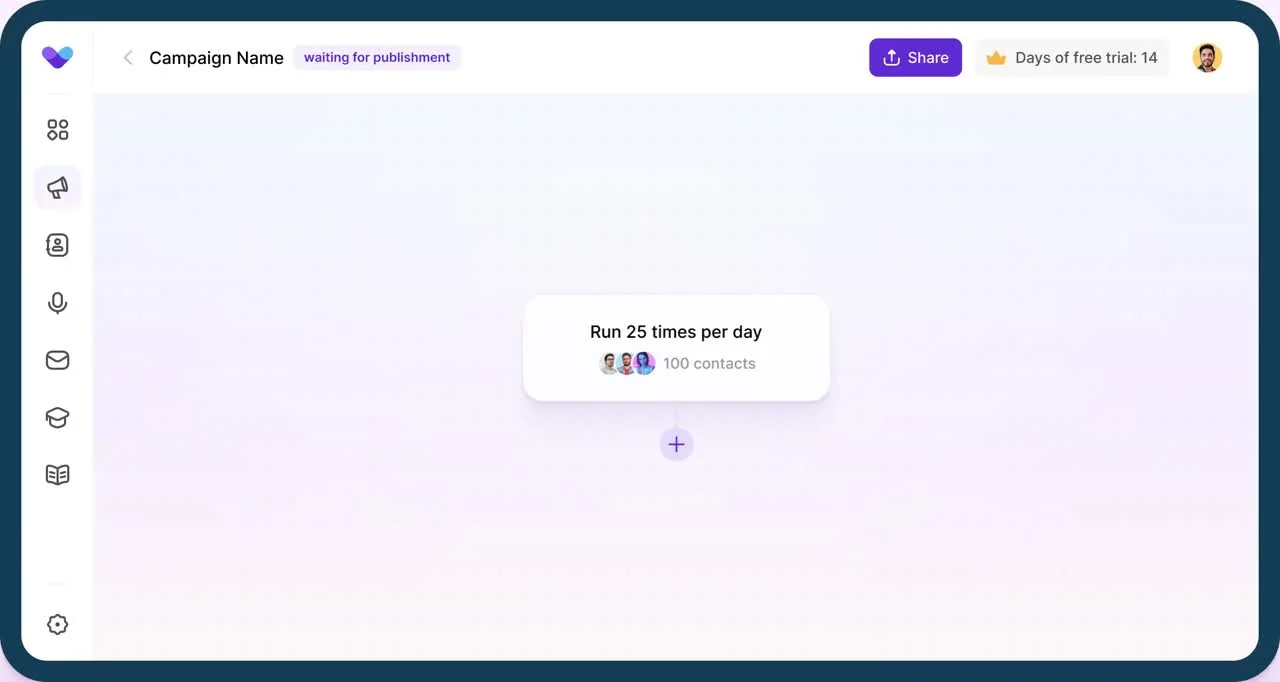
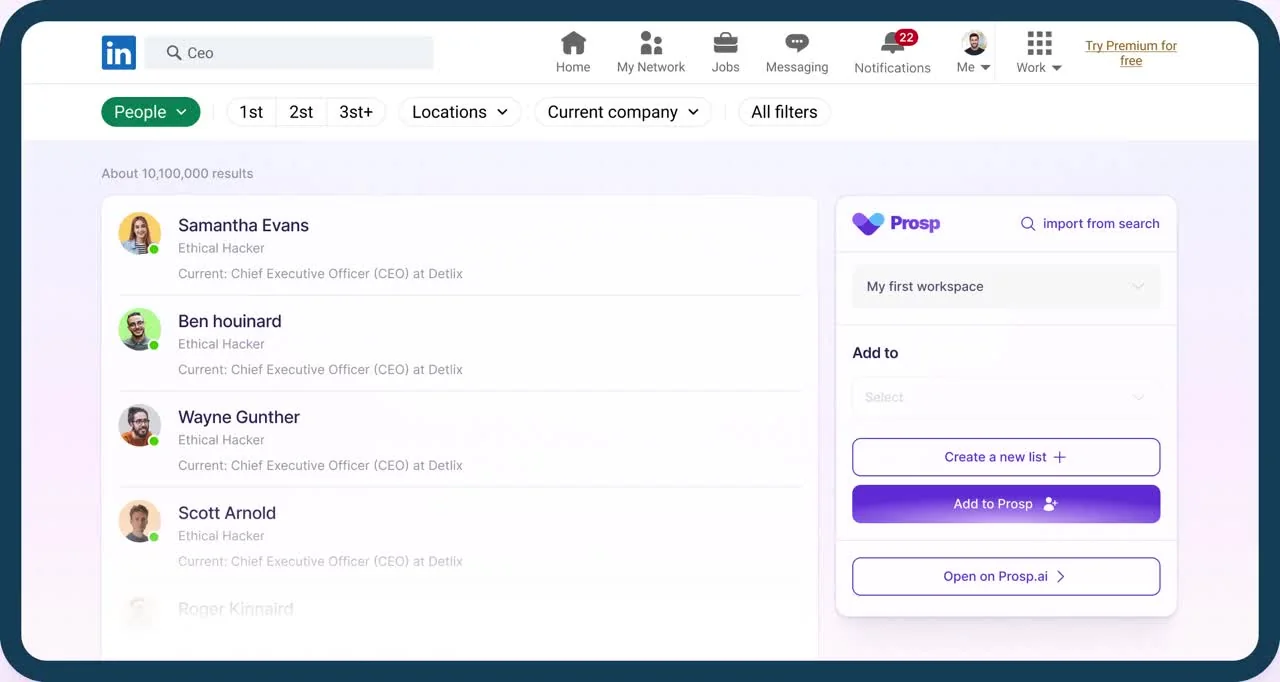
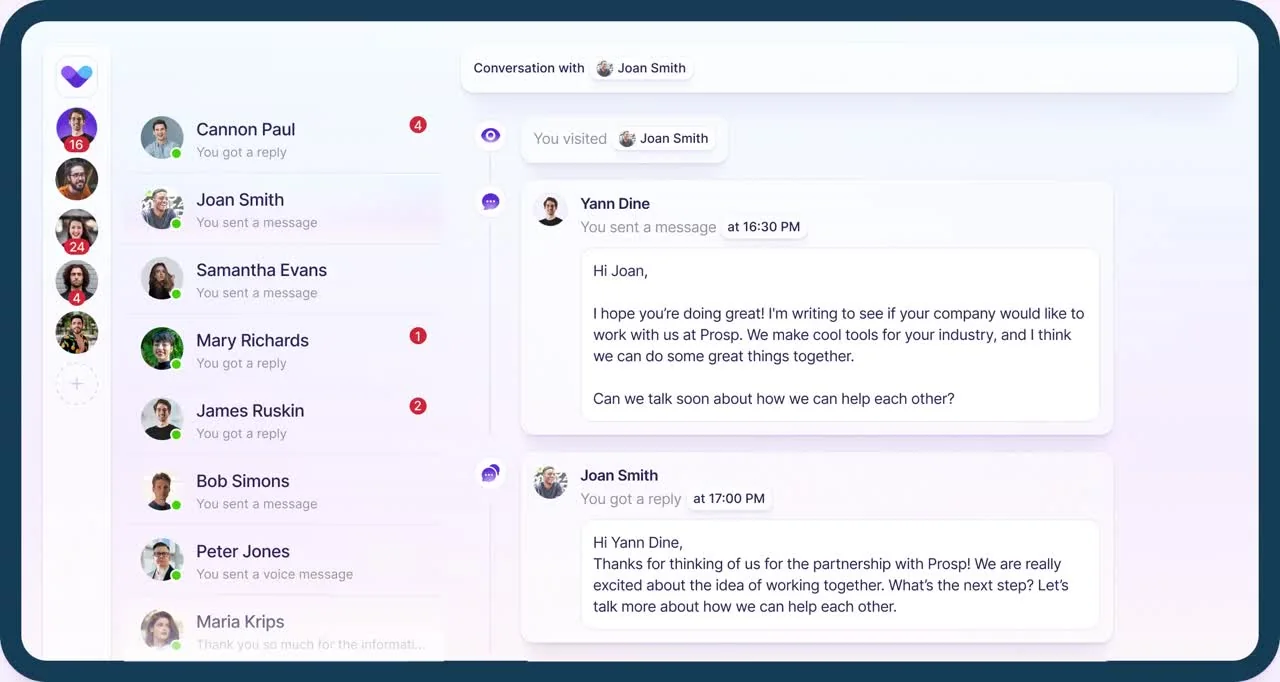
For GTM teams running this at outbound volume rather than only organic reach, a tool like Prosp fits naturally at the follow-up layer: once someone comments requesting the script pack or engages with a video ad, Prosp can help manage the sequenced DM or email follow-up so that engagement converts into an actual conversation instead of sitting unanswered.

What to track

For paid testing, track hook retention (the percentage of viewers still watching after the first three seconds) as the primary signal of whether the script's opening line is working, separately from overall completion rate or click-through rate. A script can have a strong hook and a weak middle, or vice versa, and conflating the two metrics makes it harder to know which part of the script to rewrite.

Section 7

Quick Reference: The Full System in One Place

The full system condensed into one operating sequence.

The build order

Step 1: pick the prompt structure (from the 10 in Module 1) that fits the specific angle you want to test for this offer, and feed Claude the product, the specific customer, the platform constraint, and one real detail it could not invent.

Step 2: run the anti-AI-tell pass as a separate follow-up prompt, explicitly asking Claude to flag and rewrite any generic or AI-sounding phrasing.

Step 3: compare the before-and-after using the pattern from Module 3 to confirm the structure held while the phrasing tightened.

Step 4: feed the finished script into a video generation pipeline (Open-AI-UGC, HeyGen, or Seedance-based workflow) to produce the actual UGC-style ad.

Step 5: batch several different prompt structures for the same offer in one session to get genuinely distinct angles to test, rather than minor rewordings of one angle.

Step 6: distribute organically with a lead-magnet-style caption offering the underlying script pack, and if running this at outbound volume, connect the engagement it generates into a sequencing tool like Prosp so warm interest gets followed up rather than left in a comment thread.

8 sessions left · booking closes in

Build it live with a GTM engineer

45 minutes, screen shared, on your own list. You leave with a working campaign or agent, not a set of notes.

5/5 rated on Capterra·800+ agencies and sales teams·Set up in 5 minutes
8 GTM engineer sessions left this monthTry Prosp Free