


Section 1What This Plugin Does That 40 Standalone Skills Can't
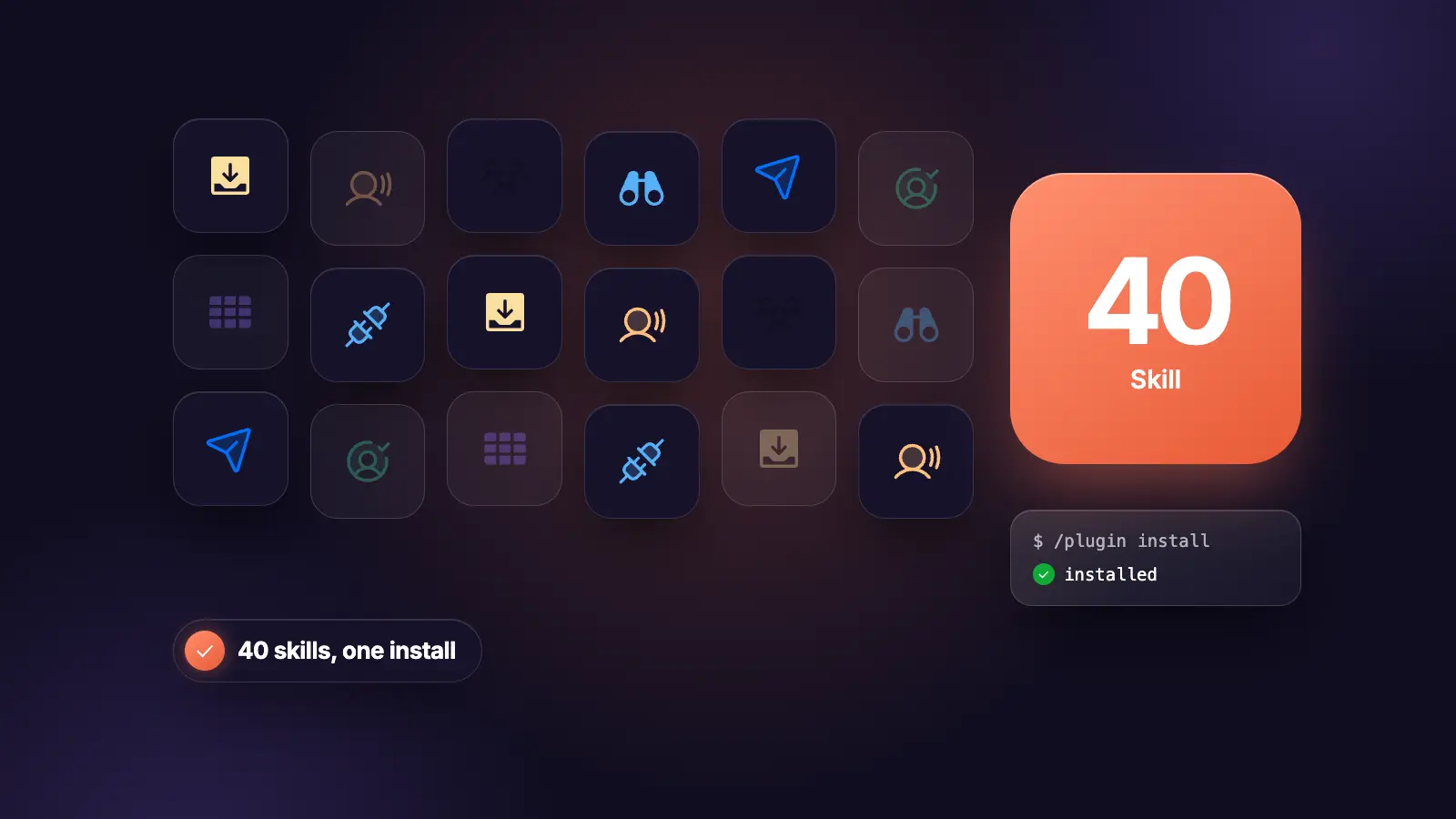
40 outbound skills that share one brief file. Every session opens with your company, ICP, value props, personas, and competitors already loaded. You describe the business once. Every skill reads the same source. This is the gap between a skills library and a skills system.
Source: github.com/henriquecaner/next-level-outreach
The problem with standalone skills
You re-explain the business every session
What drifting artefacts cost you
What outreach-brief.md is
One file. All context. Updated once.
What it looks like in practice
How the SessionStart hook loads it automatically
You open Claude Code. The brief is already there.
The outreach-strategist agent
Your Head of Growth virtual. Coordinates skills into plans.
What changes when all 40 skills read the same brief
Consistency compounds fast
Section 2How to Run /nl-outreach:onboard in Under 60 Seconds
One command. Eight skills run in sequence. You describe the company. Claude Code builds the brief. From the next session on, it loads automatically. Total time: under 60 seconds of your attention.
Source: github.com/henriquecaner/next-level-outreach
Step 1: Install the plugin
Three paths. Pick the one that matches how you work.
Step 2: Run /nl-outreach:onboard
Type this. Answer the questions. Done.
The 8 skills the command runs in sequence
What each one does and what it writes to the brief
What to do when things change
The brief is a living document. Update it the same day.
Section 3How to Define Your ICP Down to Buying Signals
Most ICP definitions describe who to reach. This plugin defines when to reach them. The icp-definer skill builds ICPs around triggers, not demographics. The difference between "VP Sales at 50-200 person SaaS" and "VP Sales who posted two SDR roles in the last 30 days" is the gap between a list and a pipeline.
Source: github.com/henriquecaner/next-level-outreach
icp-definer: trigger-based ICP, not demographics
How to invoke it
What it outputs
What most ICP definitions get wrong
persona-definer: contact-level detail by seniority
Same ICP, different angle by seniority level
persona-insights-analysis: extract intelligence from call transcripts
Your best ICP data comes from calls, not desk research
trigger-finder: detect buying signals before you prospect
The signals that predict pipeline, not just presence
pain-identifier: from growth and hiring signals to specific pains
Pain is always tied to a signal. Find the signal, find the pain.
Section 4How to Build a List From ICP Filters Without Manual Research
company-finder translates your ICP definition into exact filter configurations for lemlist, Apollo, and Clay. You don't need to know where to click. You describe who you want. It tells you how to find them.
Source: github.com/henriquecaner/next-level-outreach
company-finder: ICP filters into platform config
How to invoke it
people-finder: contact-level filter to find the exact persona
Same platform, contact-level config
list-builder: pull and format the final prospect list
From filters to usable CSV
niche-data-finder: sources beyond the obvious platforms
Your ICP is in communities, not just databases
value-prop-lister and offer-definer: what you sell, in the buyer's language
Features don't sell. Outcomes do.
Section 5How to Write Cold Email Copy That Hits 8.5%+ Reply Rates
The copywriting-analyzer benchmarks your email against data from 244,000+ outbound campaigns before you send a single one. Eight copywriting skills cover every email type, seniority level, and scenario. Stop writing copy that sounds like outreach. Write copy that sounds like a person.
Source: github.com/henriquecaner/next-level-outreach
The copywriting framework this plugin uses
Every skill reads the brief. Every email sounds like it comes from someone who did the research.
copywriting-first-touch: the first cold email
Short. Signal-led. One ask.
copywriting-follow-up: touches 2 and 3
Each follow-up adds a new angle. Never bump the previous email.
copywriting-ic-sequence, copywriting-manager-sequence, copywriting-vp-sequence: tone by seniority
The same product, three different ways to talk about it
copywriting-refiner and copywriting-analyzer: score before you send
Never send copy that hasn't passed the refiner and the analyzer.
cta-designer: CTAs that start conversations, not request demos
The ask at the end of your email is the most underthought part
Section 6How to Run LinkedIn Outreach and Cold Calls From One Brief
Three skills. One brief. Three channels. linkedin-outbound-angle reads the prospect's profile and proposes the angle. linkedin-sequence writes the 2-DM follow-up. cold-call-script builds a 6-part call framework. Everything consistent because all three read outreach-brief.md before running.
Source: github.com/henriquecaner/next-level-outreach
linkedin-outbound-angle: profile to angle in one command
Read the profile. The skill tells you how to open.
What makes a LinkedIn angle different from a cold email angle
linkedin-sequence: the 2-DM follow-up after connection
Connected. Now what?
cold-call-script: 6-part framework from the brief
Nobody buys off a cold call. But the call opens the conversation that leads to the meeting.
Running all three channels in parallel
Multi-thread the same ICP across email, LinkedIn, and phone
Section 7How to Architect a Full Campaign Before Writing the First Email
campaign-angle-finder generates three distinct campaign angles before you write a word. outbound-campaign-architect designs the full sequence from ICP, channels, and performance data. You design the campaign at the strategy layer first. Then you write.
Source: github.com/henriquecaner/next-level-outreach
campaign-angle-finder: three distinct angles before you write anything
Most teams run one angle and wonder why half the list doesn't respond
outbound-campaign-architect: the full campaign design
Sequence structure, channel split, timing, and copy direction in one output
deep-company-analyser: account-level research before high-value outreach
For named accounts, the campaign architect isn't enough. You need a deep dive.
gtm-action-thinker: stress-test your GTM idea before executing it
Most outbound ideas sound good until you think through the second and third order effects
Section 8How to Handle Replies, Debug Pipeline, and Read Campaign Data
reply-handler maps every reply type to the right response. outbound-analyst benchmarks your reply rate, open rate, and bounce rate against 244,000+ real campaigns and tells you what to fix. pipeline-analysis gives you a visual dashboard of where deals are stalling. You don't have to guess why a campaign is underperforming.
Source: github.com/henriquecaner/next-level-outreach
reply-handler: every reply type, mapped to the right response
Most reps handle two reply types well. The other six they wing.
outbound-analyst: benchmark against 244k+ campaign data
Your numbers don't mean anything without a benchmark
pipeline-analysis: visual dashboard, stall detection
Where in the funnel are deals dying
claap-sales-opportunity-detector: upsell and expansion from call transcripts
Revenue hiding in calls your team already had
crm-duplicate-detector: clean the CRM before you scale
Scaling a dirty database scales the problems in it
Section 9How to Build n8n Workflows and Scrape Data Without Leaving Claude Code
Describe the n8n workflow you need. n8n-workflow-builder outputs exportable JSON. Describe the website to scrape. website-scraper outputs a working Python script. Describe the error. n8n-debugger fixes it. Three skills that remove the gap between "I need this automated" and it actually being automated.
Source: github.com/henriquecaner/next-level-outreach
n8n-workflow-builder: describe it, get exportable JSON
You don't need to know how n8n works. You need to know what you want.
GTM workflows you can build with this skill today
n8n-debugger: paste the error, get the fix
n8n errors are opaque. This skill makes them readable.
website-scraper: describe the target, get a working Python script
No developer required. Describe what you want scraped. Get the script.
prompt-engineering: take any rough prompt to production-ready
A better prompt is worth more than a better model
Section 10How to Install Next Level Outreach on Claude Code and Cowork
Five install paths. Claude Code CLI, marketplace, clone, Cowork admin, Cowork individual. Pick the one that matches your setup. Three minutes or less for any of them.
Source: github.com/henriquecaner/next-level-outreach
Option 1: Git clone (fastest for developers)
Three lines. Plugin active in under 60 seconds.
Option 2: Marketplace install (recommended for teams)
Add the repo as a marketplace. Install the plugin. Works for the whole team.
Option 3: Claude Cowork admin upload (full plugin for the org)
Upload once. Every team member gets all 40 skills.
Option 4: Claude Cowork individual upload (skills only, no admin needed)
No admin access required. Upload the skills you want. Keep them private to your account.
Option 5: Plugin dir for testing (temporary session only)
Test a skill edit before rolling it out
Known Cowork limitations
What doesn't work in Cowork and how to work around it