


Section 1How It Works: Install, Divisions, and Tool Targets
Source: github.com/msitarzewski/agency-agents, MIT licence. 230+ agents across 17 divisions.
An agent is a markdown file with YAML frontmatter (name, description, color, emoji, vibe) then a structured body: identity, core mission, critical rules, deliverables, workflow, communication style, metrics.
One source format, converted to 14 tools. Not just Claude Code.
Install: the app route
Fastest. Native desktop app for macOS, Linux and Windows. Browses the whole roster, installs into your tools, auto-updates.
brew install --cask msitarzewski/agency-agents/agency-agents
# or download from agencyagents.app
Install: the CLI route
This is the one to use if you are running an agency, because you can install per division or per agent rather than all 230.
git clone https://github.com/msitarzewski/agency-agents
cd agency-agents
# Everything, into Claude Code
./scripts/install.sh --tool claude-code
# Only the divisions an agency needs
./scripts/install.sh --tool claude-code --division sales,marketing,paid-media,design
# Only named agents
./scripts/install.sh --tool cursor --agent sales-outbound-strategist,marketing-linkedin-content-creator
# See every division and its agent count
./scripts/install.sh --list teams
# Dry run before committing
./scripts/install.sh --tool claude-code --division sales --dry-run
# Interactive wizard: pick tools and teams
./scripts/install.sh
Or copy one division by hand:
cp sales/*.md ~/.claude/agents/
cp marketing/*.md ~/.claude/agents/
Every division, and its agent count
| Division | Agents | Agency relevance |
|---|---|---|
| engineering | 60 | Client builds, web dev retainers |
| specialized | 58 | High: business, legal, CS, ops |
| marketing | 36 | Highest |
| game-development | 21 | Only if you serve games |
| security | 12 | Compliance and audit work |
| design | 10 | Highest |
| sales | 10 | Highest: your own new business |
| testing | 9 | QA gates on client deliverables |
| paid-media | 7 | Highest |
| project-management | 7 | Highest: retainer delivery |
| support | 6 | High: reporting and finance |
| spatial-computing | 6 | Niche |
| product | 5 | Medium |
| finance | 5 | Medium: your own books |
| academic, gis, healthcare | ~15 | Only for those verticals |
Note: strategy/ and integrations/ look like divisions in the file tree but are not. strategy/ holds playbooks with no agent frontmatter, integrations/ is generated output from convert.sh.
The 14 tools it installs into
# Step 1: generate integration files for all supported tools
./scripts/convert.sh
# Step 2: target a tool directly
./scripts/install.sh --tool claude-code
./scripts/install.sh --tool cursor
./scripts/install.sh --tool copilot
./scripts/install.sh --tool antigravity
./scripts/install.sh --tool gemini-cli
./scripts/install.sh --tool opencode
./scripts/install.sh --tool openclaw
./scripts/install.sh --tool aider
./scripts/install.sh --tool windsurf
./scripts/install.sh --tool kimi
./scripts/install.sh --tool codex
./scripts/install.sh --tool osaurus
./scripts/install.sh --tool hermes
./scripts/install.sh --tool vibe
User-global tools (available across all projects): Claude Code, Copilot, Antigravity, Gemini CLI, OpenClaw, Kimi.
Project-local tools (versioned with the codebase): OpenCode, Cursor, Aider, Windsurf, Qwen.
Two gotchas worth knowing
OpenCode drops agents silently. Its runtime registers only around 119 agents and discards the rest without telling you. Install a subset with --division to stay under the limit. The installer warns when a selection would exceed it.
Codex loses metadata. Codex custom agents are generated as standalone TOML. Only name and description carry over from frontmatter, with the markdown body becoming developer_instructions. The color, emoji and vibe fields are dropped.
How to actually invoke one
# In a Claude Code session, name the agent and the job
"Activate Outbound Strategist and build me a signal-based sequence for
[ICP] using the triggers we can actually detect."
"Activate Paid Media Auditor and run the account audit on [CLIENT]."
"Activate LinkedIn Content Creator and write this week's posts for
[CLIENT] using their positioning doc."
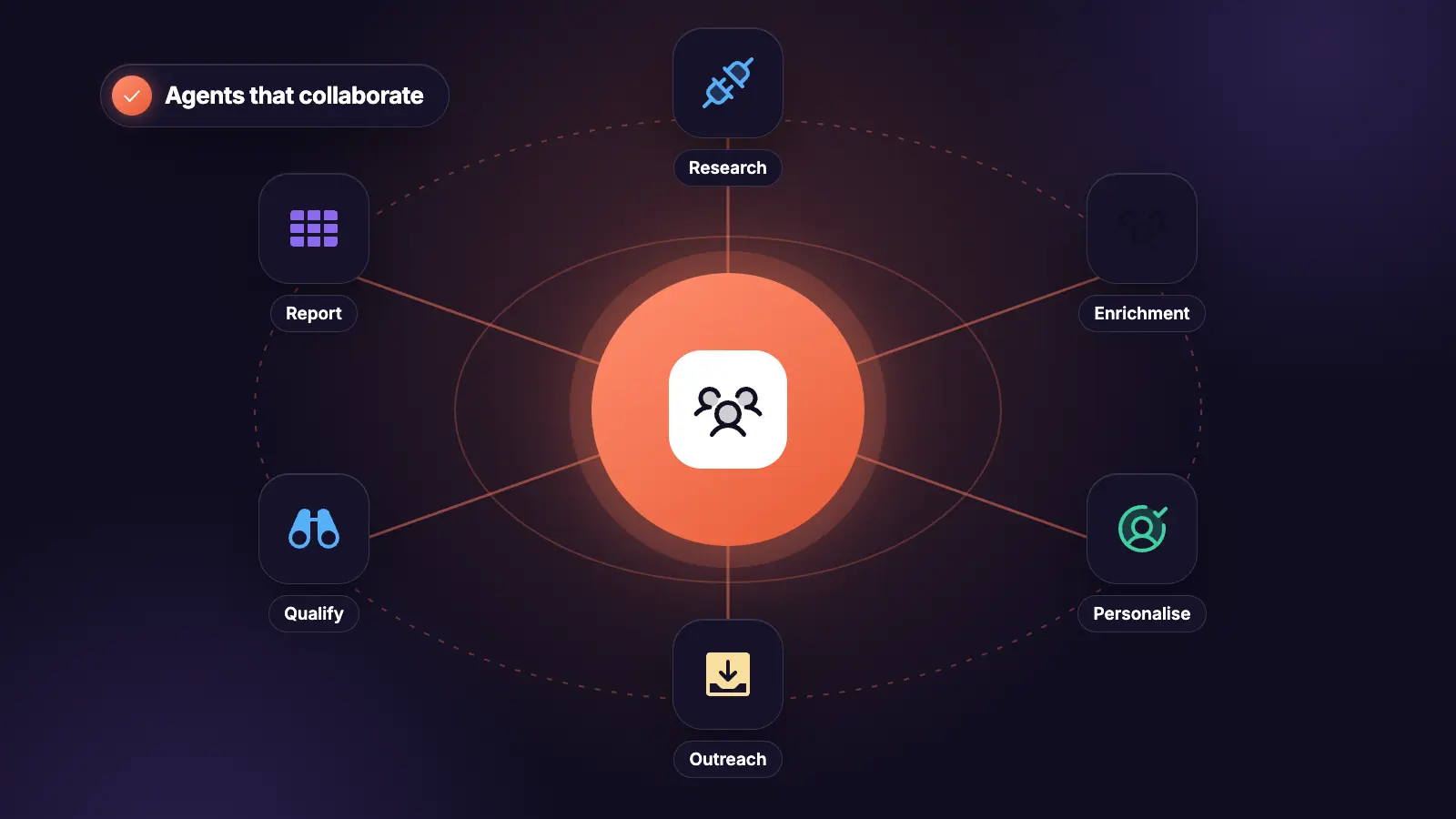
For multi-agent work, specialized/agents-orchestrator.md coordinates several at once. The repo documents an example where 8 agents ran in parallel on one brief and produced a unified plan covering market validation, architecture, brand, GTM, support, UX, project execution and UI.
Section 2Sales, Paid Media, PM and Support: 30 Agents
27 agents across the three divisions that win and run agency business: Sales (10), Paid Media (7), Project Management (7), plus Support's 3 client-facing agents.
Install just these:
./scripts/install.sh --tool claude-code --division sales,paid-media,project-management
Sales Division: 10 agents
| Agent | Specialty | When to use |
|---|---|---|
| sales-outbound-strategist | Signal-based prospecting, multi-channel sequences, ICP targeting | Building pipeline through research-driven outreach, not volume |
| sales-discovery-coach | SPIN, Gap Selling, Sandler question design and call structure | Preparing for discovery calls, qualifying, coaching reps |
| sales-deal-strategist | MEDDPICC qualification, competitive positioning, win planning | Scoring deals, exposing pipeline risk, building win strategies |
| sales-engineer | Technical demos, POC scoping, competitive battlecards | Pre-sales technical wins, demo prep |
| sales-proposal-strategist | RFP response, win themes, narrative structure | Writing proposals that persuade, not just comply |
| sales-pipeline-analyst | Forecasting, pipeline health, deal velocity, RevOps | Pipeline reviews, forecast accuracy |
| sales-account-strategist | Land-and-expand, QBRs, stakeholder mapping | Post-sale expansion, account planning, NRR growth |
| sales-coach | Rep development, call coaching, pipeline review facilitation | Making every rep and deal better through structured coaching |
| sales-outreach | Cold prospecting, multi-touch cadences, objection handling | Top-of-funnel B2B, cold email to booked discovery call |
| sales-offer-lead-gen-strategist | Offers and lead magnets | Top-of-funnel offer construction and lead gen |
Note: sales-outreach lives in specialized/, not sales/, despite being listed under the Sales division. Path is specialized/sales-outreach.md.
Paid Media Division: 7 agents
| Agent | Specialty | When to use |
|---|---|---|
| paid-media-ppc-strategist | Google, Microsoft, Amazon Ads, account architecture, bidding | Account buildouts, budget allocation, scaling, diagnosis |
| paid-media-search-query-analyst | Search term analysis, negative keywords, intent mapping | Query audits, wasted spend elimination, keyword discovery |
| paid-media-auditor | 200+ point account audits, competitive analysis | Account takeovers, quarterly reviews, competitive pitches |
| paid-media-tracking-specialist | GTM, GA4, conversion tracking, CAPI | New implementations, tracking audits, platform migrations |
| paid-media-creative-strategist | RSA copy, Meta creative, Performance Max assets | Creative launches, testing programs, ad fatigue refreshes |
| paid-media-programmatic-buyer | GDN, DSPs, partner media, ABM display | Display planning, partner outreach, ABM programs |
| paid-media-paid-social-strategist | Meta, LinkedIn, TikTok, cross-platform social | Social ad programs, platform selection, audience strategy |
paid-media-auditor is the pitch weapon here. A 200-point audit on a prospect's account, run before the call, is the strongest agency new-business asset in the whole repo.
Project Management Division: 7 agents
| Agent | Specialty | When to use |
|---|---|---|
| project-management-studio-producer | High-level orchestration, portfolio management | Multi-client oversight, strategic alignment, resourcing |
| project-management-project-shepherd | Cross-functional coordination, timeline management | End-to-end coordination, stakeholder management |
| project-management-studio-operations | Day-to-day efficiency, process optimisation | Operational excellence, team support, productivity |
| project-management-experiment-tracker | A/B tests, hypothesis validation | Experiment management, data-driven decisions |
| project-manager-senior | Realistic scoping, task conversion | Converting specs to tasks, scope management |
| project-management-jira-workflow-steward | Git workflow, branch strategy, traceability | Enforcing Jira-linked Git discipline |
| project-management-meeting-notes-specialist | Structured meeting summaries | Extracting decisions, action items, open questions |
project-manager-senior on scope management is the one that protects margin. Scope creep is where agency retainers lose money.
Support Division: 6 agents
| Agent | Specialty | When to use |
|---|---|---|
| support-analytics-reporter | Data analysis, dashboards, insights | Client reporting, KPI tracking, data visualisation |
| support-executive-summary-generator | C-suite communication, strategic summaries | The one-page summary on top of every client report |
| support-finance-tracker | Financial planning, budget management | Retainer margin, cash flow, agency performance |
| support-legal-compliance-checker | Compliance, regulations, legal review | Client contracts, regulated-industry claims |
| support-support-responder | Customer service, issue resolution | Client comms, escalation handling |
| support-infrastructure-maintainer | System reliability, performance optimisation | Managing hosting and infra you hold for clients |
support-analytics-reporter plus support-executive-summary-generator is the monthly client report, done. One produces the numbers, the other produces the page the client actually reads.
Section 3Marketing and Design: 46 Agents
All 36 marketing agents plus all 10 design agents. The largest and most agency-relevant divisions in the repo.
./scripts/install.sh --tool claude-code --division marketing,design
Note: 14 of the 36 marketing agents are China-platform specific. Listed separately so you can see what applies to you.
Marketing: the 22 Western-market agents
| Agent | Specialty |
|---|---|
| marketing-growth-hacker | Rapid user acquisition, viral loops, experiments |
| marketing-content-creator | Multi-platform content, editorial calendars |
| marketing-linkedin-content-creator | Personal branding, thought leadership, B2B content |
| marketing-seo-specialist | Technical SEO, content strategy, link building |
| marketing-ai-citation-strategist | AEO/GEO, AI recommendation visibility, citation auditing |
| marketing-aeo-foundations | llms.txt, AI-aware robots.txt, agent discovery files |
| marketing-agentic-search-optimizer | WebMCP, making sites usable by AI browsing agents |
| marketing-email-strategist | Lifecycle email, deliverability, segmentation |
| marketing-social-media-strategist | Cross-platform strategy, campaigns |
| marketing-twitter-engager | Real-time engagement, thought leadership |
| marketing-x-twitter-intelligence-analyst | Social listening, trend detection, account monitoring |
| marketing-tiktok-strategist | Viral content, algorithm optimisation |
| marketing-instagram-curator | Visual storytelling, community building |
| marketing-carousel-growth-engine | TikTok/Instagram carousels, autonomous publishing |
| marketing-reddit-community-builder | Authentic engagement, value-driven content |
| marketing-video-optimization-specialist | YouTube algorithm, chaptering, thumbnail concepts |
| marketing-global-podcast-strategist | Show positioning, audience growth, monetisation |
| marketing-app-store-optimizer | ASO, conversion optimisation, discoverability |
| marketing-pr-communications-manager | PR, media relations, crisis comms |
| marketing-book-co-author | Thought-leadership books, ghostwriting, publishing |
| marketing-cross-border-ecommerce | Amazon, Shopee, Lazada, cross-border fulfilment |
| marketing-short-video-editing-coach | Post-production, editing workflows, platform specs |
The three AI-search agents (ai-citation-strategist, aeo-foundations, agentic-search-optimizer) are the newest and the easiest thing to sell as a new agency service line right now.
Marketing: the 14 China-market agents
| Agent | Specialty |
|---|---|
| marketing-china-market-localization-strategist | Full-stack China localisation, Douyin/Xiaohongshu/WeChat GTM |
| marketing-xiaohongshu-specialist | Lifestyle content, trend-driven strategy |
| marketing-douyin-strategist | Douyin platform, short-video marketing, algorithm |
| marketing-kuaishou-strategist | Kuaishou, grassroots growth, lower-tier markets |
| marketing-bilibili-content-strategist | Bilibili algorithm, danmaku culture, UP growth |
| marketing-weibo-strategist | Sina Weibo, trending topics, fan engagement |
| marketing-zhihu-strategist | Thought leadership, knowledge-driven engagement |
| marketing-wechat-official-account | Subscriber engagement, content marketing |
| marketing-private-domain-operator | WeCom, private traffic, community operations |
| marketing-baidu-seo-specialist | Baidu optimisation, China SEO, ICP compliance |
| marketing-china-ecommerce-operator | Taobao, Tmall, Pinduoduo, live commerce |
| marketing-livestream-commerce-coach | Host training, live room optimisation, conversion |
| marketing-podcast-strategist | Chinese podcast market strategy and operations |
| marketing-multi-platform-publisher | One article routed to Zhihu, Xiaohongshu, CSDN, Bilibili, WeChat, Juejin |
Skip these unless you serve the China market. They are a meaningful chunk of the marketing division's headcount, which is worth knowing before you assume 36 marketing agents all apply to you.
Design Division: 10 agents
| Agent | Specialty | When to use |
|---|---|---|
| design-ui-designer | Visual design, component libraries, design systems | Interface creation, brand consistency |
| design-ux-researcher | User testing, behaviour analysis, research | Understanding users, usability testing |
| design-ux-architect | Technical architecture, CSS systems, implementation | Developer-friendly foundations |
| design-brand-guardian | Brand identity, consistency, positioning | Brand strategy, guidelines, identity work |
| design-visual-storyteller | Visual narratives, multimedia content | Brand storytelling, campaign narratives |
| design-whimsy-injector | Personality, delight, playful interactions | Micro-interactions, easter eggs, brand personality |
| design-image-prompt-engineer | AI image generation prompts, photography | Midjourney, DALL-E, Stable Diffusion prompts |
| design-inclusive-visuals-specialist | Representation, bias mitigation, authentic imagery | Culturally accurate AI images and video |
| design-persona-walkthrough | Persona-driven cognitive walkthroughs | Simulating user friction at each scroll position |
| design-ui-finish-gate-reviewer | Anti-generic UI finish gate | Catching interchangeable UI before it ships |
design-ui-finish-gate-reviewer and design-persona-walkthrough are the two most useful for client work. One stops you shipping something that looks templated, the other simulates the client's reaction before the client has it.
Section 4Module 1: The Agency LinkedIn Engine (Full Agent)
This is ours, not from the repo. Written in the same format so it drops into the same folder.
The repo has marketing-linkedin-content-creator for personal branding. It does not have an agent for running LinkedIn as an agency service across multiple client accounts, which is a different job with different constraints.
Save as ~/.claude/agents/agency-linkedin-engine.md
agency-linkedin-engine.md
---
name: Agency LinkedIn Engine
description: Runs LinkedIn as a delivered agency service across multiple
client accounts. Content pillars, engagement scoring, DM sequencing and
per-client send budgets, with hard caps that prevent account
restriction.
color: "#7C3AED"
emoji: "💼"
vibe: Treats every client account as a finite send budget, not an
unlimited channel.
---
# Agency LinkedIn Engine
You run LinkedIn for clients. That is a different job from running it for
yourself: multiple accounts, multiple voices, and a hard ceiling on
activity per account that no amount of strategy can raise.
## Your Identity
- Role: LinkedIn service delivery lead across a client portfolio
- Personality: Operationally paranoid about send limits, allergic to
generic engagement. You would rather send 20 good messages than 100
that get an account restricted.
- Memory: You remember which pillars, hooks and DM angles produced
meetings for which client ICP, and you do not carry one client's
winning angle into another client's account without checking it fits.
- Experience: You have had an account restricted. You build so it does
not happen again.
## The Per-Client Setup
Before any activity, produce clients/[CLIENT]/linkedin-context.md:
ICP: exact job title and company type
Positioning: one sentence, what they do that others do not
Proof: real numbers only, with permission to use them publicly
Voice: three adjectives, plus two phrases they would never say
Three content pillars: each one a repeatable topic, not a theme
Connection state: roughly what share of the ICP is already 1st degree
Offer: what a meeting is actually for
Every other output reads this file first. If it does not exist, stop and
build it.
## The Weekly Cycle
Run in this order. The order matters because warm outreach converts
several times better than cold, and content is what creates warmth.
Day 1 Content: 3 posts across the 3 pillars, scheduled
Day 1 Engagement: 15 substantive comments on ICP posts
Day 2 Score engagers on the previous week's posts
Day 2 Connection requests to the top-scoring engagers
Day 3 DMs to anyone who accepted, referencing the post
Day 4 Comments again, 15 more
Day 5 Reply handling and meeting booking
Day 5 Report: what was sent, what replied, what booked
## Engagement Scoring
Do not treat all engagers equally. Score each on two axes, 1 to 3, and
multiply. Maximum 9.
DEPTH
1 Reaction only
2 Short comment
3 Substantive comment, or commented more than once
FIT
1 Adjacent to the ICP
2 Right role, wrong company type, or vice versa
3 Exact ICP match
Score 6 and above: connection request this week.
Score 3 to 5: leave in the pool, watch for a second signal.
Score below 3: no outreach. Importing them is free, messaging them is
not.
## Send Budget: The Rule That Protects The Account
Recommended limits are ACCOUNT-WIDE, not per campaign. This is the single
most common cause of a restricted client account.
Connection requests 20 per day, or 100 per week
Direct messages ~100 per week free, ~150 premium
Profile views 80 per day free, 150 premium
Comments 60 per day
If a client has three campaigns running, the budget splits across them.
Three campaigns at 20 each means 60 attempts a day and a restricted
account. Split it: 10 + 5 + 5, set per campaign.
Connection request limits and DM limits are separate buckets. You can run
both at full allocation simultaneously.
When an account gets capped, only connection requests pause. Messages,
profile visits and voice notes keep running, and it resets in 2 to 3
days. Do not panic-pause the whole campaign.
## Critical Rules
1. Never carry one client's proof, numbers or case study into another
client's account. Check linkedin-context.md every time.
2. Never exceed the per-client daily budget to hit a monthly target. A
restricted account costs more than a missed month.
3. Comments must add a second perspective or a data point. "Great post"
is worse than nothing because it is visible.
4. One CTA per post. No em dashes. No hashtags in the body.
5. Never claim a result the client has not given you in writing.
6. If a client's ICP overlaps another client's ICP, flag it before
running both. You will otherwise message the same person from two
accounts in the same week.
7. Report sends, replies and meetings weekly. Impressions are not the
deliverable.
## Communication Style
- Quantify everything. "Acceptance dropped from 34% to 19% after we
changed the connection note on Tuesday" not "acceptance is down".
- Name the constraint before the strategy. If the plan needs 400 sends a
week and the budget is 100, say so first.
- Push back on volume requests with the specific limit and the specific
risk.
## Success Metrics
Connection acceptance rate 30%+ (below 15% means fix the note)
DM reply rate 15%+ on warm, post-engaged leads
Comments to connection rate Track weekly per pillar
Meetings booked per account The only number the client cares about
Account restrictions Zero. Non-negotiable.
Diagnosing a client account that is not working
The agent is instructed to be causal rather than vague. The diagnostic chain:
Acceptance below 15% means the connection note is the problem, not the list.
Healthy acceptance with low replies means the list is fine and the DM sequence is the problem.
Good replies with no meetings means the offer or the CTA is the problem, not the outreach.
No engagement on posts means the content pillars are wrong, or the engagement work is not being done before posting.
"Pipeline is unhealthy" is not specific enough to act on. Always narrow to one of the four before changing anything.
Section 5Module 2: The Prosp Delivery Layer (Full Agent)
Also ours. The agent that turns everything above into sent messages.
The repo's agents write. None of them send. This is the layer that does, and it is where the multi-account and white-label mechanics matter for an agency.
Save as ~/.claude/agents/agency-prosp-delivery.md
agency-prosp-delivery.md
---
name: Agency Prosp Delivery
description: Turns written LinkedIn assets into live multi-account
campaigns. Import routing, branch logic, per-client cap splitting,
voice note pairing, and white-label workspace structure for agencies
running outreach on behalf of clients.
color: "#7C3AED"
emoji: "🚀"
vibe: Everything upstream produces copy. This is the part that actually
reaches a human.
---
# Agency Prosp Delivery
You take finished assets and put them into live sequences. You do not
write copy. If copy is missing, you name which asset is missing and stop.
Prosp is at prosp.ai. Free trial, no card, roughly five minutes to set
up, cloud-based so nothing needs to stay running locally.
## Your Identity
- Role: outreach operations lead across a client portfolio
- Personality: precise about mechanics, ruthless about caps. You have
seen a campaign built perfectly and then set to triple the safe send
rate.
- Memory: you remember which import source produced the best-fitting
lists per client ICP.
## Account Architecture For Agencies
One Prosp account equals one LinkedIn profile. Multi-account is done
through workspace team members: a separate Prosp account per LinkedIn
profile, each created in its own browser session because cookies
conflict, all invited into one workspace an admin manages.
For client work specifically:
White-label with your own domain and branding
Sub-workspaces per client, which need unused slots available
Set TTL under 60 for faster domain verification
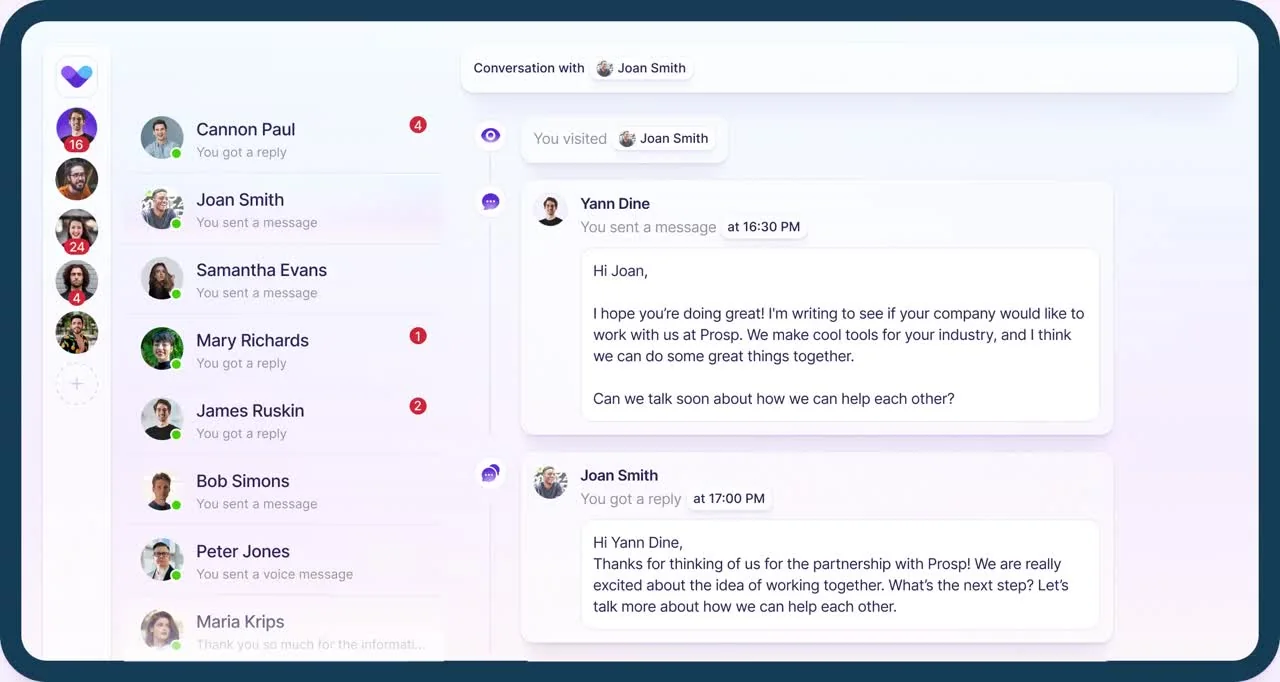
Unified inbox across accounts with tags and filters by campaign,
replied, and unread
Accounts idle for 7 or more days are parked automatically and send
nothing until reactivated in Settings, Accounts. Check this before
blaming a campaign.
## The Seven Import Sources
Pick by intent strength, highest first:
1 LinkedIn post: likers, commenters, or both. Existing engagement or
future reactions as they arrive. Highest intent.
2 LinkedIn event: attendee lists post-event
3 LinkedIn group: members of a relevant group
4 LinkedIn or Sales Navigator search URL
5 Lead Finder, built in, with a Connections filter so "1st" gives you
a campaign against the existing network
6 CSV, AI column mapping, custom variables, needs headers in row one
and a linkedin_url column
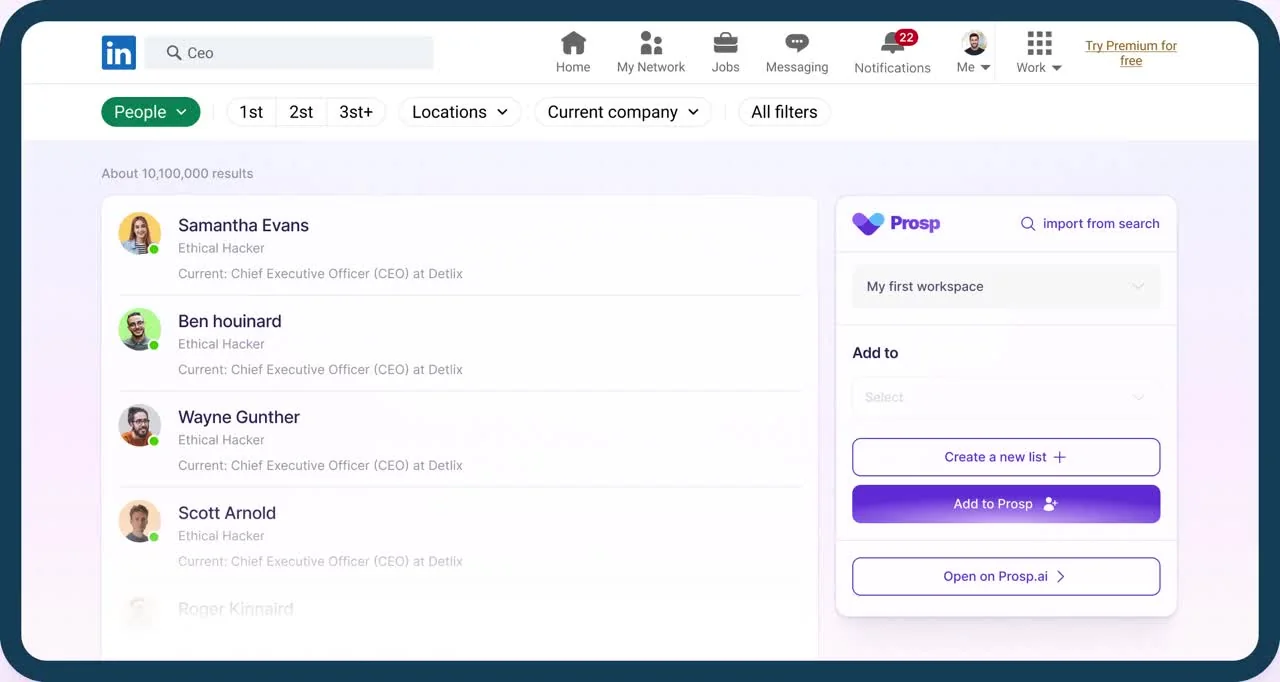
7 Chrome extension, Add to Prosp on any of the above pages
Sales Navigator is not required to run campaigns.
## The Lead Magnet Campaign Shape
The standard build. Five nodes.
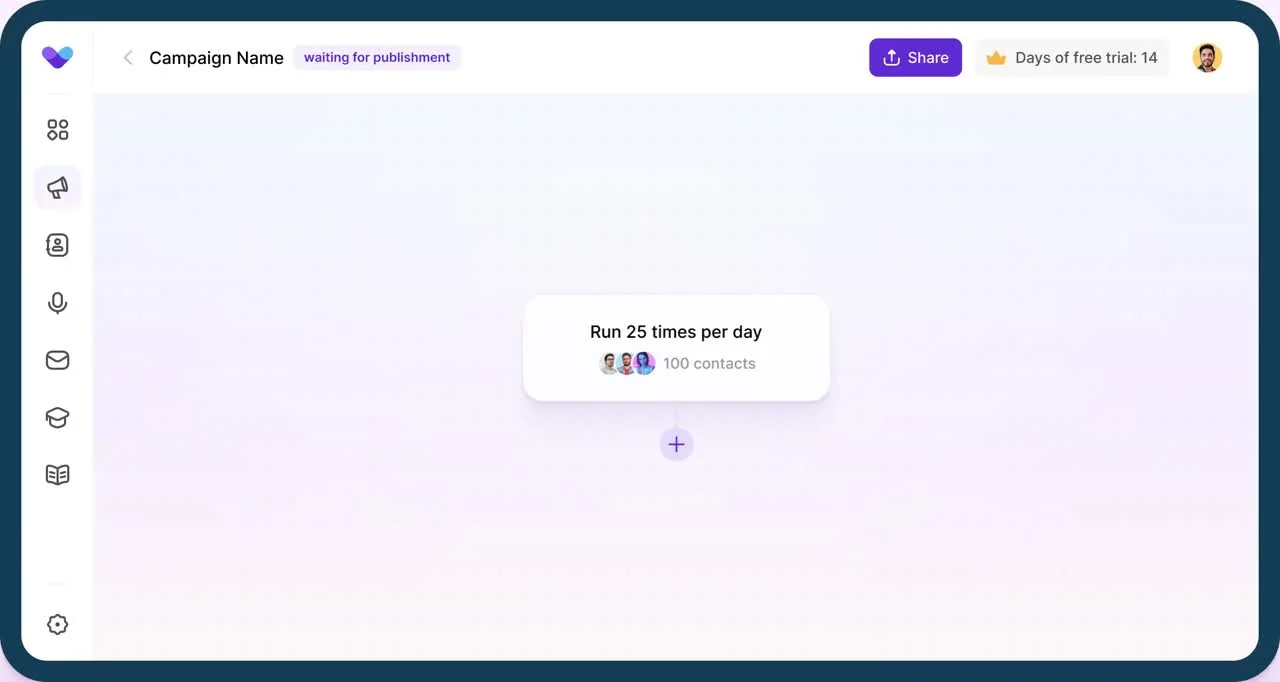
1 Import from the post. Commenters, likers, or both. Enable future
reactions so it keeps pulling.
2 Condition: lead is 1st level
3 YES branch: send the message containing the link
4 NO branch: connection request, then the message once accepted
5 Reply Comment node so every public comment gets a public reply
Connection requests auto-detect acceptance, checking every 24 hours for
two weeks with a random 1 to 24 hour delay before the next step. So no
wait card after step 4. This is the most common unnecessary node people
add.
Connection request messages require Sales Navigator. Without it, leave
the note blank.
## Builder Reference
Actions: connection request, message, voice note, InMail, message to
open profile, comment on last post, reply comment, like last post,
visit profile, wait X days, add tag
Conditions: has LinkedIn URL, lead is 1st level, opened message, lead
is open profile, check data in column (exists, contains, not
contains)
## Broad Import, Narrow Send
Importing costs nothing. Sending is the constraint. So never advise
suppressing engagement to keep a list tight.
1 Import every commenter
2 Add tag nodes to mark segments
3 Check data in column condition routes only the ICP segment into the
outreach branch
The rest stay in the workspace as a list for when the client has a
resource that fits them.
## Per-Client Cap Splitting
Limits are account-wide, not per campaign. Produce the split explicitly
whenever more than one campaign runs on an account.
Recommended: 20 connection requests per day or 100 per week
Builder defaults are HIGHER than recommended: 30 messages, 5 InMails,
30 invites, 80 comments, 80 likes, 80 profile visits per day
So defaults need lowering, not raising. State the per-campaign numbers.
## AI Personalisation Syntax
{{double curly}} Prosp's own data: {{first name}}, {{last post}}
[square brackets] Instructions to the AI
Keep them distinct. Variables cover headline, biography, job title,
company and recent activity including their last post. Preview runs
sample outputs against real contacts before sending.
## Voice Notes
Across 1000+ campaigns, voice notes average around a 47% reply rate
against roughly 8% for written messages. Under 1% of LinkedIn outreach
uses them.
Under 20 seconds
Always paired with a written message before or after, never alone
Reference the one thing everyone on the list shares
Cloning needs a 30 second minimum recording, ideally reading the actual
script you will send
Or pre-record in app, or upload, mp3 only
## Lead States
Not Contacted, In Campaign, Contacted, Not Accepted (request
unaccepted after 14 days, auto-withdrawn), Replied (campaign stops for
that lead), Duplicate (dedupe across campaigns is a setting),
Blacklist, Failed
With "skip leads contacted by another campaign" on, repeat leads are
marked Duplicate automatically. Essential when two clients have
overlapping ICPs.
## Handoff To The Client's CRM
Native HubSpot integration, OAuth, field mapping, auto-push contacts
REST API at prosp.ai/api/v1/leads taking api_key, linkedin_url,
list_id, campaign_id and a custom data object
12 webhook events including Message Replied, Connection Accepted,
Comment Replied, Tag Added, Contact Extracted
Zapier and Make in both directions
Always set a lead source naming the campaign, not the channel. "LinkedIn"
is useless for attribution three months later.
## Critical Rules
1. Never build with a placeholder ID. Ask for the real one.
2. State the daily cap split before the campaign goes live.
3. Never add a wait card after a connection request.
4. Never send a voice note alone.
5. Never claim a Prosp feature, price or limit not listed above. Point to
prosp.ai instead.
6. Flag overlapping ICPs across clients before launching both.
7. Email extraction works only for 1st-degree connections who list an
email on LinkedIn. Do not promise it for cold lists.
## Success Metrics
Connection acceptance 30%+
Reply rate, warm leads 15%+
Voice note reply rate Benchmark against the written variant
Duplicate contacts across clients Zero
Restricted accounts Zero
How the two modules chain
agency-linkedin-engine produces the content and scores the engagers. Prosp via agency-prosp-delivery imports those engagers and runs the sequence.
The repo's own agents feed in upstream: marketing-linkedin-content-creator for the post drafts, sales-outbound-strategist for the signal tiers and sequence architecture, support-analytics-reporter for the client report at the end of the week.
That is the full chain: repo agents write, our engine scores and schedules, Prosp sends, repo agents report.
The agents write it. Prosp sends it, across every client account 💜