


Section 1What Claude Voice Mode Is and What It Changes
Sources:
- YouTube: "Opus 5 + Claude Voice Mode + Codex Voice" (Riley Brown, Agent Native, July 25 2026)
- Anthropic blog: anthropic.com/news/claude-opus-5 (July 24, 2026)
- Existing Opus 5 for Marketing lead mag
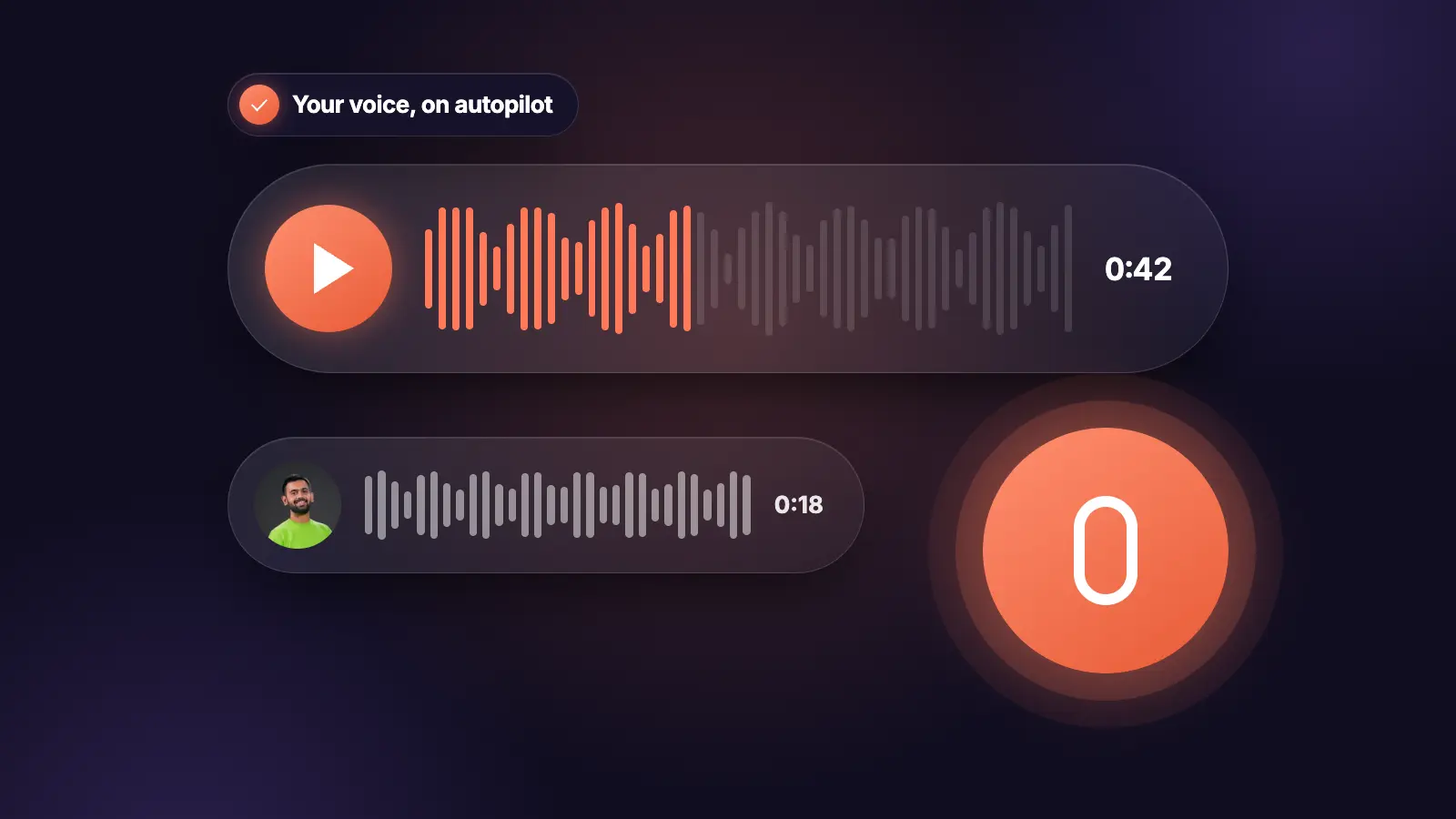
Claude Voice Mode launched in the Claude iOS app alongside Opus 5 on July 24, 2026. It is a real-time voice agent that runs on Opus 5 (or Fable 5) and connects to all of your existing tools: Notion, Gmail, Google Calendar, Google Drive, Slack, browser, and anything else connected to your Claude setup.
This is not a voice-to-text transcription tool. It is a voice-controlled agentic interface. You speak, the agent executes multi-step tasks across your connected tools in real time, and speaks back to you. The same tasks you would run in Claude Cowork or Claude Code by typing, you can now run by speaking.
Where it lives: the white voice button in the Claude iOS app.
Model: Opus 5 by default. Fable 5 also available (select from within the voice interface).
Platform: iOS app only at time of writing. Claude desktop app remote mode extends this to desktop control from mobile.
What it changes for GTM teams:
Most high-value Claude use cases require you to be at a computer. Voice Mode changes that. You can run research, draft documents, edit Notion pages, draft emails, read your inbox summary, and deploy a landing page while away from your desk. The gap between mobile and desktop capability is closing.
Voice Mode vs typing: what is different
Same model, same tools, same capabilities. The input method changes, not the intelligence.
What voice adds: lower friction for multi-step task initiation, natural back-and-forth iteration ("actually, make it more energetic" mid-task), hands-free use while travelling, recording a video, or away from a desk.
One honest limitation from the video: voice mode cannot read URLs aloud. If the agent builds something and you need the link, exit voice mode and ask in text: "where's the link?" It will return it immediately. Within voice mode, it physically cannot speak a full URL. This is the primary rough edge in the current release.
The pausing/freezing issue: the model occasionally pauses mid-sentence while processing. Riley notes this is being patched. It is a latency issue, not a capability issue.
Section 2Live Marketing Workflows in Voice Mode: What Riley Built
Source: Riley Brown live demo (Agent Native, July 25, 2026)
Every task in this section was completed live on camera in real time using voice mode only. No typing.
Research a topic and write to Notion
Riley asked Claude Voice to:
- Search Notion for a specific document (Agent Native Weekly, created July 22)
- Read what was in it and summarise what the video covered
- Research the new Claude Voice feature
- Write 7-8 concise bullets with hyperlinks into a specific section of the Notion doc
Result: completed end-to-end by voice. Claude found the document, read it, searched the web, and wrote the researched bullets with hyperlinks into the correct section of the Notion page.
For GTM teams:
# Live example prompt (spoken)
"There's a Notion document called [DOCUMENT NAME]. Can you find it?
In the [SECTION NAME] tab, it's empty right now.
Please do some research on [TOPIC] and write out 7 or 8
concise bullets on what it can do and use cases.
Include hyperlinks to any sources you use."
Use cases: briefing documents updated on the go, meeting prep notes written while commuting, research written into a client workspace before a call, campaign summaries added to team Notion without opening a laptop.
Add new sections to a live document
After the research bullets were added, Riley asked Claude Voice to:
- Go to the bottom of the same Notion document
- Add a new section with tabs containing whatever it thought he might want in the video
Claude created a section called "Your Move This Week" with four tabs: Do This Monday, What to Watch, My Take, and Outro.
For GTM teams:
# Spoken prompt
"Below the [SECTION] section, I want you to add a new section
in tabs of whatever you think I might want to include in [CONTEXT]."
This is the agentic judgment capability of Opus 5 applied through voice: not just executing instructions but proposing structure the user did not specify. For content teams, this means asking for a first draft of a meeting doc or campaign brief structure without specifying every section.
Inbox summary and email draft
Riley asked Claude Voice to:
- Read his Gmail inbox and give him an update (no company names, no people names, just what needs attention)
- Create a Gmail draft to a specific address, referencing the Notion doc from earlier as context
What Claude returned on the inbox summary:
- Two failed or overdue subscription payments (a card on file has likely expired)
- A warm follow-up from someone met with that day wanting coffee in New York next week
Then Riley said: "Create a draft to emily@[DOMAIN] letting her know this video is complete and it matches the Notion doc."
Claude created the draft, set the subject line as "Agent Native Weekly Recording Done", included a link to the Notion outline in the body, and confirmed it was sitting in drafts.
For GTM teams:
# Spoken prompts
"Give me the latest update on my emails.
Don't give me company names or people's names.
Just tell me what's going on and what needs attention."
"Can you draft an email to [EMAIL ADDRESS]?
Let them know [CONTEXT].
Create a draft so I can review it when I'm at my computer."
The key workflow: inbox triage and draft creation while away from desk. You review and send when back at the computer. The agent does the work; you do the approval.
Deploy a landing page by voice
Riley asked Claude Voice to:
- Build a personal landing page for him
- Include that he runs the Agent Native podcast
- Make it cool
- Deploy it to Vercel
Claude built the page and deployed it to Vercel by voice. The page was live within the conversation.
The limitation hit: Claude could not speak the URL in voice mode. Riley had to exit voice mode and ask in text to get the link. This is the one known rough edge.
# Spoken build prompt
"Create a landing page for me, [YOUR NAME].
I run [DESCRIBE YOUR PODCAST/CHANNEL/BUSINESS].
Make it cool. Deploy it to Vercel."
# When you need the URL: exit voice mode, then type:
"Where's the link?"
For GTM teams: landing pages for campaigns, event registrations, lead magnets, and product announcements can now be initiated by voice, deployed while on the move, and reviewed later. You do not need to be at a desk to kick off a deployment.
Investor slide deck built in Cowork by voice
Riley used Claude Cowork (not the voice interface) but switched the model to Opus 5 and ran the following prompt:
"Please extract the chorus.com site using Firecrawl to get the brand.
Make a professional slide deck for investors to raise an A round.
Make up fake numbers. It should be a final deck that will get the job done.
Make it amazing."
Result: took 40+ minutes. Produced a slide deck that matched the chorus.com branding almost exactly, including pulling logos and design elements from the live site. Riley described it as one of the best PowerPoints he had seen.
This is not a voice workflow but it illustrates what Opus 5 does in Cowork for marketing: brand-matched presentation creation from a URL and a brief, without any manual asset work.
For GTM teams: pitch decks, QBR presentations, client proposals, and conference decks can be initiated with a URL and a brief. Opus 5 scrapes the brand, pulls assets, and builds to the brand identity automatically. The time cost is significant (40 minutes) so plan accordingly.
Section 3GTM Use Cases: Where Voice Mode Adds the Most Value
Source: Riley Brown (Agent Native), practical framing for GTM teams
The use cases where voice mode adds the most value relative to typing are the ones where you are away from a desk, in transit, recording something, or want to iterate naturally in conversation.
Highest-value marketing use cases for voice mode
- Morning inbox triage on the commute
Ask Claude Voice to summarise overnight emails, flag what needs attention, and draft replies to the 2-3 that are time-sensitive. Review and send when at the desk.
- Notion document updates before a meeting
On the way to a client meeting, ask Claude Voice to find the client's Notion page, check what was agreed last time, and write a 3-line prep note in the doc. You arrive briefed.
- Post-meeting capture
Immediately after a call, speak the key decisions and next steps to Claude Voice. It writes them into the relevant Notion doc, creates follow-up draft emails, and updates the deal status in your CRM if connected.
- Content ideation while walking
Brain dump post ideas, campaign angles, and hook variations while walking. Claude Voice writes them into a Notion capture doc. You review and select later.
- Research-to-brief while in transit
Ask Claude Voice to research a prospect before a call (without naming the person directly in voice mode if sensitive). Have it write a call brief into Notion before you arrive.
- Campaign launch prep
Voice-initiate a sequence of tasks: research the competitor, update the competitive brief in Notion, draft the campaign announcement email, and add the key dates to Calendar. Four tasks, one voice conversation.
- Remote Cowork sessions from phone
Leave your computer running Claude Cowork at the office. Use the Claude iOS remote feature to send tasks to it from anywhere. Voice-initiate new agent tasks on your desktop without touching the keyboard.
The compound workflow: voice plus connected tools
The full power of voice mode is in chaining tools within a single conversation. The live demo showed this sequence in one unbroken voice conversation:
- Find a Notion document
- Research a topic on the web
- Write researched bullets with hyperlinks into the document
- Add new sections the agent suggested
- Summarise the Gmail inbox
- Draft a Gmail message referencing the Notion doc
- Build and deploy a landing page to Vercel
All of this in one voice conversation with no typing except to retrieve the Vercel URL at the end.
The practical implication: a morning routine that used to require opening 5 tabs and typing for 20 minutes can now be spoken in 5 minutes while getting ready for the day.
Connectors that work with voice mode (same as Claude Cowork):
- Notion: read pages, write to pages, create pages, update sections
- Gmail: read inbox, summarise, create drafts
- Google Calendar: read schedule, check for conflicts
- Google Drive: read and create documents
- Slack: read channels, draft messages
- Browser: search the web, scrape pages
- Vercel: deploy web apps
- Any MCP connector you have set up in Claude
Section 4Claude Voice vs Codex Voice: What Each Does and When to Use Which
Source: Riley Brown (Agent Native), OpenAI Codex Voice for comparison
Two voice features launched within 10 minutes of each other on July 24, 2026: Claude Voice in the iOS app and Codex Voice in the Codex desktop/app. Both allow voice control of an AI agent. Understanding the difference helps GTM teams pick the right workflow.
Claude Voice vs Codex Voice
| Claude Voice | Codex Voice | |
|---|---|---|
| Where it lives | Claude iOS app | Codex desktop app + mobile remote |
| Model | Opus 5 (default) or Fable 5 | GPT 5.6 |
| Tool connections | All Claude connectors (Notion, Gmail, Calendar, Slack, browser, Vercel, all MCPs) | Paper MCP, Gmail, browser, Canva-like board (Paper), iOS simulator |
| Multi-agent support | Via Claude Code sub-agents | Can spin up new tasks and parallel high-reasoning jobs |
| Visual design | Via Claude Design MCP | Via Paper board (Figma-like AI canvas) |
| Remote desktop control | Via Claude desktop app remote | Via Codex Remote (phone controls desktop Codex) |
| Record-to-skill | Screen record to skill in Claude desktop | Record and Replay skill in Codex |
| URL limitation | Cannot speak URLs in voice mode (exit to text) | Same limitation observed |
Riley's main takeaway on competition: both companies are copying each other's features within days. The super app structure (chat, work/Cowork, code) is identical across Claude and Codex/ChatGPT. The race is to make the most powerful agent workflows accessible from any device, not just from a terminal.
For GTM teams: do not spend time picking the right tool. Both work. Both are improving at speed. Go deep on workflows, not tool selection.
Codex Remote: control your desktop from anywhere by voice
Codex also launched a remote mode alongside voice. You leave Codex running on your desktop, connect from your phone, and control it by voice from anywhere.
Riley's live demo:
- Connected to his desktop Mac from his phone
- Asked for a summary of the day's Codex chat sessions and Calendar
- Spun up a new task to summarise sponsorship emails only
- Asked what tools and skills were available on the Mac (the agent listed: Paper, Gmail, Calendar, Drive, Notion, Slack, browser control, image and video, social posting, PDF, stocks and sheets)
For GTM teams with a permanent desktop setup: this means your full agent stack is accessible from anywhere by voice. You can kick off a competitive research run, start a content batch, or trigger a CRM hygiene pass from your phone while away from the office.
Claude equivalent: the Claude desktop app has the same remote capability. You can use the Dispatch tab in the mobile app to send tasks to your desktop, and now with voice mode you can do this entirely by speaking.
Section 5Quick Reference: Setup, 7 Voice Prompts, and What to Keep in Mind
All key information in one place.
Setup
# Enable Claude Voice Mode
1. Download the Claude iOS app (claude.ai/download)
2. Open the app
3. Tap the white voice button in the chat interface
4. Select model: Opus 5 (default) or Fable 5
5. Start speaking
# Required for full GTM workflows
# Connect your tools in Claude settings before using voice:
# Settings > Connectors > enable Notion, Gmail, Google Calendar,
# Google Drive, Slack, and any other tool you use
# Each connector requires a one-time authorisation
# For remote desktop control from phone
1. Open Claude desktop app on your computer
2. Keep it running
3. Open Claude iOS app
4. Dispatch tab > voice
5. Your desktop agent is now voice-controllable from anywhere
# Critical: how to get a URL in voice mode
# Voice mode cannot speak URLs
# Say or type: "Where's the link?" AFTER exiting voice mode
# Claude returns the URL as text immediately
The 7 most useful voice prompts for GTM
# 1. MORNING INBOX TRIAGE
"Give me the latest update on my emails.
Don't give me any company names or people's names.
Just tell me what needs attention and what I can ignore."
# 2. DRAFT FROM INBOX
"There's an email from [DESCRIBE, NOT NAME] about [TOPIC].
Create a Gmail draft replying to it.
[DESCRIBE WHAT TO SAY]
Create the draft and confirm when it's in my drafts."
# 3. NOTION RESEARCH WRITE-UP
"Find the Notion document called [NAME].
In the [SECTION] tab, please research [TOPIC]
and write 7-8 concise bullets with hyperlinks to your sources."
# 4. MEETING PREP
"I have a call with someone from [COMPANY TYPE, NO NAMES] in 30 minutes.
Find our Notion doc for them if there is one.
Write a 3-line prep note in the doc: what we agreed last time,
what I should ask, and what the goal of this call is."
# 5. POST-MEETING CAPTURE (immediately after a call)
"I just finished a call. Here's what happened: [SPEAK YOUR SUMMARY]
Write the key decisions and next steps into [NOTION DOC NAME].
Draft a follow-up email summarising what was agreed.
Put it in my Gmail drafts."
# 6. CONTENT BRAIN DUMP
"I'm going to brain dump some LinkedIn post ideas.
Write them all into a Notion page called [PAGE NAME].
[SPEAK YOUR IDEAS]
Organise them by content type when you're done."
# 7. CAMPAIGN INITIATION
"I need to kick off a campaign for [DESCRIBE].
Research [COMPETITOR OR MARKET CONTEXT] quickly.
Update the competitive brief in [NOTION PAGE].
Draft an internal announcement email for the team.
Add the campaign launch date [DATE] to my Calendar."
What to keep in mind
From Dan Shipper's early access testing of Opus 5 (quoted in Riley's video): the model argues with instructions, stops before work is finished, and does not play well with existing skills and plugins on first use. If you hit this, delete existing skills and rebuild them for Opus 5. It follows instructions more closely than Opus 4.8 and prompts written to overcome old model reluctance are now too aggressive.
Riley's main takeaway for business owners: do not spend time picking the right model or the right platform. Both Claude and Codex are improving at speed. Go deep on your workflows. The value is in the workflow, not the tool.
Tokens: agentic voice tasks use significantly more tokens than a text chat. Voice mode running Opus 5 on multi-step workflows involving Notion, Gmail, and Vercel in one session will consume a material chunk of your plan's usage. Monitor usage and use medium effort rather than max for most voice-initiated tasks unless the task genuinely requires frontier reasoning.