


Section 1Setup: Two Context Files, Six Categories, Effort Routing
60 skills for running the agency, not for doing the client work. New business, delivery, retention, margin, team and reporting.
Every one reads two files first. Build those before installing anything.
The two files everything reads
agency/agency-context.md โ who you are, once.
# Agency Context
## What we sell
Services, one line each, with the price band:
What we refuse to do:
Minimum engagement size:
## Who we sell to
Vertical, exact:
Company size band:
Buyer job title:
Who we turn away, and why:
## Commercials
Target gross margin per retainer:
Fully loaded cost per delivery hour:
Discount authority, and whose:
Payment terms and notice period:
## Capacity
Delivery heads and their disciplines:
Hours available per head per week, realistically:
Current utilisation:
## Proof
Only results with a real number and written permission:
Clients we may name publicly:
## Banned
<never_use_these>
Claims we cannot evidence:
Numbers nobody approved:
</never_use_these>
clients/[CLIENT]/client-context.md โ one per client.
# Client Context: [NAME]
Contract start, end, notice period:
Monthly fee, and what it covers:
What it explicitly excludes:
Agreed deliverables, per month:
Success criteria, in their words, with a date:
The economic buyer, and the day-to-day contact:
Who else can kill this account:
Their ICP, positioning and voice:
Proof they have approved for public use:
Escalation history:
The exclusions line in the client file prevents more scope creep than any process document. It is what scope-creep-detector reads.
The six categories
| # | Category | Skills | Owns |
|---|---|---|---|
| 1 | New Business | 10 | Pipeline and pitching |
| 2 | Onboarding and Delivery | 10 | The first 90 days |
| 3 | Account Management | 10 | Retention and expansion |
| 4 | Operations and Margin | 10 | Whether any of it is profitable |
| 5 | Team and Capacity | 10 | Who does the work |
| 6 | Reporting and Comms | 10 | What the client sees |
Category 4 is the one most agencies have nothing for, and it is where the business is won or lost. An agency with full pipeline and no margin visibility grows itself into trouble.
Install all 60
mkdir -p agency
mkdir -p clients
# 1. New Business
mkdir -p .claude/skills/{niche-selector,offer-architect,free-audit-generator,audit-at-scale,pitch-deck-builder,rfp-responder,pricing-architect,proposal-writer,win-loss-analysis,pipeline-diagnostic}
# 2. Onboarding and Delivery
mkdir -p .claude/skills/{kickoff-brief,client-context-builder,first-90-days,deliverable-spec,scope-creep-detector,delivery-qa-gate,dependency-chaser,change-request-writer,handover-pack,delivery-retrospective}
# 3. Account Management
mkdir -p .claude/skills/{account-health-score,churn-risk-flagger,qbr-builder,expansion-finder,renewal-planner,escalation-handler,relationship-mapper,referral-request,case-study-writer,client-offboarding}
# 4. Operations and Margin
mkdir -p .claude/skills/{retainer-margin-check,time-to-value-tracker,effort-router,tool-cost-audit,capacity-forecast,rate-card-review,unprofitable-client-check,process-documenter,sop-writer,ops-diagnostic}
# 5. Team and Capacity
mkdir -p .claude/skills/{role-scoper,job-spec-writer,onboarding-path,skill-gap-audit,workload-balancer,one-to-one-prep,feedback-writer,performance-review,knowledge-base-builder,contractor-brief}
# 6. Reporting and Comms
mkdir -p .claude/skills/{monthly-report,exec-summary,metric-narrator,bad-news-email,status-update,meeting-notes,slack-digest,client-newsletter,internal-weekly,annual-review}
Effort routing
| Effort | Use for |
|---|---|
| Low | meeting-notes, slack-digest, status-update, dependency-chaser, metric-narrator |
| Medium | Most of categories 2, 5 and 6. Known artefact from known inputs. |
| High | proposal-writer, pricing-architect, qbr-builder, escalation-handler, bad-news-email |
| Highest | niche-selector, offer-architect, unprofitable-client-check, ops-diagnostic |
bad-news-email sits high deliberately. It is four sentences long and it is the highest-stakes writing an account manager does all quarter.
Section 2Categories 1 and 2: New Business and Delivery (20 Skills)
20 skills. Category 1 wins the work. Category 2 delivers the first 90 days without losing money on them.
Category 1: New Business, 10 skills
---
name: niche-selector
description: Decide which vertical to specialise in, from your own
delivery data. Use annually, or when growth stalls.
---
Read agency-context.md and every clients/[CLIENT]/client-context.md.
For each vertical you have served, calculate:
- Average retainer size
- Average tenure in months
- Average gross margin
- Delivery hours per pound of revenue
- How many of the deliverables were reusable across clients
The last row is the one that decides it. A vertical where the same
playbook works for every client compounds. One where every engagement
is bespoke does not, regardless of the fee.
Output the three verticals ranked, the evidence for each, and the one
you should stop serving.
If you have fewer than three clients in a vertical, say so. That is
not a pattern, it is a coincidence.
---
name: offer-architect
description: Define a productised offer specific enough to sell
without a discovery call. Use before any outreach.
---
Ask, in ONE message, for anything missing:
1. Which service line to lead with
2. Which vertical, exactly. "B2B" is not a vertical.
3. What you have delivered before, with numbers
4. What you refuse to do
5. Your delivery cost per client per month
OUTPUT
THE OFFER
- One sentence a stranger understands
- What they receive, as objects: files, dashboards, workflows
- Week 1, week 2, week 4
- What is explicitly not included
- The price, and what it does not cover
THE WEDGE
- The free thing that proves competence before they pay
- Why it is useful even if they never buy
THE DISQUALIFIER
- Who this is not for, stated openly
RULES
- No "bespoke" or "tailored". Those words mean the offer is undefined.
- The price appears. An offer with no number is a conversation.
- Never invent a result. Only what is in agency-context.
---
name: free-audit-generator
description: Produce a free audit of a prospect's business as the
outreach wedge. The highest-converting agency lead magnet.
---
SIX SECTIONS, under 900 words total.
1. What they are doing well. Two genuine, specific things.
2. The thing costing them most. One finding, quantified only if the
arithmetic is defensible from something observable.
3. Four more findings. Each: issue, evidence with URL, fix, effort.
4. What I would do first. ONE action they can take WITHOUT us.
5. What this audit does not cover, and what access it would need.
6. If you want the rest. Two lines and the price.
FAIL CLOSED IF fewer than four findings have observable evidence.
Report the count and skip the prospect. A thin audit is worse than
none.
Section 4 must be usable without us. That is what makes it a gift
rather than a sales document, and it is the instruction most likely
to get softened.
Section 5 is counterintuitive and it is what makes the rest
credible. Naming what you could not assess earns trust in what you
did.
---
name: pricing-architect
description: Set or review the price of an offer from real delivery
cost. Use before quoting, and annually across the book.
---
Read agency-context.md for loaded cost per hour and target margin.
BUILD UP FROM COST, never down from a competitor's price.
1. Delivery hours per month, by discipline, realistically
2. Loaded cost of those hours
3. Tool and data cost attributable to this client
4. Account management overhead, which is always underestimated
5. The QA and review time, which is usually forgotten entirely
6. Total cost. Then divide by (1 - target margin) for the floor.
THEN THE THREE PRICES
Floor Below this you are subsidising them
Target Cost plus target margin
Stretch What the value justifies where the buyer has budget
Output all three and the assumptions behind each.
Never quote the floor. It leaves nothing for the month something goes
wrong, and something always does.
If the floor exceeds what the vertical will pay, say so. That is a
positioning problem, not a pricing one.
---
name: proposal-writer
description: Write a client proposal from call notes. Same day as the
call, always.
---
ASK, in one message: the problem in their words quoted literally,
what they already tried and why it failed, deliverables agreed,
price, budget signal, and anything that would kill the deal.
FOUR SECTIONS
1 DIAGNOSIS. Their problem in their own phrasing, not a paraphrase.
Then the underlying cause using why the last attempt failed. Then
what it costs to leave it.
2 APPROACH. Phased. Per phase: what we do, what they receive as an
object, roughly when. Phase one addresses why the last attempt
failed. One line naming what we do NOT do.
3 SCOPE AND INVESTMENT. Branch on budget signal:
named a figure -> ONE option at that price
gave a range -> TWO options, quote and 70% reduced scope
dodged it -> THREE tiers at ~70%, 100%, 140%
no budget yet -> ONE option plus paid discovery at ~15%
State exclusions, payment terms, notice period.
4 WHAT COULD GO WRONG. Two or three real risks, starting with the
deal-killer they named, each with what we do about it.
Timeline in week ranges, never dates. Never discount unprompted.
Never invent a number, client or result.
The remaining five:
audit-at-scaleโ batch the audit across a graded list. Produce ONE at high effort and stop for approval before batching fifty against an unvalidated template.pitch-deck-builderโ the deck that supports a live pitch, not one that replaces it. Ten slides, one idea each, no appendix.rfp-responderโ extracts every requirement, scores fit per line, and recommends bid or no-bid before you write a word. Most RFPs are wired for an incumbent and the score tells you which.win-loss-analysisโ run on both. The losses are worth more, and the question is what they chose instead and why, not whether price was a factor.pipeline-diagnosticโ works the chain in order, stops at the first failure, and outputs exactly one change per week.
Category 2: Onboarding and Delivery, 10 skills
---
name: first-90-days
description: Build the onboarding plan from what was actually sold.
Use the day the contract is signed.
---
Read the proposal and clients/[CLIENT]/client-context.md. The plan
delivers what was sold, not what is easy to deliver.
WEEK 1 Access, data, and the single first outcome. Name it.
WEEK 2 The first real output the client can use, not a plan
WEEK 4 The second deliverable from the proposal
WEEK 8 Review against phase one of the proposal, in writing
WEEK 12 The 90-day review, against the success criteria they set
PER WEEK: what we do, what they do, and the named owner on each side.
A plan with no owner on their side does not happen.
DEFINE FIRST VALUE explicitly. One sentence: the moment they get
something they could not get before. Everything in week 1 serves it.
FLAG any promise in the proposal that onboarding cannot deliver in
phase one. Raise it now, internally, rather than at the week 8
review.
---
name: scope-creep-detector
description: Check any incoming request against the contract before
anyone starts work. Use on every request that was not planned.
---
Read the deliverables and the exclusions in client-context.md.
CLASSIFY the request as exactly one of:
IN SCOPE Listed in the agreed deliverables. Do it.
ADJACENT Not listed, under two hours, no precedent risk.
Do it, log it, mention it in the monthly report.
OUT OF SCOPE Not listed, material effort, or sets a precedent.
Change request required before any work starts.
EXCLUDED Explicitly excluded in the contract. Say so, kindly,
and quote the clause.
For ADJACENT, log it. Three adjacents in a month is a scope
conversation, not three favours.
Output the classification, the clause it rests on, and the message to
send.
The most expensive answer in agency work is "sure, no problem", said
four times.
---
name: delivery-qa-gate
description: Review a deliverable before it leaves. Run on everything
client-facing, no exceptions.
---
You did not produce this work. Do not defend it.
CHECK
- Does it meet the spec in the deliverable brief, line by line
- Does every claim trace to a source
- Any number not present in the inputs
- Is it in the client's voice, checked against client-context
- Would the client query anything on first read
- Is anything in it we do not have permission to say publicly
RETURN EXACTLY ONE VERDICT
ship Meets the spec. Send it.
fix-first Specific listed defects. Requires re-review after fixing,
by a fresh reviewer, not the one who listed them.
rethink The approach is wrong, not the execution. Needs a new
brief, not edits.
There is no fourth verdict. "Mostly fine" is where agency quality
dies, because it means shipped with known defects and nobody
accountable for which ones.
List the five most significant findings regardless of verdict. A
clean review with no observations means you did not look.
---
name: change-request-writer
description: Turn an out-of-scope request into a priced change
request. Use whenever scope-creep-detector returns OUT OF SCOPE.
---
Write it so it reads as helpful, not obstructive. The client is not
trying to get free work, they usually do not know it is extra.
STRUCTURE
- What you have asked for, restated in their words
- Why it sits outside the current agreement, referencing the
deliverable list rather than the exclusions where possible
- What it would take: effort, timeline, and who does it
- The cost
- The alternative: what we could do inside the current scope that
gets most of the way there
The alternative is the part that keeps the relationship warm. Always
include one, even if it is worse.
Under 250 words. A long change request reads as a negotiation.
Never start the work before it is approved in writing. Never.
The remaining six:
kickoff-briefโ the internal one, not the client-facing one. What was sold, what was implied, and what the delivery team should worry about.client-context-builderโ fillsclient-context.mdfrom the proposal and the call notes, flagging every field it could not filldeliverable-specโ what done looks like, written before the work starts, so the QA gate has something to check againstdependency-chaserโ the polite, escalating chase for the asset the client owes you. Most delivery delays are client-side and nobody logs them.handover-packโ what transfers when a project ends or a team member leaves. Written continuously, not at the end.delivery-retrospectiveโ run at 90 days. What went over, what the client actually valued, and what to price differently next time.
Section 3Categories 3 and 4: Account Management and Margin (20 Skills)
20 skills. Category 3 keeps the client. Category 4 tells you whether keeping them is worth it.
Category 4 is the one most agencies have nothing for, and it is where the business is actually won or lost.
Category 3: Account Management, 10 skills
---
name: account-health-score
description: Score every account monthly on signals that predict
churn, not on how the last call felt.
---
Build the model from your own churned accounts, not from opinion. For
each, look back 90 days before notice and find what was observably
different.
SIX SIGNALS, scored 1 to 5 each:
1 Champion still in post, and still engaged
2 Economic buyer contactable, or only reachable through the champion
3 Days since last inbound contact from them
4 Results against the success criteria they set at kickoff
5 Payment behaviour, including how long invoices sit
6 Whether the original use case is still the one being delivered
Below 18 of 30 is intervention this week, not next month.
Signal 1 is usually the strongest predictor and the least tracked. A
champion leaving is a churn event with a three-month delay.
Signal 6 catches the quiet drift where you are still delivering, they
are still paying, and neither of you remembers why.
Output the score, the two weakest signals, and one action for each.
---
name: churn-risk-flagger
description: Catch the early tells before the notice email arrives.
Run weekly across the book.
---
SCAN for, in order of how far ahead they warn you:
90 DAYS OUT
- The champion updates their LinkedIn or starts posting differently
- A new senior hire in the function you serve
- Their company announces a restructure or a cost programme
60 DAYS OUT
- Meeting attendance drops from three of theirs to one
- Replies get shorter and slower
- They stop asking for anything new
30 DAYS OUT
- A request for a contract copy or a notice-period question
- Procurement joins a thread they were never on
- They ask for a full data export
Output the flag, the evidence, how far out it typically sits, and the
action.
The 30-day tells are already too late to fix the relationship. They
are useful only for planning the replacement revenue, and this skill
should say so plainly rather than suggesting a save.
---
name: qbr-builder
description: Build a quarterly review that reports against promises
rather than activity.
---
Read the proposal, client-context.md, and the last three monthly
reports.
STRUCTURE
1. The success criteria they set at kickoff, quoted, with where we
are against each. Green, amber or red. No fourth option.
2. What we did, only where it maps to a criterion. Activity that
serves nothing gets cut from the deck and from next quarter.
3. What did not work, named before they name it. One item minimum.
4. What we would change, with a decision we need from them.
5. Next quarter, with the one thing we would prioritise and why.
RULES
- Never open with activity volume. "We published 24 posts" answers a
question nobody asked.
- Every metric pairs with a decision.
- If a criterion is red, it goes on slide one, not slide nine.
- Never present a quarter with no misses. It reads as either
dishonest or unambitious.
Section 3 is what earns the renewal. An agency that names its own
misses is one the client stops auditing.
---
name: escalation-handler
description: Respond to an angry client. Use before replying, always,
and never send the first draft.
---
READ the escalation history in client-context.md first. A second
escalation on the same issue is a different conversation from a
first.
ESTABLISH, before drafting
- What actually happened, factually, with dates
- What we said would happen
- The gap between those two, stated plainly
- Whether this is the first time
THE REPLY, in this order
1. Acknowledge the specific thing, not "your concerns"
2. State what happened, without explaining why yet
3. What we are doing about it, with a date and a name
4. What we are changing so it does not repeat
5. One question that moves it forward
RULES
- No explanation before the acknowledgement. An explanation that
arrives first reads as an excuse.
- Never say "as per our agreement" in a first reply. That is a second
or third reply move.
- Never blame a team member by name, to a client, ever.
- If we were wrong, say so in one sentence and move to the fix.
- Under 200 words. Long apologies read as panic.
Flag it for a human to send. Never auto-send an escalation reply.
The remaining six:
expansion-finderโ four routes ranked by ease: seat or scope expansion, the second problem from the original discovery notes, an adjacent department, a tier upgrade. Route two is the cheapest revenue in the agency and nobody goes back for it.renewal-plannerโ starts 120 days out, not 30. By 30 days the decision is made.relationship-mapperโ who we know, who we do not, and who could kill the account without us seeing it comingreferral-requestโ asked at the moment of a result, not at renewalcase-study-writerโ reads the permission column first. No permission, no name, no exceptions.client-offboardingโ leave well. The clean exit is the one that comes back in eighteen months or refers someone next quarter.
Category 4: Operations and Margin, 10 skills
---
name: retainer-margin-check
description: Calculate real gross margin per client, monthly. The
single most useful number in an agency.
---
PER CLIENT, pull:
- Fee received this month
- Delivery hours logged, by discipline
- Loaded cost of those hours, from agency-context.md
- Account management hours, which are always underlogged
- QA and review hours
- Attributable tool and data cost
- Any unbilled overservice
Output: revenue, total cost, gross margin in pounds and percent,
against the target in agency-context.
RANK every client by margin percent, worst first. That order is the
one that should drive next month's decisions, and it is almost never
the same as the order by fee size.
FLAG any client where margin fell more than 10 points month on month,
with the line item that caused it.
If hours are not logged reliably, say so and state what the figure
assumes. An estimated margin labelled as estimated is useful. One
presented as fact is dangerous.
---
name: unprofitable-client-check
description: Identify clients costing more than they pay, and decide
what to do about each. Run quarterly.
---
Read six months of retainer-margin-check output per client.
CLASSIFY each as exactly one:
HEALTHY At or above target margin, stable
RECOVERABLE Below target, with a nameable cause that can be fixed:
scope creep, wrong team seniority, a one-off project
STRUCTURAL Below target with no fixable cause. The price is wrong
for the work.
TOXIC Below target AND high escalation volume AND slow
payment. Costs money and morale.
PER CLIENT output the classification, the evidence over six months,
and the recommended action:
RECOVERABLE -> the specific fix and who owns it
STRUCTURAL -> the re-price conversation, with the number
TOXIC -> the exit plan and the notice date
Never classify on one month. One bad month is a project, not a
pattern.
Be direct about TOXIC. An agency carrying two toxic accounts is
subsidising them with the margin from its best clients, and the best
clients are the ones who leave when service slips.
---
name: capacity-forecast
description: Project whether you can deliver what you have sold, over
the next 90 days. Run monthly, and before signing anything.
---
Read agency-context.md for heads and realistic weekly hours. Read
every client-context.md for committed deliverables.
BUILD, per discipline, per month for three months:
- Committed hours from signed contracts
- Probable hours from pipeline, weighted by stage
- Available hours, using realistic capacity not headcount times 40
- The gap
Use 60 to 70% of nominal hours as realistic delivery capacity. The
rest goes to admin, internal work, sickness and the meetings nobody
counts. An agency planning at 100% is planning to miss.
FLAG any discipline over 85% committed. That is the point where
quality drops and the QA gate starts returning fix-first.
Output the gap by discipline and month, and the three options: hire,
contract, or do not sign the next deal.
State plainly if the pipeline cannot be delivered even if it all
closes. Better to know in advance than to win and fail.
---
name: effort-router
description: Decide which model and effort each recurring agency task
runs at. Review quarterly as costs change.
---
For every recurring task, classify:
LOW Classification, extraction, formatting. One right answer.
Meeting notes, status updates, list filtering, digests.
MEDIUM A known artefact from known inputs. Reports, briefs,
standard copy, change requests.
HIGH Judgement, planning or diagnosis. Proposals, QBRs,
escalations, pricing, retrospectives.
Output the routing table, the estimated monthly cost per tier, and
the three tasks where moving down a tier would save most with least
risk.
TWO RULES
- Never route a client-facing commercial document low. The tokens
saved are trivial against a lost renewal.
- Always route high-volume classification low. It touches every row,
so it is the biggest line on the bill and has the least thinking
in it.
Re-run this quarterly. Model pricing moves and the routing that was
right six months ago probably is not.
The remaining six:
time-to-value-trackerโ days from signature to the client's first usable output, per client. The best leading indicator of renewal in the whole set.tool-cost-auditโ every subscription, what it costs, which clients it serves, and whether anyone opened it last monthrate-card-reviewโ annual. Your costs went up; your rate card probably did not.process-documenterโ watches how a task is actually done and writes it down, rather than documenting how someone says it is donesop-writerโ turns that into something a new starter can follow without askingops-diagnosticโ the monthly chain. Margin, capacity, utilisation, churn risk, pipeline. Stops at the first failure and outputs one change.
The number to look at first
If you run only one skill from this page, run retainer-margin-check.
The ranking it produces, worst margin first, is almost never the same as the ranking by fee size. Agencies manage attention by fee size, which means the biggest client gets the most care and the least profitable one quietly gets subsidised by everyone else.
Then unprofitable-client-check quarterly on top of it, because a single bad month is a project and six is a structure.
Section 4Categories 5 and 6: Team and Client Comms (20 Skills)
20 skills. Category 5 is who does the work. Category 6 is what the client actually sees, which is most of what they judge you on.
Category 5: Team and Capacity, 10 skills
---
name: role-scoper
description: Decide what to hire before writing a job spec. Use when
capacity-forecast flags a gap.
---
Read capacity-forecast output and six months of margin data.
ANSWER FOUR QUESTIONS IN ORDER
1. Is this a capacity gap or a capability gap? Capacity is solved by
a contractor. Capability needs a hire.
2. Is the gap permanent or does it end with one client? A gap that
ends when a project does is not a headcount.
3. What is the hire's cost against the margin they release? A hire
that consumes more margin than they free up is a growth decision,
not an operations one. Say which.
4. What would have to be true in six months for this to have been
right?
Output: contractor, hire, or neither, with the reasoning and the
number.
"Neither" is a valid and common answer. The gap is often a pricing
problem or a scope problem wearing a headcount costume.
---
name: workload-balancer
description: Distribute committed work across the team weekly.
Realistic capacity, not headcount times hours.
---
Read capacity-forecast and every client's committed deliverables.
PER PERSON, per week:
- Committed hours
- Realistic available hours, 60 to 70% of nominal
- Utilisation percent
- Which clients they are on
FLAG
- Anyone above 85%. That is where quality drops and the QA gate
starts returning fix-first.
- Anyone below 50% for two consecutive weeks.
- Any client with only one person who knows the account. That is a
holiday away from a problem.
Output the reallocation, and what has to move or slip to make it
work. Never output a plan that requires anyone over 100%.
If the work does not fit, say what does not get done rather than
quietly assuming overtime.
---
name: one-to-one-prep
description: Prepare a manager for a one-to-one. Run the morning of,
not the night before.
---
PULL: their last four weeks of work, their utilisation, anything
flagged in delivery QA, and the notes from the previous one-to-one.
OUTPUT ONE PAGE
SINCE LAST TIME
- What they said they would do, and whether it happened
- What actually landed well, specifically, with the evidence
WHAT TO ASK
Three questions, open, that you do not already know the answer to.
Never ask something the data answers.
WHAT TO RAISE
Anything from QA or utilisation. Facts, dated. Not impressions.
WHAT THEY MIGHT RAISE
Based on their workload and what changed this month.
RULES
- Never turn a one-to-one into a status update. The work is tracked
elsewhere.
- Praise needs to be as specific as criticism, or it reads as filler.
- If nothing has changed since last time, say so and make it short
rather than filling thirty minutes.
---
name: feedback-writer
description: Write specific, usable feedback. Use before any
conversation where feedback is the point.
---
THREE PARTS, in this order:
1. THE OBSERVATION. What happened, dated, factual. Not a
characterisation. "The client report went out on the 14th with
two figures that did not match the dashboard" is an observation.
"You are careless with detail" is a characterisation.
2. THE IMPACT. What it cost, concretely. The client queried it, the
account manager spent an hour reconciling, trust took a hit.
3. THE ASK. One specific behaviour change, testable next time.
RULES
- One piece of feedback per conversation. Two becomes a list and
neither lands.
- Never bundle praise around criticism to soften it. It teaches
people to distrust praise.
- If you cannot name the observation with a date, you do not have
feedback yet. You have an impression.
- Never write feedback about someone's character. Only about what
they did.
The remaining six:
job-spec-writerโ the actual job, not the aspirational one. What they will do in week one, and the three things that would make someone unhappy here.onboarding-pathโ first 30 days for a new starter, with the first real deliverable in week one rather than week fourskill-gap-auditโ what the book of clients needs against what the team can do, so training is bought against demand rather than interestperformance-reviewโ built from the one-to-one notes across the period, so nothing in it is a surpriseknowledge-base-builderโ turns repeated questions into documented answers. If it was asked three times, it is a page.contractor-briefโ scope, rate, deliverable, deadline and what they do not have access to. Written before they start, not after the first misunderstanding.
Category 6: Reporting and Comms, 10 skills
---
name: monthly-report
description: The client's monthly report. Every metric pairs with a
decision, and impressions never lead.
---
Read client-context.md for the success criteria they set at kickoff.
STRUCTURE
1. Against the criteria. Each one, green amber or red, with the
number. This is slide one, always.
2. What moved, and why. Cause before effect.
3. What did not move, and what we are doing. One item minimum.
4. What we need from you. Named, with a date.
5. Next month, with the one priority.
BANNED
- Impressions or activity volume as a headline number
- Percentages without the absolute figure beside them
- Any metric with no decision attached
- The word "engagement" without saying what kind
If a criterion is red, it goes first. A report that buries the red on
page nine trains the client to read backwards.
Section 3 is the one that builds trust. A report with no misses reads
as either dishonest or unambitious, and clients can tell which.
---
name: bad-news-email
description: Tell a client something went wrong. Highest-stakes four
sentences an account manager writes.
---
SEND IT EARLY. A problem disclosed on the day it happens is a
problem. The same problem disclosed a week later is a cover-up, and
clients respond to the delay rather than the issue.
FOUR SENTENCES, in this order:
1. What happened. Factually, no preamble, no "I wanted to reach out".
2. The impact on them, specifically. Not on us.
3. What we are doing, with a date and a named person.
4. What we are changing so it does not repeat.
RULES
- Never open with an apology. Open with the fact. The apology lands
harder after they know what for.
- Never explain the internal reason unless they ask. "A team member
was off sick" is our problem, not theirs.
- Never use "unfortunately", "regrettably" or "as you may be aware".
- No passive voice. "The report was delayed" hides who delayed it.
- Offer a call. Do not require one.
Under 120 words. Length reads as anxiety, and anxiety reads as
something worse than what happened.
Always flag for human review. Never auto-send.
---
name: metric-narrator
description: Turn a number into a sentence a client can act on. Use
on every figure that appears in a report.
---
PER METRIC, produce four things:
1. THE NUMBER, with its absolute alongside any percentage. "Up 40%"
from 5 to 7 is a different sentence from 500 to 700.
2. AGAINST WHAT. Last month, last year, or the target. A number with
no comparison is decoration.
3. WHY, if we know. If we do not know, say we do not know. A guessed
cause presented as fact is the fastest way to lose a client's
trust in the whole report.
4. SO WHAT. The decision it should inform, or cut the metric.
If a metric cannot answer point 4, it does not belong in the report.
Most agency reports are three useful numbers and twenty decorative
ones.
Never narrate a metric you cannot source. Name the tool it came from.
The remaining seven:
exec-summaryโ the one page on top that the economic buyer actually reads. Three lines: where we are, what changed, what we need.status-updateโ the weekly. Done, doing, blocked, and who owns each blocker.meeting-notesโ decisions, actions with owners and dates, open questions. Not a transcript.slack-digestโ turns a week of channel noise into what actually needs a decisionclient-newsletterโ the light-touch monthly to accounts you are not actively working, which is the cheapest retention there isinternal-weeklyโ the team version. Margin, capacity, churn flags, pipeline. One change per week.annual-reviewโ the twelve-month version of the QBR, framed around the renewal conversation rather than reporting into it
The weekly and monthly loop
DAILY scope-creep-detector on any unplanned request
DAILY delivery-qa-gate on anything client-facing
WEEKLY
Mon internal-weekly, one change
Mon workload-balancer for the week
Mon churn-risk-flagger across the book
Fri status-update per client
MONTHLY
retainer-margin-check, every client, ranked worst first
account-health-score, every client
monthly-report, every client
capacity-forecast, 90 days out
QUARTERLY
unprofitable-client-check
qbr-builder, every client
effort-router, re-route as pricing moves
delivery-retrospective on anything that finished
ANNUALLY
niche-selector
rate-card-review
annual-review, every client
One change per week is the rule that makes the diagnostics worth running. Change three things and a lift tells you nothing about which one worked.
The half none of this covers
Sixty skills run the agency. None of them fills the pipeline, and pipeline-diagnostic can only diagnose what exists.
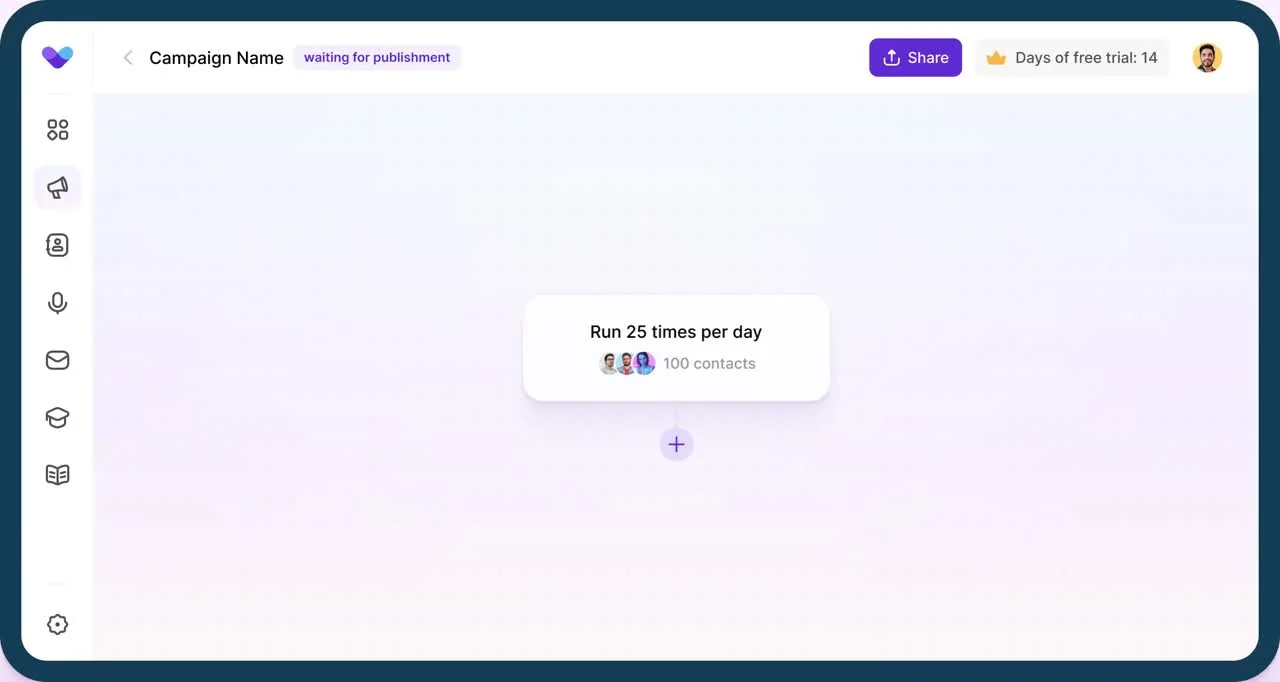
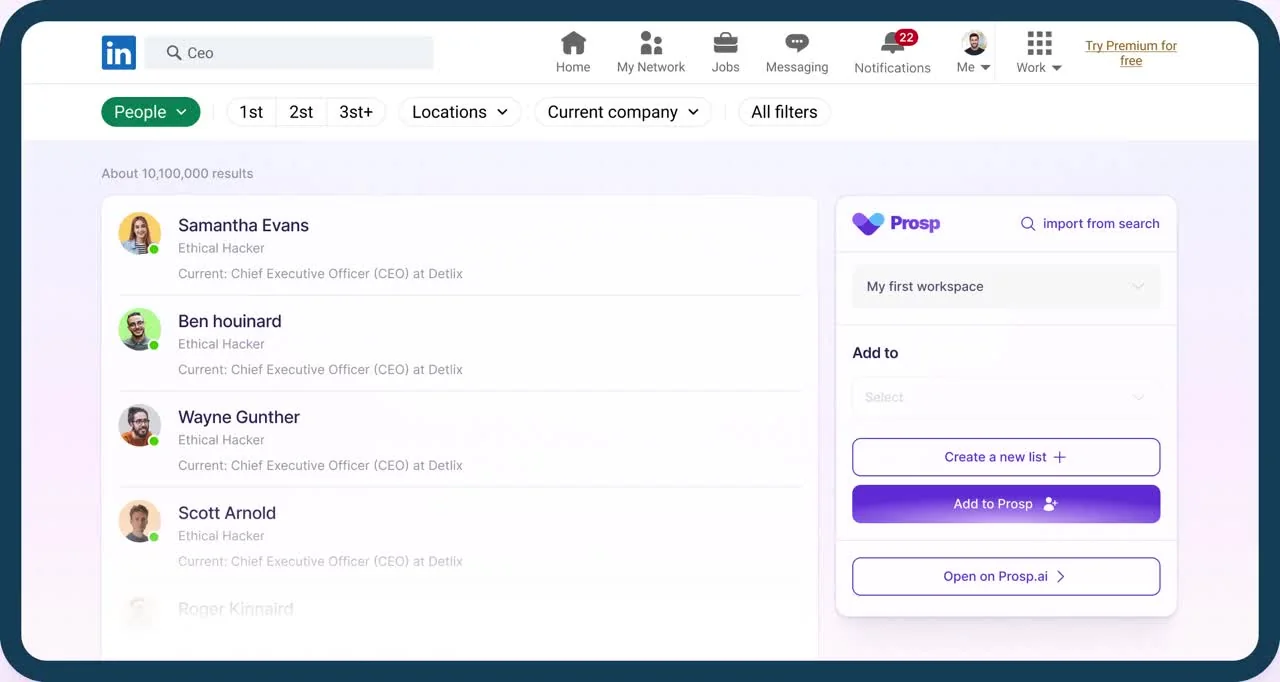
The new business half needs outreach, and for an agency that means multiple client-facing accounts rather than one. Prosp handles that: one account per LinkedIn profile, each created in its own browser session, all managed from one workspace, with white-label domain and branding plus a sub-workspace per client.
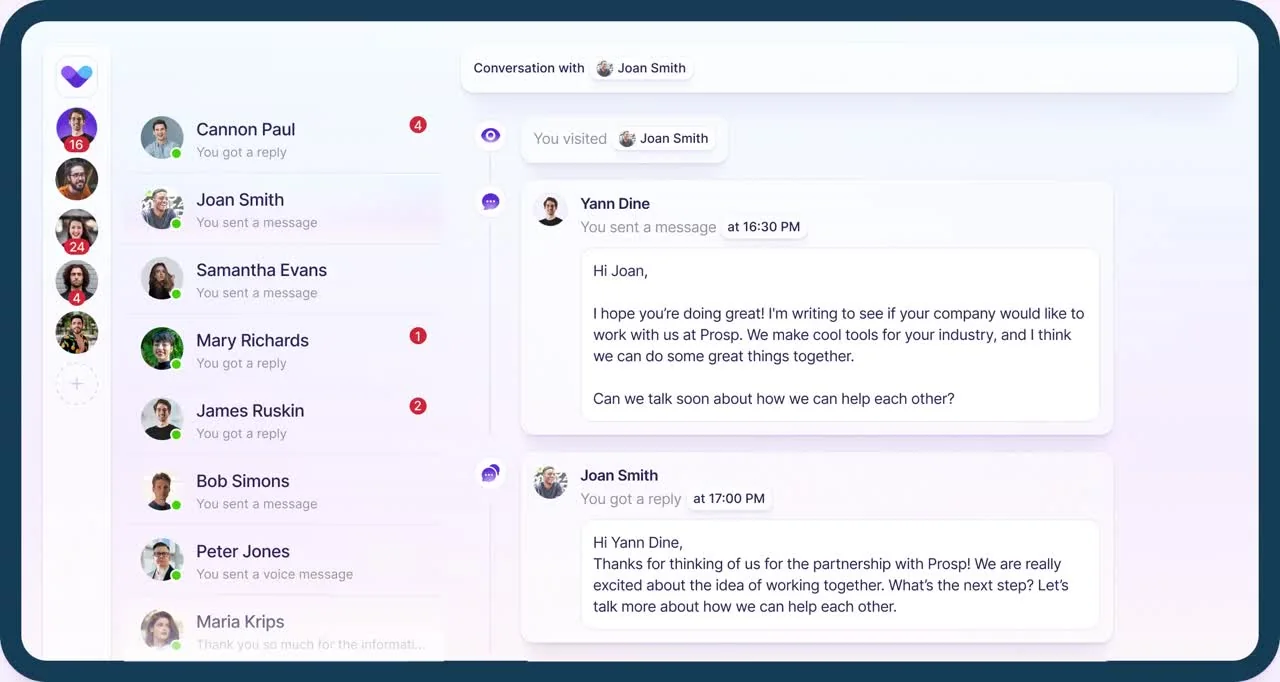
The unified inbox spans every connected account with filters for campaign, replied and unread, which is what makes a daily reply pass across eight clients one task rather than eight logins.
The constraint that should shape capacity-forecast as much as delivery hours: 20 connection requests a day and roughly 100 messages a week, account-wide rather than per campaign. Outreach capacity is a real resource and most agencies plan around delivery capacity only.
Pricing scales at agency volume, which matters when you are running seats for clients as well as yourself: $79.99 per account per month at 1 to 5, $59.99 at 6 to 30, $39.99 at 31 plus, with roughly 23% off annually.
Three things to remember
- Run
retainer-margin-checkbefore anything else. The ranking by margin is almost never the ranking by fee size, and agencies manage attention by fee size. delivery-qa-gatehas three verdicts and no fourth. "Mostly fine" is where agency quality dies, because it means shipped with known defects and nobody accountable for which ones.- Plan capacity at 60 to 70% of nominal hours. An agency planning at 100% is planning to miss, and the miss lands on the client who was going to renew.
60 skills run the agency. Prosp fills the pipeline that feeds it ๐
โณ Start a 14 Day Free Trial ๐ โณ Watch Full Tutorial โถ๏ธ